

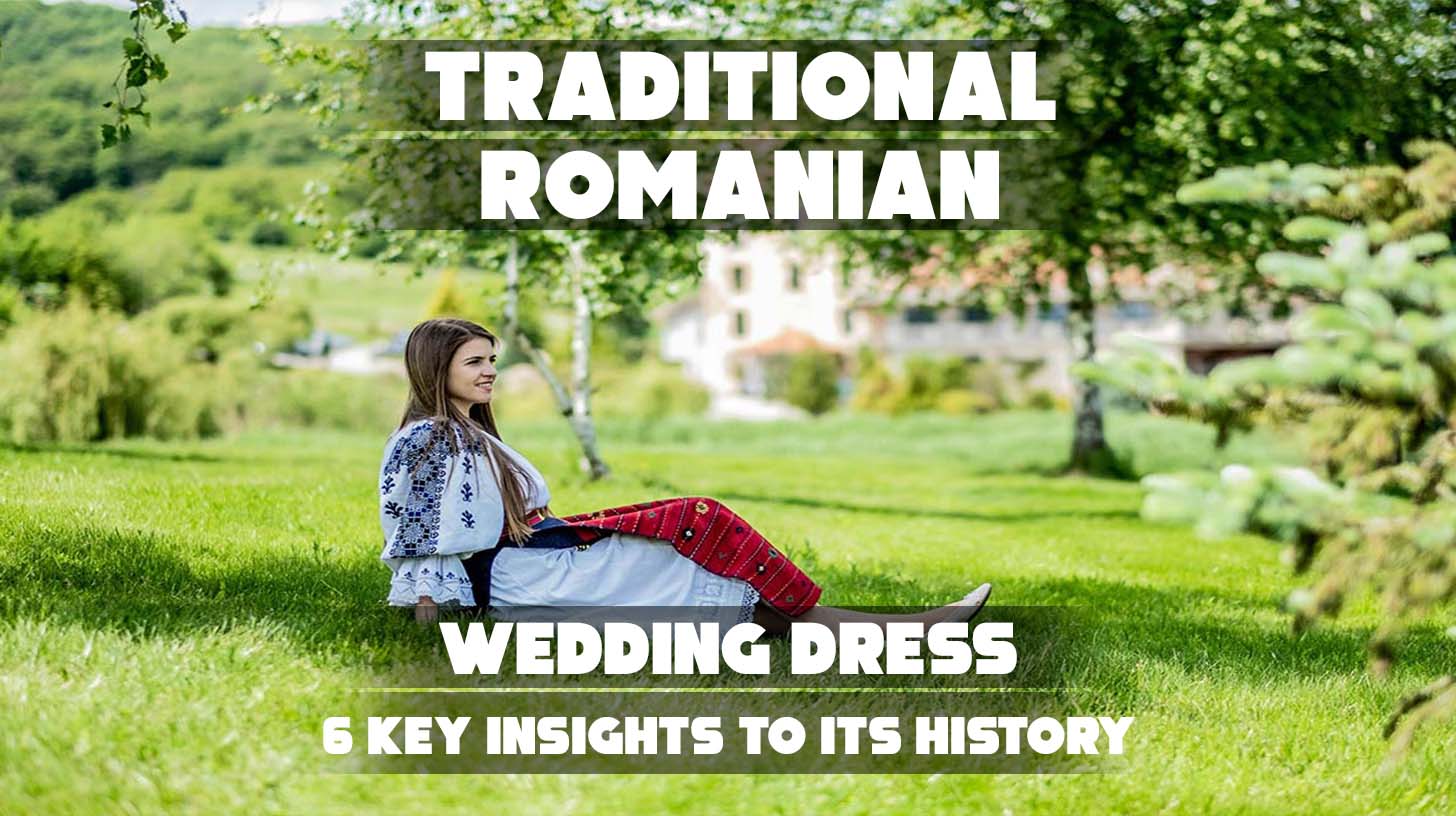

Are you dreaming of a wedding dress that reflects your rich cultural heritage? You’re not alone! Many brides face the challenge of choosing attire that embodies their unique identity while celebrating tradition. As your trusted guide, we understand the importance of this choice.
I once had the privilege of seeing a colleague at a cultural event, where she wore a stunning Romanian wedding dress. The intricate details and vibrant colors not only captured the essence of her heritage but also made her stand out as she gracefully walked through the crowd.
With years of expertise in traditional Romanian wedding attire, we’re here to help you make this important decision. In this article, we will explore:
- Origins of the traditional dress
- Cultural symbolism
- Crafting techniques
- Must-have accessories
- Regional styles
By following our insights, you’ll discover how to honor your roots while looking stunning on your special day.
Let’s start and transform your wedding vision into reality!
- 1. Origins and Historic Influences of the Traditional Romanian Wedding Dress
- 2. Cultural Symbolism in Romanian Wedding Dresses
- 3. Techniques and Artistry in Romanian Wedding Dresses
- 4. Must-Have Accessories in Romanian Bridal Fashion
- 5. Regional Styles of Romanian Wedding Dresses
- 6. Modern Brides and Traditional Romanian Attire
- Traditional Romanian Wedding Dress: A Recap
- FAQ
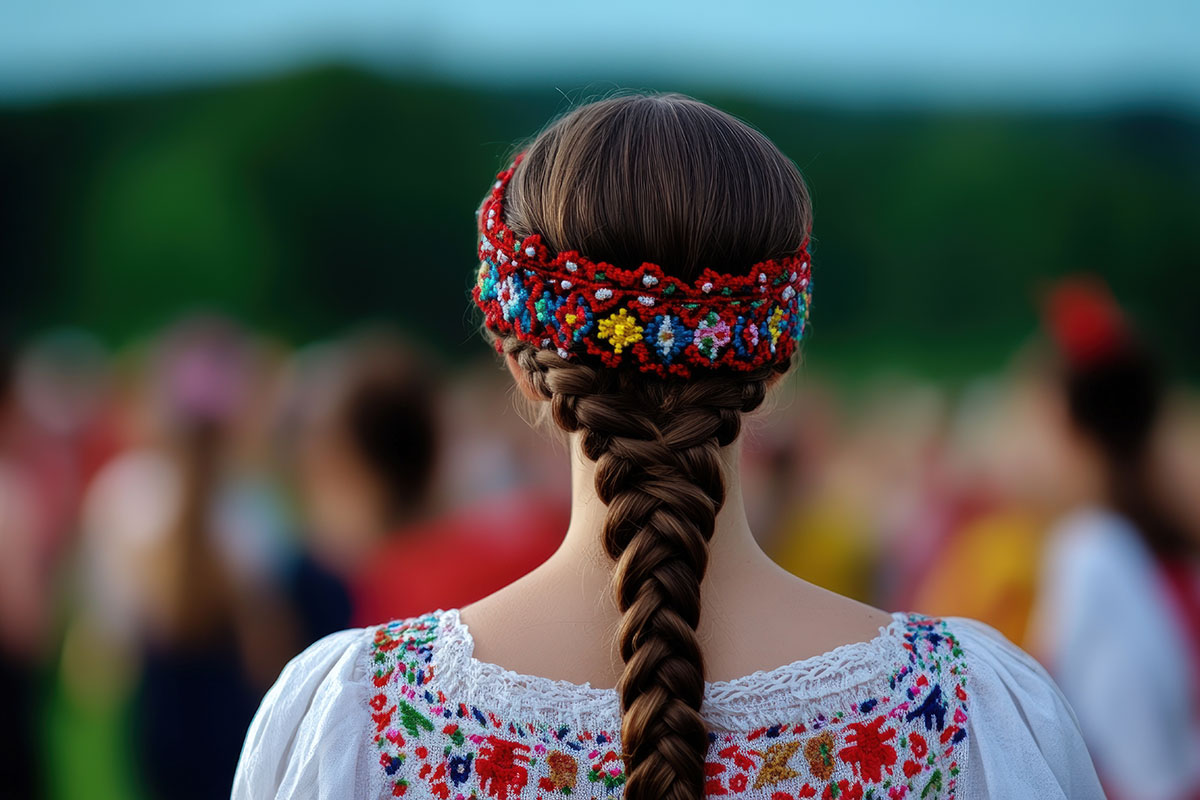
1. Origins and Historic Influences of the Traditional Romanian Wedding Dress
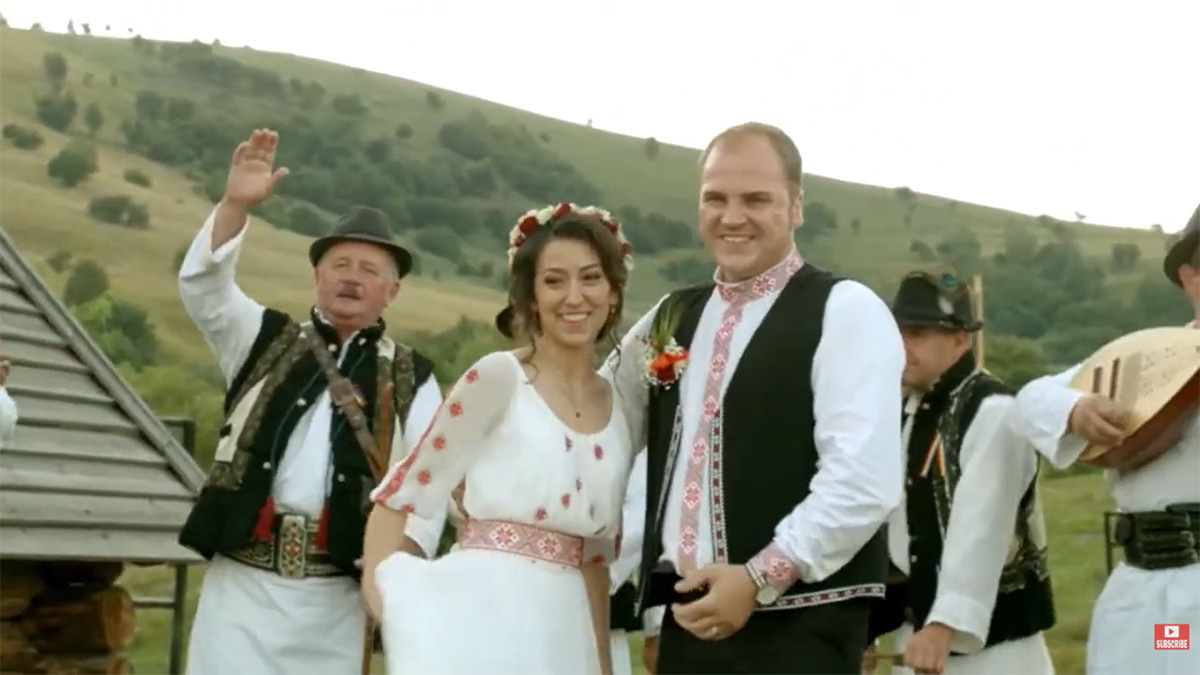
The origins of traditional Romanian wedding attire can be traced back to ancient times, shaped by the region’s long history of agricultural life, spiritual beliefs, and folk traditions. Romanian wedding dresses were typically hand-made, often using locally-sourced materials like wool, linen, and silk.
These materials were not only practical for the harsh winters but also symbolized the bride’s connection to the earth and her community.
Historical Influences:
Modern Evolution:
In the modern era, Romanian wedding dresses fused European styles with traditional elements. Lace, satin, and intricate embroidery became common, but the connection to heritage and the symbolic use of hand-made details remained central to the attire.
Ancient Dacians and Romans:
The early influence of the Dacians and Romans shaped Romanian wedding attire, with Roman craftsmanship and Dacian simplicity blending into woolen garments, embroidery, and ornamental jewelry, setting the foundation for the traditional wedding dress.
Byzantine Influence:
The Byzantine Empire introduced religious motifs and ornate fabrics. Crosses, floral patterns, and intricate embroidery became common in Romanian wedding attire, signifying spiritual prosperity and regional connection, particularly in southern Romania.
Ottoman Influence:
Under Ottoman rule, Romanian wedding dresses and traditional Romanian clothing gained luxurious fabrics like silks and velvet, with intricate gold and silver thread embroidery. This added opulence to the traditional dress, symbolizing wealth, and prestige in both rural and urban settings.
Folk Traditions:
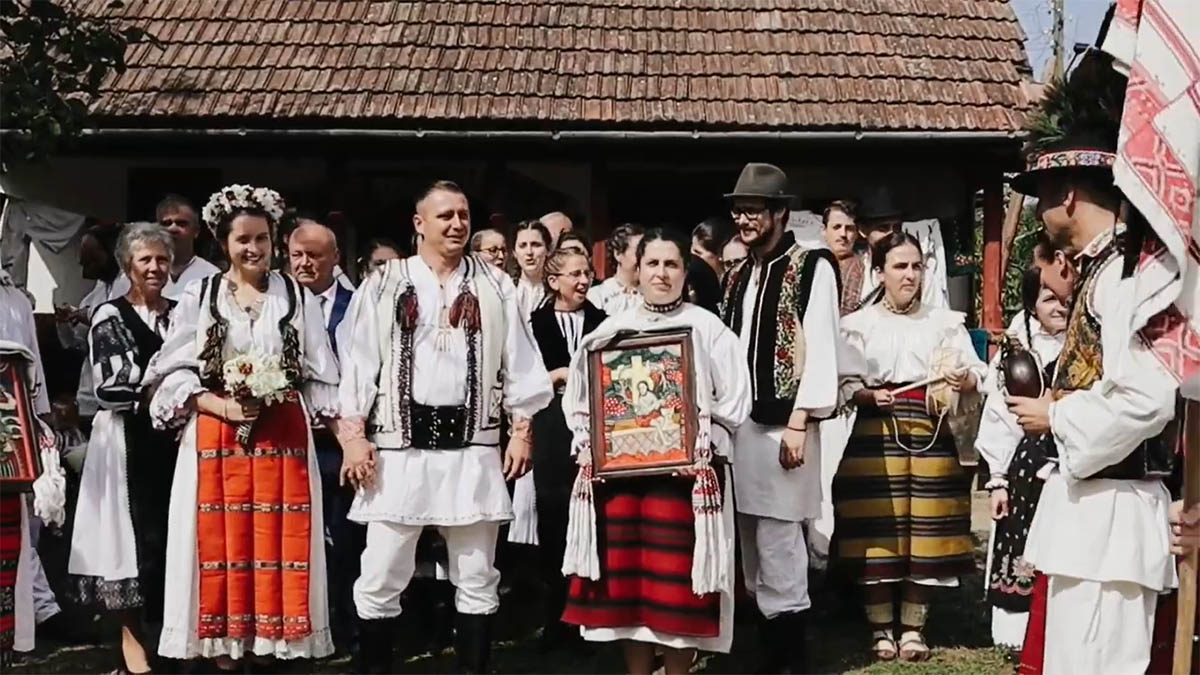
Regional folk customs played a key role in Romanian wedding dress design. Simple linen gowns, colorful woven belts, and distinctive headpieces like the căciulă reflected the bride’s connection to nature, purity, and modesty, deeply rooted in rural traditions.
Romanian Orthodox Church:
The Romanian Orthodox Church’s influence is evident in bridal veils, symbolizing piety and respect for religious customs. The color white became associated with purity and divine blessing, reflecting the sacred aspect of marriage in Romanian culture.
According to the study The Female Folk Costume of Romanian Women from Rupea, Romania: Fashion, Resilience, and Sustainable Management of Cultural Heritage, the traditional Romanian female folk costume, particularly in bridal attire, reflects cultural identity, resilience, and the region’s rich history, preserving the symbolic significance of craftsmanship and community traditions in weddings.
See Also Romanian Folk Art
2. Cultural Symbolism in Romanian Wedding Dresses
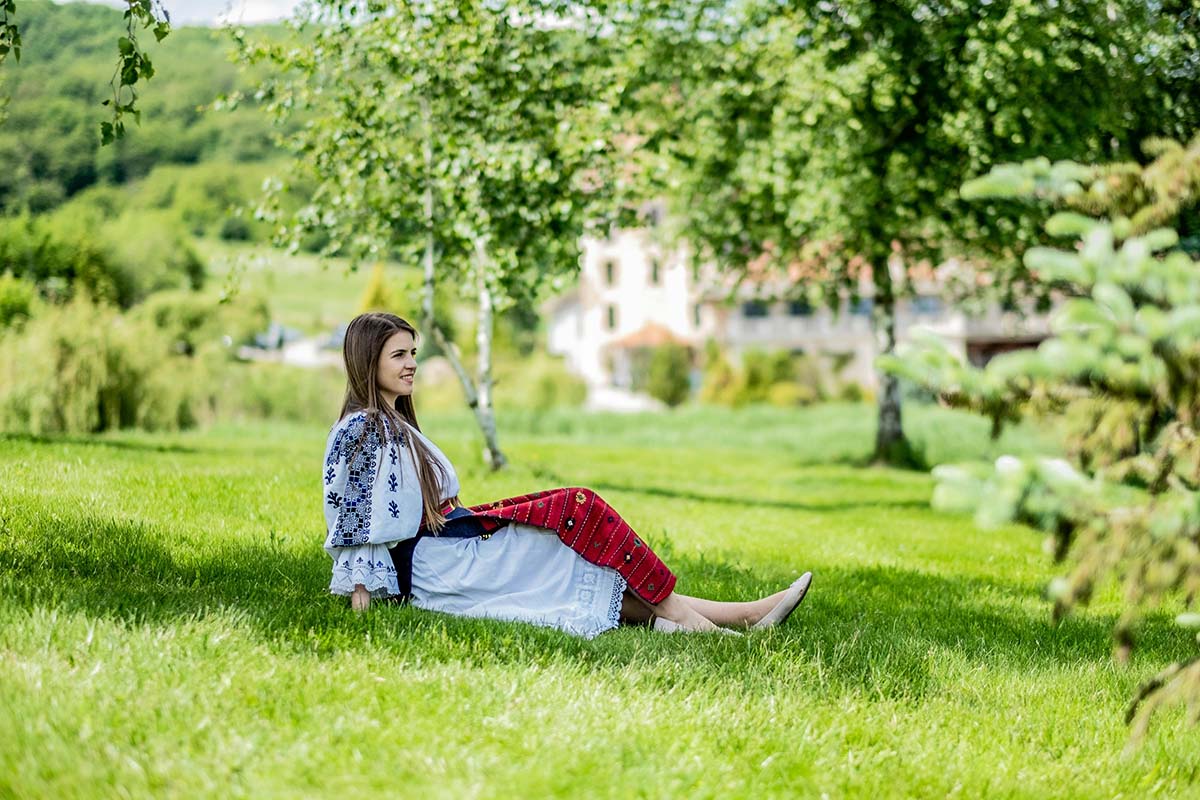
Traditional Romanian wedding dresses are rich in cultural symbols, representing the country’s deep traditions, beliefs, and history. Every detail, from the colors to the embroidery, carries significant meaning, making the dress a powerful reflection of the bride’s cultural identity.
Here are the colors with purpose in traditional Romanian wedding attire:
- Purple: Denotes nobility and dignity. Often used for older brides, it represents wisdom and honor, while also carrying spiritual significance.
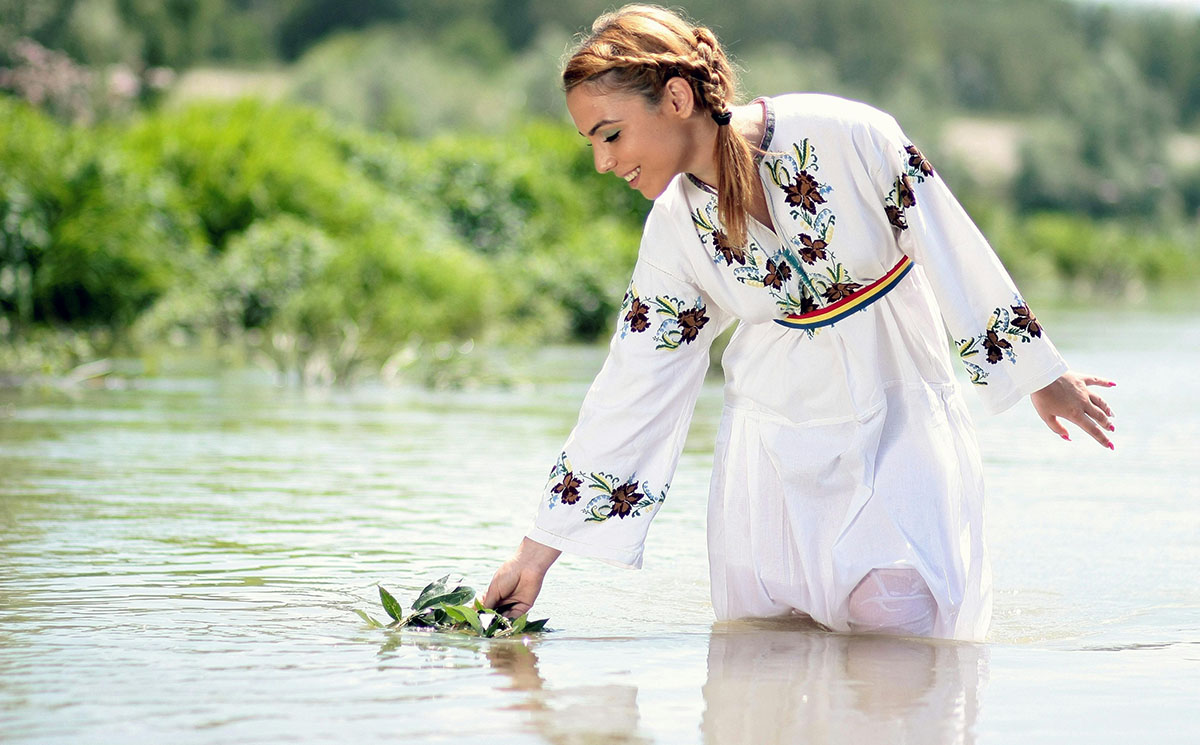
- White: Symbolizes purity, innocence, and new beginnings. Traditionally worn by brides to signify spiritual and marital purity.
- Red: Represents love, passion, and fertility. In some regions, red is the color of choice for weddings, believed to bring prosperity and joy to the couple.
- Black: In some Romanian regions, black signifies maturity and respect. Often seen in the wedding attire of older brides or worn during the evening celebrations.
- Gold: Gold is associated with wealth, prosperity, and divine blessing. It is frequently used in embroidery and jewelry, symbolizing a prosperous marriage.
- Blue: Signifies tranquility, loyalty, and protection. Blue is often used in wedding dresses and accessories, symbolizing faithfulness and stability in marriage.
- Green: Represents fertility and connection to nature. It symbolizes growth and prosperity in marriage, often seen in headpieces or decorative elements.
- Yellow: Yellow symbolizes joy, wealth, and vitality. It is sometimes incorporated into accessories or parts of the dress to bring good fortune.
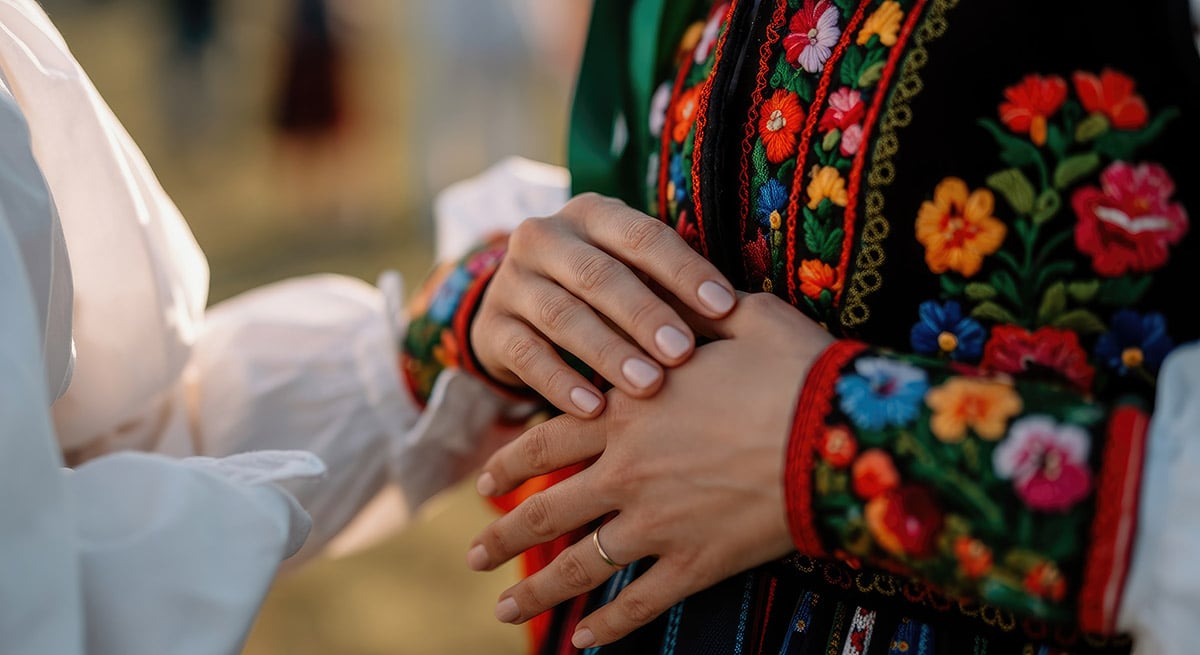
Here are the key patterns and embroidery in traditional Romanian wedding dresses:
- Floral Patterns:
Flowers are symbolic of fertility, beauty, and life. Intricate floral motifs are often embroidered on wedding dresses, representing the bride’s connection to nature and her role in nurturing a new life. - Geometric Patterns:
Geometric designs symbolize order, balance, and the harmony of life. These patterns, often in bold shapes like squares and triangles, are commonly found on the wedding attire, representing stability and strength in the marriage. - Crosses and Religious Symbols:
Crosses, often embroidered on the bride’s attire, signify faith, protection, and divine blessings. These motifs reflect the deep-rooted Christian traditions and the sacred nature of marriage in Romanian culture. - Animal Motifs:
Animals, especially birds and horses, symbolize freedom, protection, and the union between the bride and groom. Birds represent the soul and spirituality, while horses signify strength and endurance in marriage. - Spirals and Swirls:
Spirals are often used to symbolize the continuous cycle of life and the eternal nature of love. They represent the bride’s journey into marriage, emphasizing the idea of an ever-lasting bond. - Vines and Leaves:
Vines are commonly embroidered to symbolize growth, prosperity, and the enduring strength of the marriage. They also represent the bride’s connection to her family and ancestral heritage.
Here are the key fabrics with meaning in traditional Romanian wedding dresses:
- Silk: Represents luxury, wealth, and purity. Silk is often used for the wedding dress to signify the bride’s special role and her transition into a new life.
- Linen: Symbolizes simplicity, humility, and purity. Often used for undergarments or simpler dresses, reflecting the bride’s connection to her roots and modesty.
- Wool: Represents warmth, protection, and family ties. Wool is a traditional fabric used in rural areas for wedding dresses, signifying the bride’s connection to home and tradition.
- Cotton: Symbolizes comfort and practicality, used for less formal wedding attire or accessories, highlighting the balance between elegance and everyday life.

3. Techniques and Artistry in Romanian Wedding Dresses
The techniques and artistry involved in crafting traditional Romanian wedding dresses are a reflection of the country’s rich cultural heritage and attention to detail. Each dress is a work of art, combining intricate craftsmanship with deep cultural symbolism.
Skilled artisans use a variety of techniques passed down through generations to create the perfect garment for the bride. These dresses are not just clothing; they are stories told through stitches and patterns.
Here are some of the key techniques and elements:
- Hand-Embroidered Patterns: Fine embroidery is a key feature, often depicting symbols of fertility, prosperity, and protection for the bride.
- Weaving Techniques: Traditional weaving methods are employed to create intricate fabric textures, often done by hand to ensure every detail is perfect.
- Beading and Sequins: Used for decoration, beads and sequins often represent the beauty and glamour of the bride, enhancing the dress’s elegance.
- Lace Work: Lace is carefully integrated into wedding dresses, symbolizing purity and delicacy, and is often used for veils or sleeves.
- Tailoring and Draping: The precision in tailoring and draping the fabric ensures the dress fits perfectly, with special attention given to the flow and form.
These techniques are what make Romanian wedding dresses a unique and cherished part of cultural traditions, preserving a legacy of beauty and craftsmanship.
See Also What Do Romanian People Look Like?
4. Must-Have Accessories in Romanian Bridal Fashion
In Romanian wedding traditions, accessories play a vital role in complementing the bridal look, adding meaning and elegance to the overall attire. Each accessory holds cultural and symbolic value, making the bride’s ensemble a reflection of Romanian culture and heritage. Here are five must-have accessories in traditional Romanian bridal fashion:
1. Beaded Headpieces:
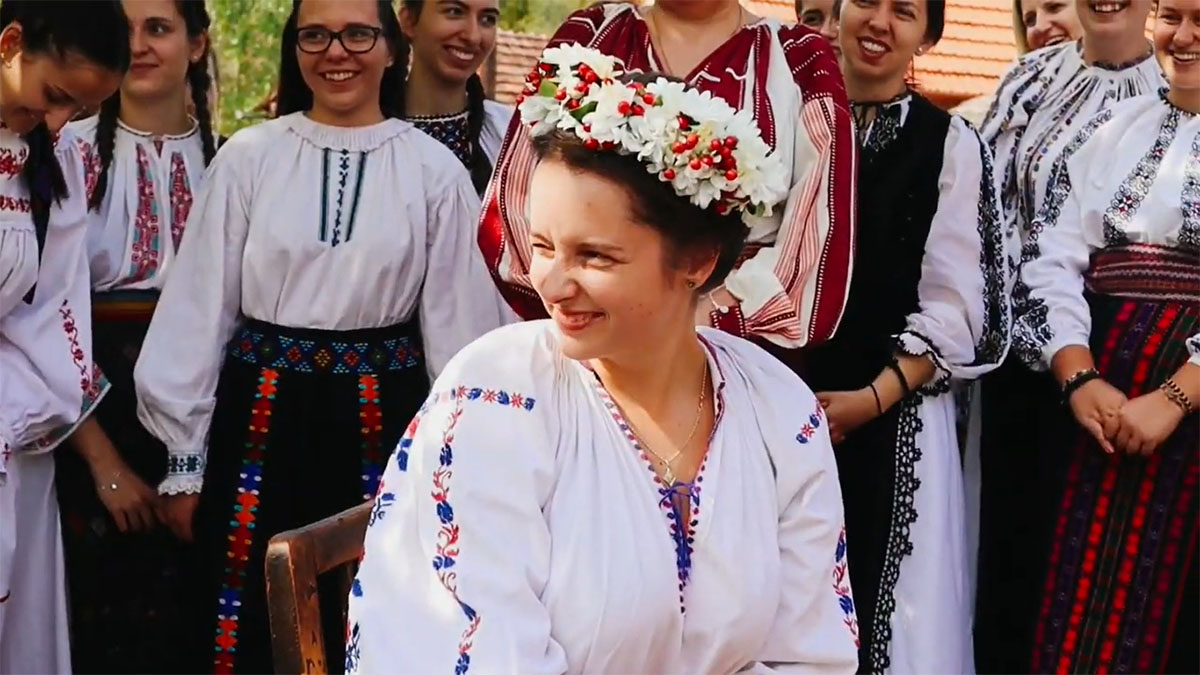
Beaded headpieces are a defining feature of Romanian bridal fashion. These ornate accessories are often adorned with intricate beadwork, symbolizing beauty and femininity.
- Ornate Designs: Worn to crown the bride’s hairstyle, these headpieces add an elegant touch while serving as protective charms against evil spirits.
- Cultural Significance: They connect the bride to her heritage, embodying the artistic traditions passed down through generations.
2. Traditional Veils:
The traditional veil is an essential accessory that enhances the bride’s appearance while carrying deep symbolism. Often made from delicate fabrics, veils signify modesty and purity, encapsulating the bride’s transition into a new life.
- Intricate Embellishments: Many veils feature beautiful embroidery or lace trims that align with the motifs of the wedding dress.
- Connection to Heritage: Wearing a veil connects the bride to her cultural roots and the traditions of her ancestors.
3. Leather Belts:
Leather belts are both functional and decorative, worn over the dress to accentuate the waist and add structure to the outfit. These belts can be embellished with embroidery or metalwork, reflecting the artistry of the region.
- Symbol of Strength: In Romanian culture, wearing a belt symbolizes strength and commitment, emphasizing the bride’s role in her new family.
- Artistic Detail: Often hand-crafted, they add a unique touch that complements the overall bridal attire.
4. Jewelry:
Jewelry is a crucial part of the bridal ensemble, often featuring silver or gold pieces that carry historical significance.
- Traditional Motifs: Necklaces, earrings, and bracelets may incorporate designs inspired by local folklore, enhancing the overall theme of the wedding attire.
- Symbol of Wealth: These pieces symbolize family heritage and prosperity, connecting the bride to her lineage.
5. Traditional Footwear:
The choice of traditional footwear completes the bridal look, ranging from handmade leather shoes to beautifully embroidered sandals.
- Comfort and Style: These shoes not only offer comfort but also feature designs that echo the embroidery found on the dress.
- Cultural Connection: Footwear often represents the bride’s connection to her roots and local craftsmanship, making it an essential element of the Romanian wedding ensemble.
These five accessories are essential in Romanian bridal fashion, each adding unique touches that connect the bride to her culture, family, and the rich wedding traditions of Romania.

5. Regional Styles of Romanian Wedding Dresses
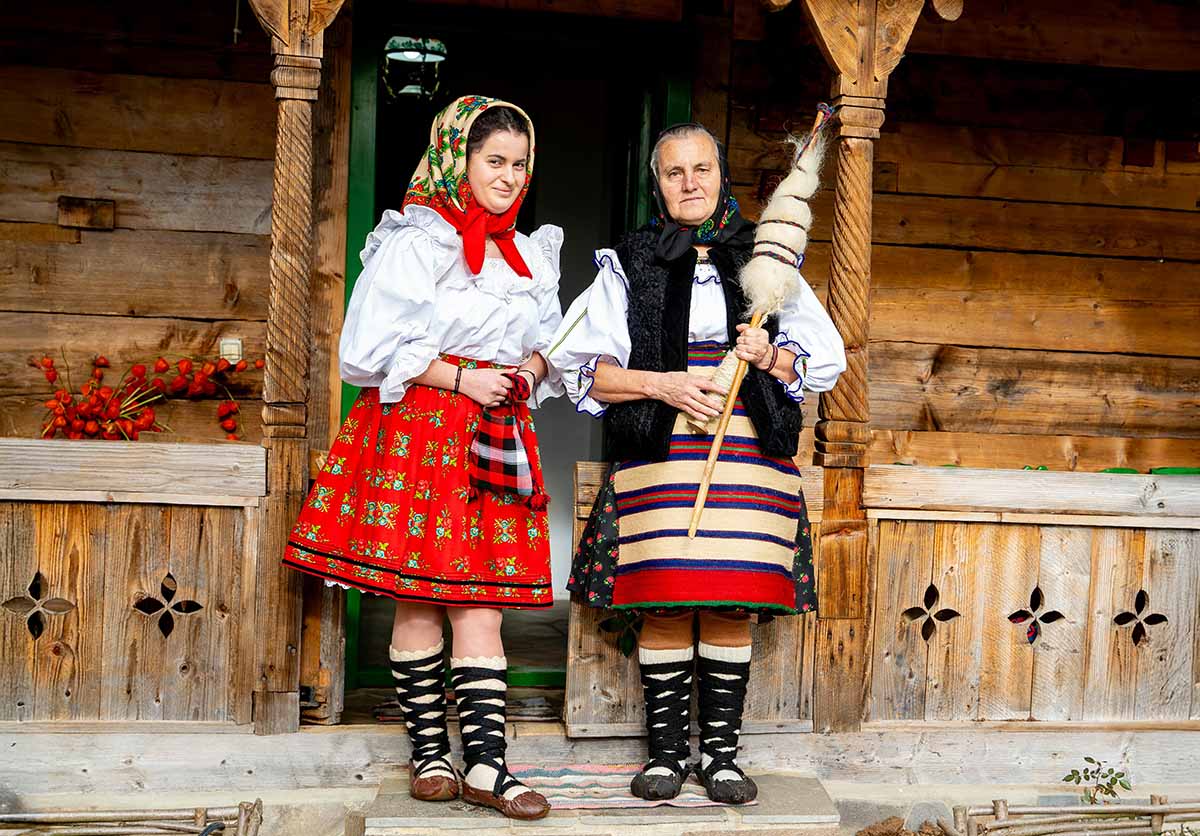
Romanian wedding dresses reflect the unique cultural heritage and traditions of various regions across the country.
- Transylvanian Wedding Attire: Transylvanian brides are known for their vibrant colors and intricate details. Their dresses often feature heavy fabrics adorned with elaborate floral and geometric embroidery, symbolizing agricultural roots. Fuller skirts and rich reds or blacks signify strength and prosperity, while gold accents represent wealth and tradition.
- Moldovan Wedding Attire: Moldovan wedding dresses are recognized for their vibrant colors and detailed needlework. Typically featuring rich reds and whites, these dresses are embellished with floral motifs that symbolize love and new beginnings. The hand-stitched embroidery often involves family contributions, strengthening community bonds.
- Wallachian Wedding Attire: Wallachian bridal attire emphasizes simplicity and elegance. Made from lightweight fabrics, these dresses often feature a straight silhouette enhanced by decorative waist belts. Common geometric and floral motifs reflect local cultural influences while maintaining an air of refinement.
- Bucovina Wedding Attire: Bucovina wedding dresses showcase vibrant colors and elaborate designs that celebrate local folklore. Often adorned with colorful embroidery, these dresses tell stories of tradition. Accessories, including intricate headpieces and jewelry, enhance the overall look and reflect cultural heritage.
- Banat Wedding Attire: Banat wedding dresses blend influences from neighboring countries, highlighting the region’s multicultural background. Combining light and heavier fabrics, these dresses feature layered skirts and flowing designs. The embroidery often incorporates both Romanian and Hungarian elements, showcasing a rich tapestry of tradition.
According to the study Contemporary Traditional Clothing in Maramureş, the region’s bridal attire retains historical and cultural significance, showcasing elaborate craftsmanship. The traditional clothing, including the wedding dress, fuses ancestral symbols with modern elements, maintaining the region’s unique identity and honoring marriage customs.
6. Modern Brides and Traditional Romanian Attire
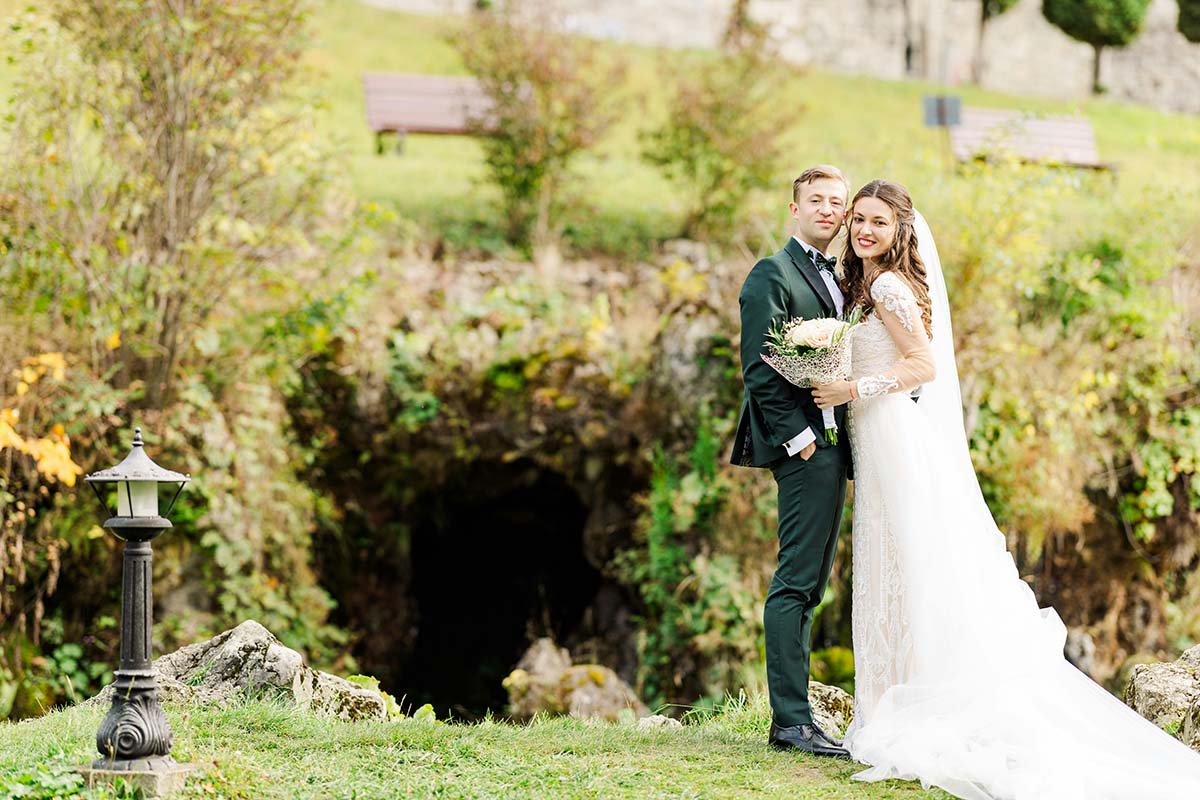
In recent years, there has been a notable resurgence of interest in traditional Romanian wedding attire among modern brides. Many women are choosing to incorporate elements of their cultural heritage into their wedding ensembles, blending contemporary styles with traditional designs. This fusion allows brides to celebrate their roots while showcasing their personal style.
By opting for hand-embroidered fabrics, vibrant colors, and traditional silhouettes, modern brides are not only paying homage to their ancestry but also making a statement about the significance of cultural identity in today’s globalized world.
Additionally, the rise of social media and the influence of wedding trends have made traditional Romanian attire more accessible and visible. Brides are increasingly sharing their wedding experiences online, highlighting the beauty and uniqueness of their heritage. This visibility encourages others to embrace traditional attire, resulting in a renewed appreciation for the craftsmanship and artistry behind these garments.
As a result, modern Romanian brides are confidently wearing traditional dresses, incorporating them into ceremonies, and inspiring a new generation to cherish their cultural traditions and Romanian fashion while celebrating love in their own unique way.
See Also Romanian Costumes
Traditional Romanian Wedding Dress: A Recap
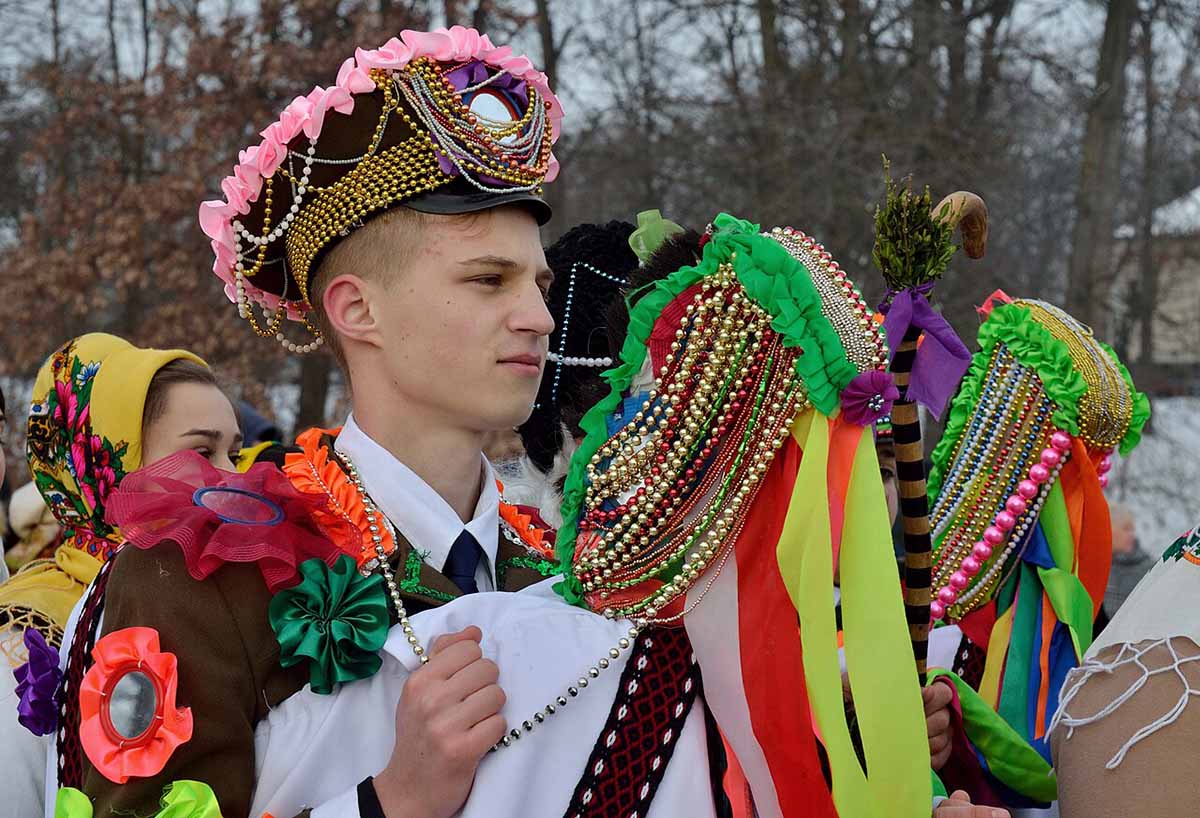
Romanian wedding dresses are more than just attire, they’re a beautiful tapestry of culture, history, and artistry. From the intricate hand-embroidered patterns to the rich symbolism of color, each dress tells a unique story.
These dresses are crafted using ancient techniques, passed down through generations, making them a timeless symbol of Romanian wedding traditions. I recall attending a Romanian wedding where the bride wore a stunning dress adorned with delicate embroidery.
The whole atmosphere was magical, her dress seemed to tell the tale of her heritage, while she glided down the aisle, a living piece of art. If you’re dreaming of a wedding dress that celebrates both your roots and your beauty, look no further than these stunning pieces of Romanian craftsmanship.
The pictures are so far from the truth… the truth is a dot .