



Are you wondering what makes Greek coffee different and why it’s more than just a drink?
At Civilisable, we guide you through the traditions, etiquette, and cultural significance of Greek coffee, helping you understand not only how it is prepared, but how it is truly experienced within Greek culture.
Read the full article and discover why Greek coffee is more than just a drink.
- 1. What Is Greek Coffee?
- 2. History of Greek Coffee
- 3. How Greek Coffee Is Made, Ingredients, and Equipment
- 4. How to Drink Greek Coffee Properly
- 5. Greek Coffee Cups and Traditions
- 6. Types of Greek Coffee (Sketos, Metrios, Glykos)
- 7. When and Where Greeks Drink Coffee
- 8. Greek Coffee and Fortune Reading (Tasseography)
- 9. Health Benefits of Greek Coffee
- Greek Coffee: A Recap
- FAQ

| Element | Description |
|---|---|
| Coffee Type | Unfiltered, finely ground coffee |
| Beans | Mostly 100% Arabica |
| Grind Size | Extremely fine (powder-like) |
| Brewing Method | Slowly heated on low heat |
| Equipment | Briki (small coffee pot) |
| Serving Style | Small cup with foam on top |
| Foam | Kaimaki |
| Grounds | Settle at the bottom, not consumed |
| Sugar Levels | Sketos, Metrios, Glykos |
1. What Is Greek Coffee?
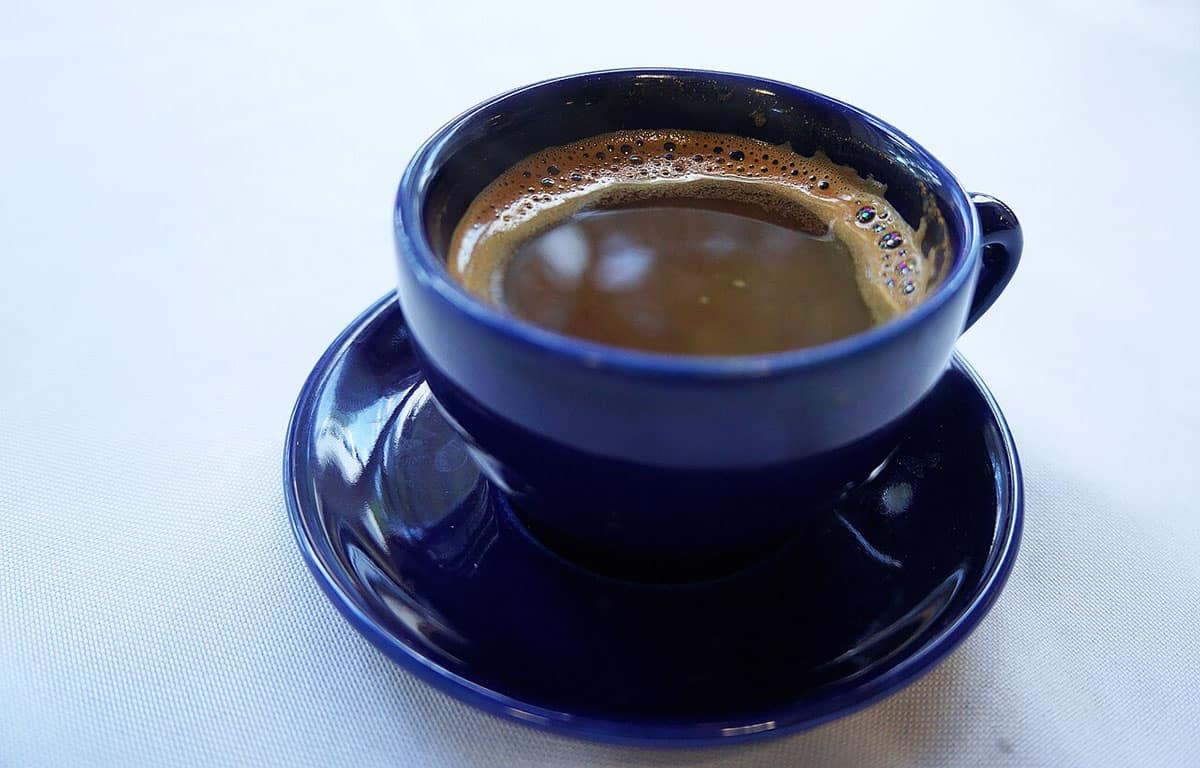
Greek coffee (also sold as Hellenic coffee or simply Greek finely ground coffee) is a traditional method of preparing finely ground coffee that is slowly brewed in a small pot and served unfiltered.
It is made from 100% Arabica coffee beans in most traditional brands.
The coffee grounds remain in the cup, creating a thick texture and strong aroma. Unlike espresso or filtered coffee, Greek coffee is about ritual, patience, and social connection, not speed.
Key characteristics of Greek coffee:
- Finely ground coffee (almost powder-like)
- Brewed slowly, never boiled aggressively
- Served in small cups
- Thick foam (kaimaki) on top
- Grounds settle at the bottom and are not drunk
Greek coffee is deeply woven into daily life, conversations, hospitality, and tradition.
See Also Greek Gods Statues
2. History of Greek Coffee
Greek coffee arrived in Greece during the Ottoman period and became deeply embedded in Greek culture over centuries. Although similar brewing methods existed across the region, Greece developed its own identity and terminology around the drink.
Historical highlights:
- Introduced to Greece in the 17th century
- Became central to social life in traditional coffee houses (kafeneia)
- Renamed “Greek coffee” in the 20th century
- Symbol of hospitality and everyday ritual
Traditional kafeneia were places for discussion, politics, games, and storytelling. Coffee was not rushed — it was meant to be sipped slowly and shared.
See Also Traditional Coffee Tables
3. How Greek Coffee Is Made, Ingredients, and Equipment
Greek coffee requires precision rather than complexity. Small changes in heat or stirring affect the final result.
Ingredients (for 1 cup):
- Cold water: 60 ml (2 oz)
- Greek coffee (finely ground): 1 heaped teaspoon (6–7 g)
- Sugar (optional):
- Sketos (no sugar): 0 tsp
- Metrios (medium): 1 tsp
- Glykos (sweet): 2 tsp
Equipment Needed:
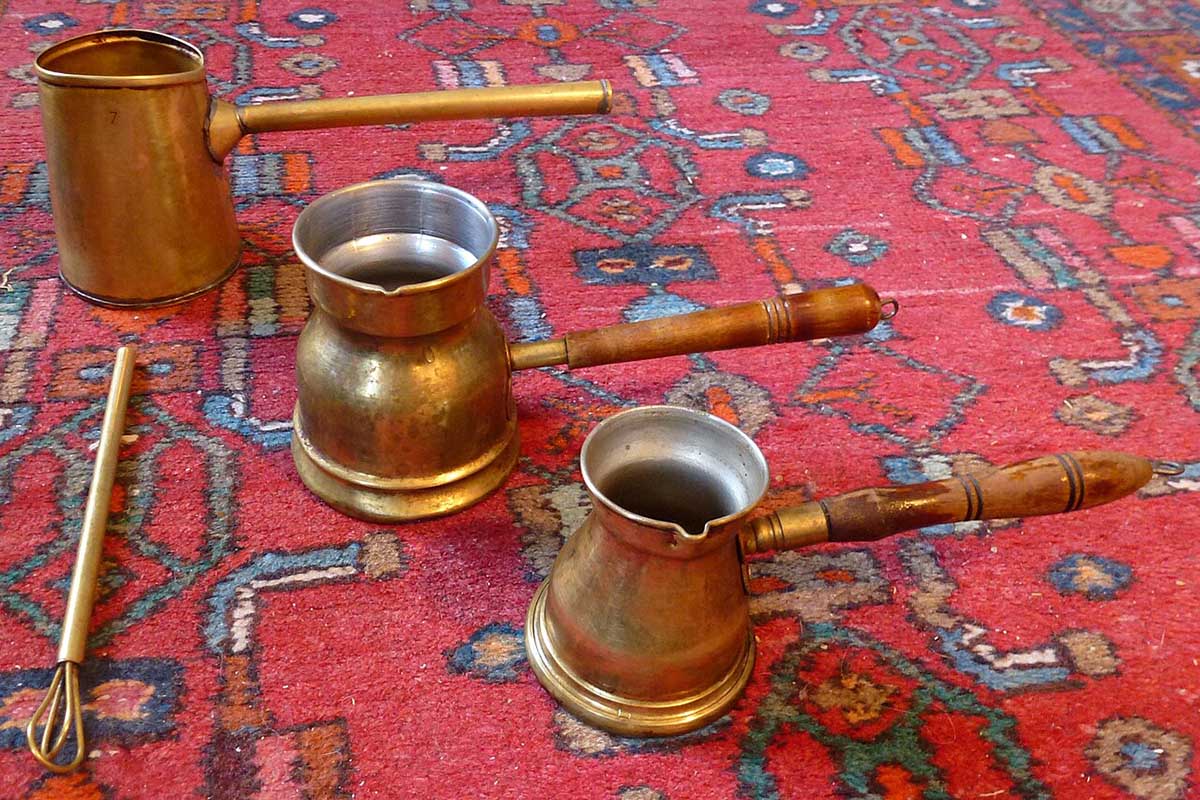
- Briki (small coffee pot)
- Small coffee cup (demitasse)
- Spoon
- Low heat source
Step-by-Step Recipe:
- Add cold water to the briki.
- Add coffee and sugar (if using).
- Do not stir yet.
- Place on low heat.
- Stir gently once, before heating fully.
- Let foam slowly rise — do not boil.
- When foam reaches the top, remove immediately.
- Spoon foam into the cup, then pour coffee slowly.
Important tips:
- Never rush the heat
- Never let it boil
- Foam is considered the mark of a well-made coffee

4. How to Drink Greek Coffee Properly
Greek coffee is not meant to be gulped or rushed.
Proper way to drink it:
- Sip slowly
- Never stir after serving
- Stop drinking before reaching the grounds
- Enjoy conversation alongside it
Common etiquette:
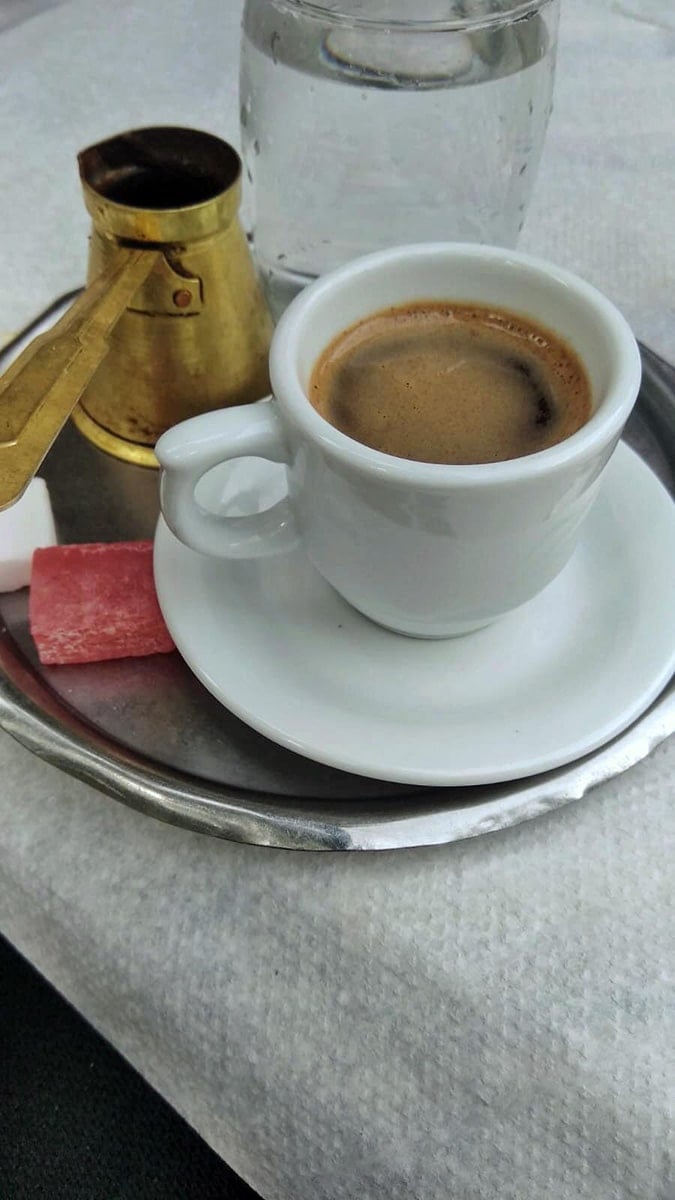
- Coffee is often served with water
- Sometimes accompanied by a small sweet
- Drinking it too fast is considered impolite
The experience is as important as the taste.
See Also Greek Mythology Symbols
5. Greek Coffee Cups and Traditions

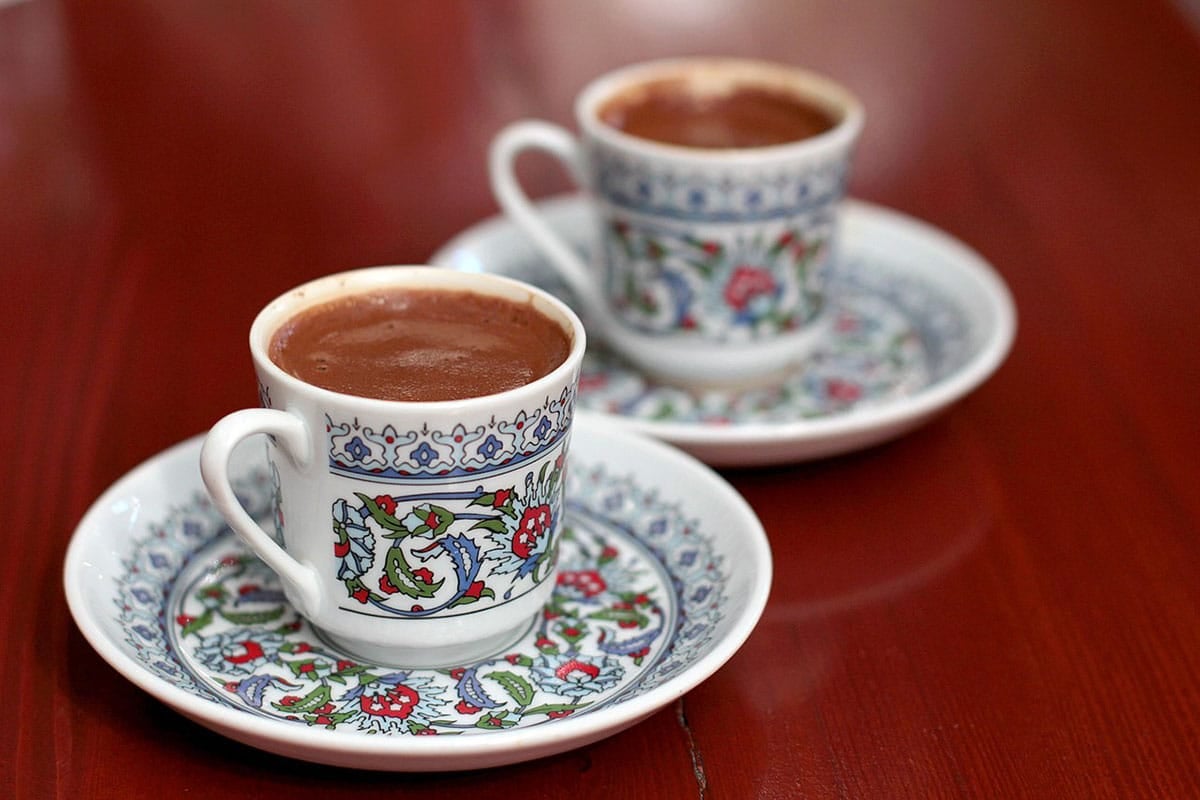
Greek coffee cups are small and decorative, often ceramic or porcelain.
Traditional features:
- Thick walls to retain heat
- Decorative patterns
- Small handles
Cultural traditions:
- Coffee is offered to guests as a sign of respect
- Served during long conversations
- Often shared during family visits
In villages and cities alike, serving Greek coffee is an act of hospitality and care.
See Also Best Breakfast Places in Paris
6. Types of Greek Coffee (Sketos, Metrios, Glykos)

Greek coffee is ordered based on sweetness, not size.
Sketos (No Sugar)
- Strong and bitter
- Preferred by traditional drinkers
Metrios (Medium Sweet)
- Balanced flavor
- Most popular choice
Glykos (Sweet)
- Smooth and rich
- Often chosen by newcomers
Each type uses the same amount of coffee, only sugar changes.
See Also National Food of Greece
7. When and Where Greeks Drink Coffee
Greek coffee is enjoyed throughout the day, especially during social moments.
Common times:
- Morning conversations
- Afternoon breaks
- After meals
Common places:
- Home kitchens
- Traditional kafeneia
- Village squares
- Family gatherings
It is less about caffeine and more about connection and rhythm.
See Also Ancient Female Outfits
8. Greek Coffee and Fortune Reading (Tasseography)
After drinking, the cup is turned upside down to let the grounds settle.
Fortune reading involves:
- Interpreting shapes left by grounds
- Symbols representing events or emotions
- Shared stories rather than serious predictions
Though playful, tasseography is a beloved cultural tradition passed through generations.
See Also Top 3 Languages Spoken In Greece
9. Health Benefits of Greek Coffee
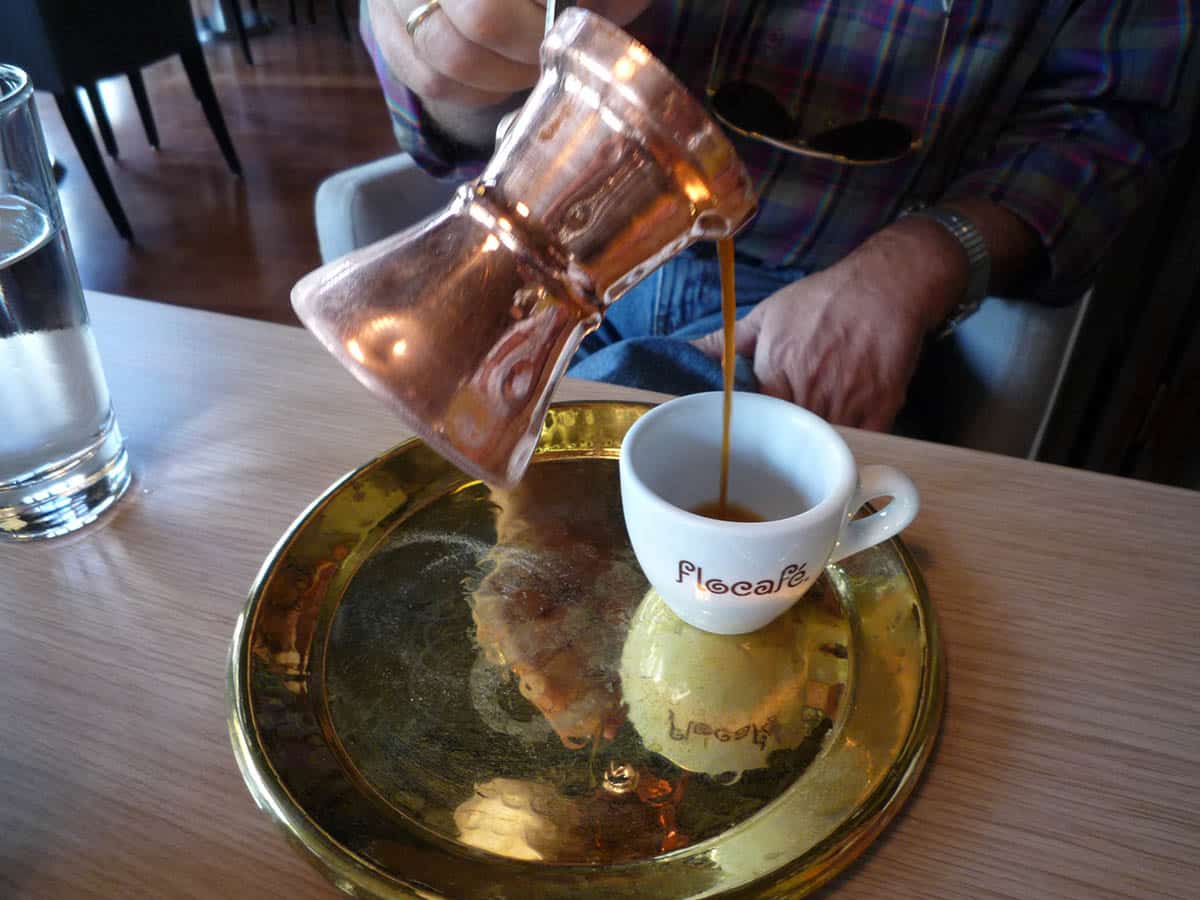
Greek coffee is rich in antioxidants and naturally low in calories.
Potential benefits:
- High antioxidant content
- Supports heart health
- May aid digestion
- Lower caffeine than espresso
Important note:
- Should be enjoyed in moderation
- Not recommended late at night due to caffeine
See Also Greek Mythology Statues
Greek Coffee: A Recap
Greek coffee is a traditional, unfiltered coffee made from extra-finely ground Arabica beans, brewed slowly in a small pot and served in small cups with thick foam on top.
Its preparation relies on precise ratios, low heat, and patience, making the ritual as important as the taste. The coffee is known for its strong aroma, rich body, and moderate caffeine content, and it is closely tied to Greek social life, hospitality, and customs such as fortune reading.
Trying Greek coffee for the first time is a memorable experience; the taste is intense yet smooth, with a deep, roasted flavor. Sipping it slowly, feeling the warmth, and noticing the grounds settle at the bottom creates a calm, grounding moment that feels more reflective than energizing.