
Have you ever wondered what makes traditional Venezuelan clothing so vibrant and meaningful? Many people are captivated by the bright colours of the pollera or the elegant lines of the liquiliqui, yet the stories behind these outfits often remain a mystery.
These traditional garments were shaped by a mix of Spanish, French, and Caribbean influences, giving them their vibrant colours, intricate embroidery, and distinctive styles. Today, while Western-style clothing dominates daily life, these traditional outfits remain a proud symbol of Venezuelan culture, worn during festivals, celebrations, and special occasions.
Learning about them doesn’t have to feel complicated. Over the years, I’ve slowly picked up bits and pieces about Venezuelan culture, especially from a Venezuelan friend who once told me how her family keeps old festival outfits carefully folded in a wooden chest.
Hearing those personal memories made me realise just how much tradition is stitched into every garment.
In this article, we’ll look at:
- How these traditional outfits developed over time
- The regional differences that make each style unique
- Why these garments still matter in Venezuela today
So let’s start and explore the heritage, pride, and colour woven into Venezuela’s traditional clothing.


1. Historical Roots of Venezuelan Clothing

Venezuelan traditional clothing carries deep stories of cultural blend and history. The colonial impact of Spanish rule brought strong European styles to local dress, while French and Caribbean influences infused vibrant colors and flowing fabrics. Long before European contact, indigenous tribal attire added its own legacy, natural materials, bright motifs, and distinctive patterns that still echo in today’s traditional garments.
This fusion of Spanish, French, Caribbean, and native heritage helped shape iconic pieces like the pollera and liquiliqui, making Venezuelan clothing not just a fashion statement but a living tapestry of identity and history.
Traditional Venezuelan clothing can be divided into urban and rural styles, with urban clothing reflecting European influences, while rural clothing is shaped by indigenous and African cultures.
Some well-known garments include the liqui-liqui, a formal suit for men made of light fabrics like linen, with a collar design that has a similar shape to that of a colonial-era soldier uniform; the pollera, a bright, full skirt worn by women, often decorated with lace and embroidery; and the ruana, a woolen poncho-like garment worn in colder rural areas.
These traditional clothes are still worn today during festivals and cultural events, symbolizing Venezuela’s rich heritage and national pride.
In “Cultural Influences on Venezuelan Fashion History”, researchers highlight how Spanish colonization, African heritage, and indigenous traditions combined to shape Venezuela’s unique urban and rural clothing, reflecting centuries of cultural exchange and regional adaptation.
See Also Traditional Swedish Clothing
2. Classic Venezuelan Style
Women’s Traditional Clothing

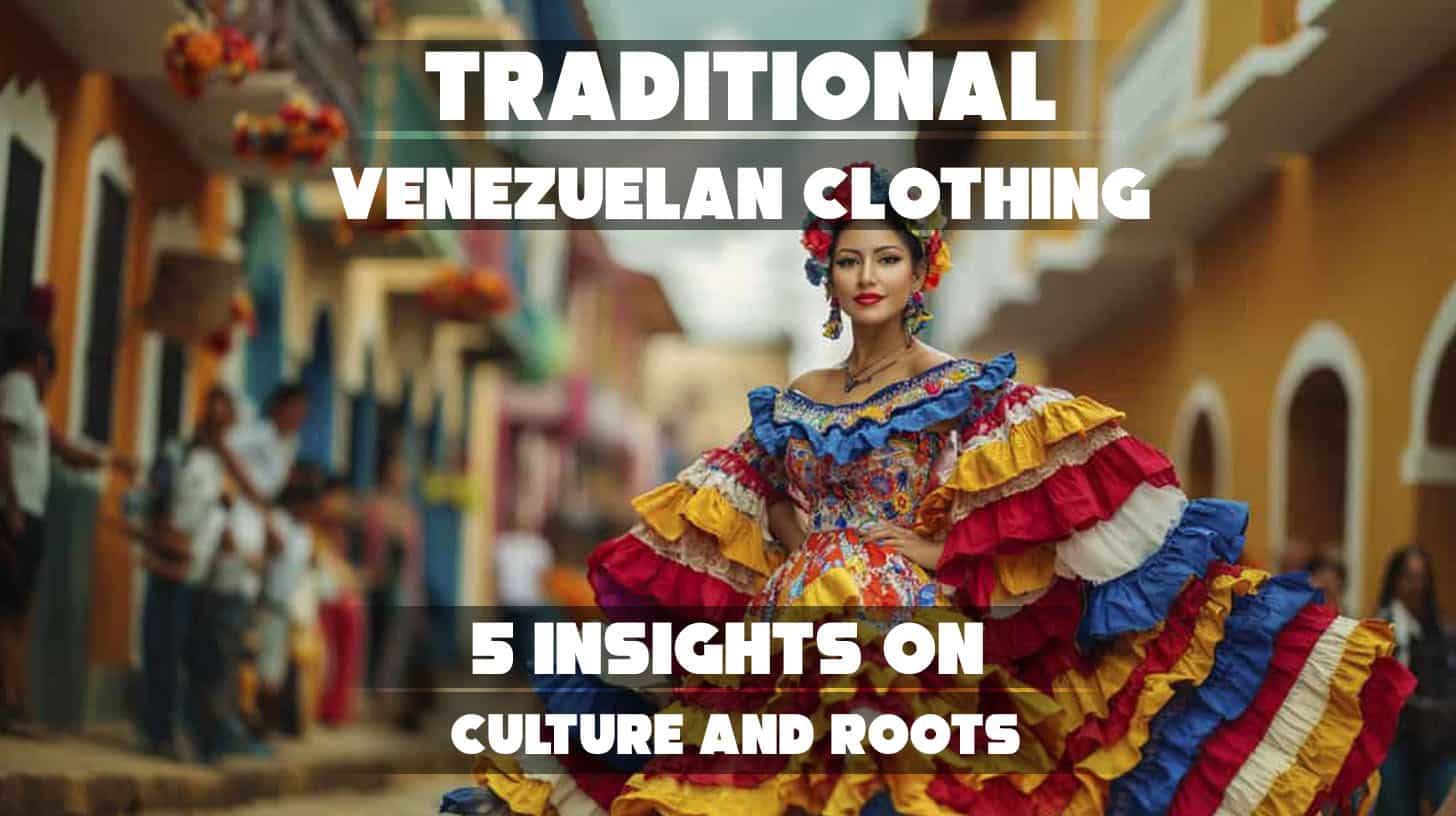
Women’s traditional clothing in Venezuela beautifully captures the warmth and vibrancy of the country’s culture. These outfits are known for their bright colours, flowing fabrics, and floral patterns that instantly reflect Venezuela’s tropical spirit.
Many traditional dresses feature wide ruffles along the neckline and are worn off one shoulder—or sometimes both—creating an elegant yet festive look.
Long decorative skirts, especially the iconic pollera, are common. These skirts are often layered, full, and embellished with embroidery or lace. They are paired with a lightweight blusa, perfect for the tropical climate, and often decorated with delicate stitching to add a touch of charm. It’s also very common for women to wear fresh flowers in their hair, adding to the natural beauty of the outfit.
These garments are usually worn during holidays, festivals, weddings, and other cultural celebrations, where they showcase the blend of Spanish and Caribbean influences that shaped Venezuelan fashion. In cooler regions, a simple shawl or wrap might be added for warmth. Altogether, these traditional outfits stand as proud symbols of Venezuela’s heritage, artistry, and joyful identity.
Men’s Traditional Clothing

The traditional male costume of Venezuela is the liqui-liqui, a formal suit that has become a national symbol. Typically made from lightweight fabrics like linen, cotton, or gabardine, it includes a matching jacket and trousers in shades of white, beige, cream, or tan—perfect for Venezuela’s warm climate.
The jacket features a distinctive high Nehru-style collar fastened with a small chain link called the junta, which adds both elegance and cultural character. For more festive occasions, men often complete the look with a llanero hat and alpargatas, the classic open-toed sandals made from jute rope.
Outside of formal celebrations, many Venezuelan men wear guayaberas, comfortable, lightweight shirts with two or four pockets and delicate embroidery, paired with slacks or jeans for everyday life.
Another traditional option, especially in rural areas, is the campesino outfit: white trousers, a white shirt, and a red triangular scarf tied at the neck. Even as jeans have become more common, alpargatas remain an important part of the look.
Together, these garments reflect Venezuela’s blend of practicality, tradition, and cultural pride, whether worn at national festivities, weddings, or community celebrations.
3. Notable Vintage Outfits
Traje de Gala Llanero

The Traje de Gala Llanero is one of the most iconic outfits from Venezuela’s Llanos region, worn proudly by men during celebrations and cultural events. The ensemble typically includes a crisp white shirt, black trousers, and the well-known llanero hat, which is a starched cowboy-style hat that holds deep cultural meaning. A bright red sash or belt is often tied around the waist to complete the traditional look.
Men also wear a ruana or poncho, usually made from wool and sometimes decorated with detailed woven patterns. This attire represents far more than clothing. It is a symbol of regional pride and history.
A Venezuelan friend once shared how wearing the Traje de Gala Llanero during a local festival made him feel closely connected to the generations before him. That same pride continues today, keeping the traditions of the Llanos alive.
See Also Holiday Traditions in Venezuela
Liqui-Liqui

The liqui-liqui is one of Venezuela’s most recognized traditional outfits for men. It features a long, knee-length jacket with a high collar, usually made from light fabrics such as linen or cotton, paired with matching trousers and a simple white shirt. A small chain link, known as the junta, fastens the collar and gives the garment its distinctive look.
This style has been highlighted in cultural studies like Traditional Clothing in Venezuela: A Rich Cultural Legacy by Outfiten, which describes the liqui-liqui as a symbol of national identity and formal elegance.
The outfit is often completed with a black or brown hat, and it is typically worn at weddings, official ceremonies, and cultural celebrations. Growing up, I always noticed how proudly people wore it during festivals, which made the liqui-liqui feel like more than clothing – it felt like a connection to Venezuelan heritage.
See Also Traditional Sicilian Clothing
Flamenco-Inspired Dresses

Flamenco-inspired dresses have become a beloved part of Venezuelan festive fashion, especially during celebrations, parades, and cultural events. These dresses stand out with their bright colors, flowing layers, and ruffled edges that move beautifully when women dance.
Although flamenco styles originally come from Spain, Venezuela has shaped them into something of its own. Over time, local seamstresses began adding tropical touches like vibrant floral prints, lighter fabrics suited for the heat, and bolder color combinations that match the energetic spirit of Venezuelan music and dance.
Today, these dresses aren’t just worn for performance, they’ve become a joyful symbol of celebration, capturing the mix of Spanish influence and Venezuelan flair that defines so much of the country’s traditional clothing.
Guajiro Dresses

Guajiro dresses, worn mainly by women in the Guajira region along the Venezuela–Colombia border, carry a strong sense of cultural pride. Made from light cotton to handle the heat, these dresses are decorated with bold, colorful embroidery inspired by traditional Wayuu designs.
Each pattern has meaning, often representing nature, family, or community stories passed down through generations. You’ll often see these dresses during festivals and regional celebrations, where they serve as a vibrant reminder of the Guajira region’s heritage.
A related style you’ll find across Venezuela is the clothing worn for the Joropo, the country’s national dance. Women typically wear wide, flowing skirts with bright prints that swirl beautifully as they move, while men dress in simple, elegant outfits that allow for quick footwork. Together, these traditional garments bring Venezuela’s music, dance, and regional identity to life
4. Folk Costumes in Different Regions
Llanos Region (Plains)

The Llanos region of Venezuela, famous for its vast open plains and cattle-ranching traditions, has its own unmistakable style of dress. Men often wear the classic llanero outfit, complete with a wide-brimmed hat for the harsh sun, a simple cotton shirt, and snug trousers paired with tall boots for riding across the grasslands. A poncho or ruana is added on cooler mornings, making the outfit both practical and tied to the land.
Women in the Llanos typically choose long, flowing skirts and blouses trimmed with soft ruffles, often topped with a straw hat decorated with fresh or fabric flowers. These outfits manage to feel both functional and festive, perfectly capturing the rhythm of life in the plains where tradition, climate, and daily ranch work blend into one distinct cultural identity.
Andean Region

The Andean region, in western Venezuela, is celebrated for its vibrant and colorful folk costumes that reflect centuries of cultural heritage. Men traditionally wear woolen ponchos, sturdy leather sandals, and warm hats suited to the cooler mountain climate. Women often don long, full skirts paired with embroidered blouses and shawls, bringing a lively burst of color to the streets and festivals.
Many elements of these outfits trace back to pre-colonial and indigenous traditions. Tribal women’s attire, including short skirts, beaded accessories, and cropped tops, influenced later regional styles, while tribal men’s varied campesino clothing left its mark on the design of Andean male costumes. Together, these garments celebrate both the natural landscape and the region’s rich indigenous history.
Guajira Region (Wayuu People)

The Guajira region, located in the far north of Venezuela, is home to the Wayuu people, who have their own unique style of traditional clothing. Men and women in this region wear brightly colored clothing made of cotton and wool. The women wear long dresses with intricate embroidery, while the men wear loose-fitting pants and shirts.
The Wayuu people are known for their beautiful woven bags, which are often used as a symbol of their cultural identity.

5. Pattern of Venezuelan Attire
The patterns of Venezuelan attire are as lively and diverse as the country itself, reflecting its rich cultural heritage and blending indigenous, African, and Spanish influences. Women’s polleras are long, flowing skirts often adorned with bold floral designs, vibrant ruffles along the neckline or skirt, and bright, contrasting colors that capture the tropical climate and festive spirit.
Accessories like shawls, scarves, and flowers in the hair add extra flair and regional identity.
Men’s traditional liqui-liquis feature subtle embroidery along the high Nehru-style collar, cuffs, and jacket seams, paired with matching trousers and occasionally a llanero hat or alpargatas sandals. In rural areas, alternative campesino attire includes white trousers, shirts, and red scarves, with jeans replacing traditional pants in modern settings.
These intricate patterns and designs are not just decorative—they celebrate heritage, cultural pride, and identity. They remain central to festivals, weddings, and cultural events, showcasing Venezuela’s enduring national traditions.
See Also Traditional Danish Clothing
Traditional Venezuelan Clothing: A Recap
Traditional Venezuelan clothing is more than just attire; it is a vibrant expression of the country’s rich cultural tapestry, weaving together indigenous, African, and Spanish influences.
Women’s polleras, with their flowing skirts, bright colors, and intricate embroidery, and men’s formal liqui-liquis, with their distinctive collars and elegant tailoring, embody centuries of tradition and craftsmanship. These garments are proudly worn during festivals, weddings, and national celebrations, serving as a living reminder of Venezuela’s heritage and identity.
I remember attending a local festival with a Venezuelan friend and being mesmerized by the lively polleras and the rhythm of the music. Even today, these traditional clothes continue to inspire pride and connection among Venezuelans.