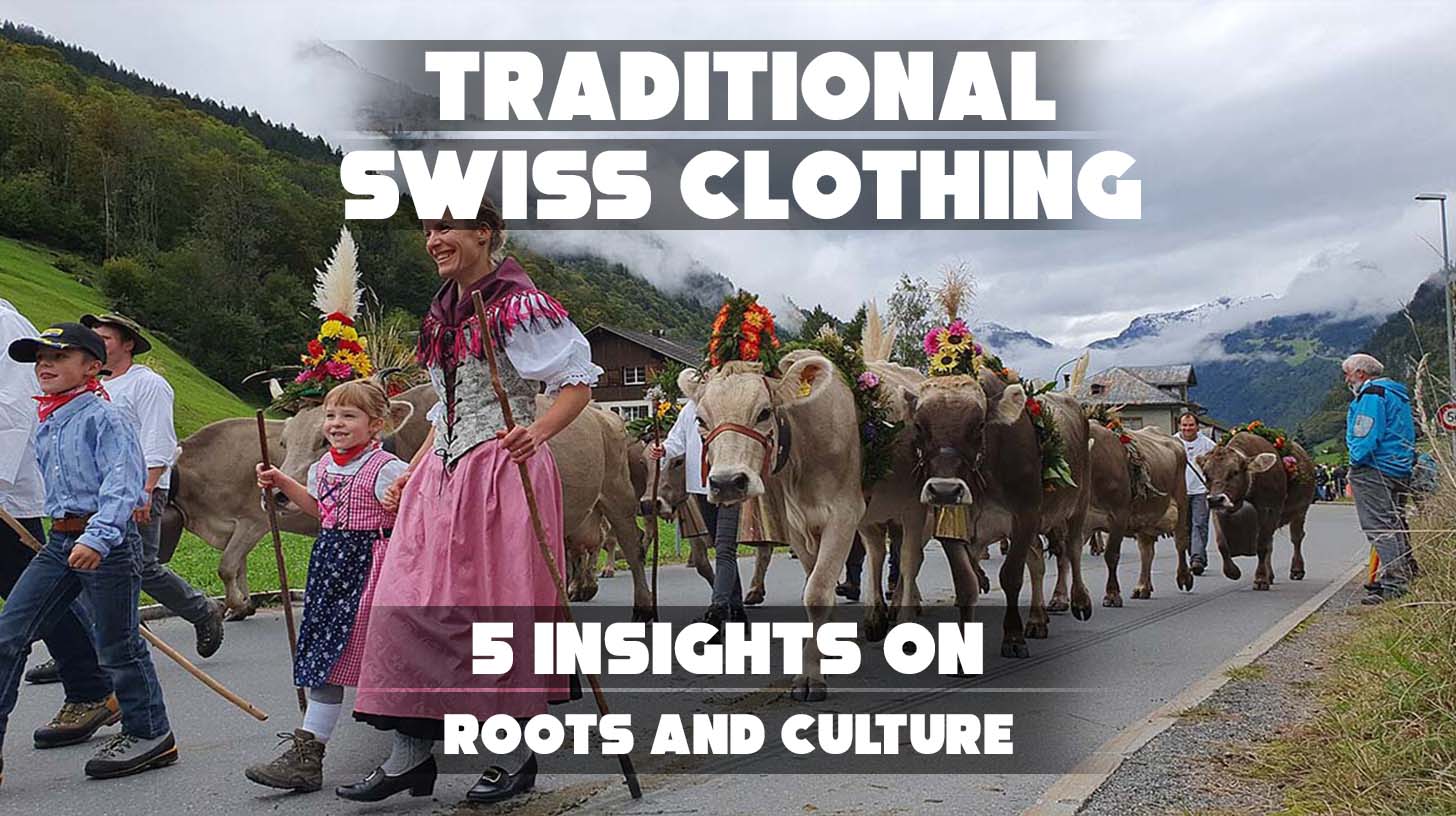

Curious about the quiet elegance and deep meaning behind traditional Swiss clothing? You’re in the right place. Switzerland’s traditional attire is more than just historic dress, it reflects alpine life, regional identity, and centuries of craftsmanship shaped by nature, climate, and community.
While exploring Swiss traditions, what stood out to me was how practical and symbolic these garments are at the same time.
Each Swiss region has its own style, influenced by geography and local customs. These differences make Swiss traditional clothing incredibly diverse, yet unmistakably Swiss in character.
In this article, we’ll explore:
- The origins of traditional Swiss clothing
- Key garments worn by men and women
- Regional variations across Switzerland
- Why these outfits are still worn and valued today
Let’s step into the world of traditional Swiss clothing and uncover the stories, symbols, and traditions woven into these timeless garments.
1. History of Traditional Swiss Clothing

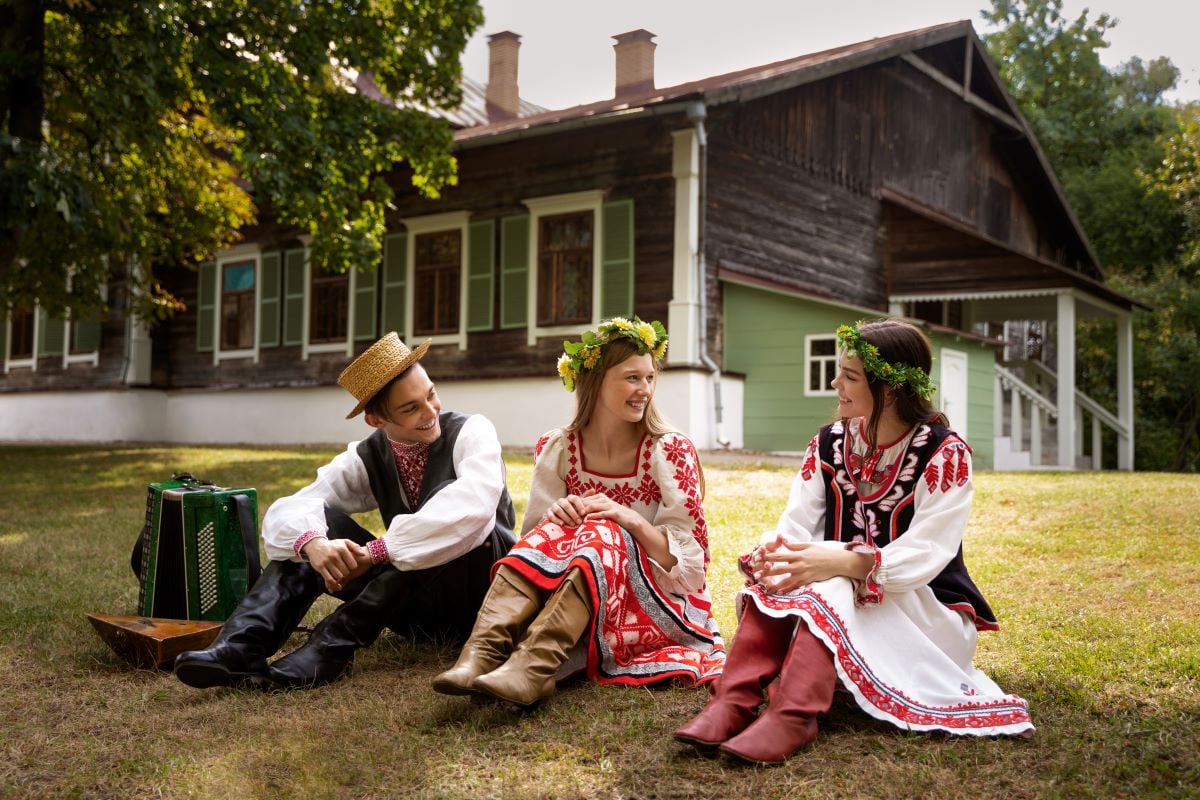
The history of traditional Swiss clothing is closely tied to Switzerland’s geography, climate, and rural way of life. For centuries, people across Swiss cantons developed practical garments suited to alpine terrain, cold winters, and agricultural work.
Clothing was made from locally available materials such as wool, linen, and leather, designed for durability and warmth rather than fashion. Over time, regional identities became stronger, and each canton developed its own distinctive styles, colors, and embroidery patterns.
During the 18th and 19th centuries, these outfits began to symbolize cultural pride and local heritage, especially during festivals and public celebrations. Although daily wear gradually modernized, traditional Swiss clothing remained preserved through folklore, national events, and ceremonial use, becoming a lasting expression of Swiss identity and craftsmanship in Switzerland.
According to “Swiss traditional dress – a patchwork of Switzerland’s history,” the preservation of Swiss traditional clothing was largely driven by 19th-century cultural movements. Organizations and costume associations were formed to document, standardize, and revive regional outfits, ensuring they survived modernization and industrialization.
2. Swiss National Costume
Swiss National Costume for Women
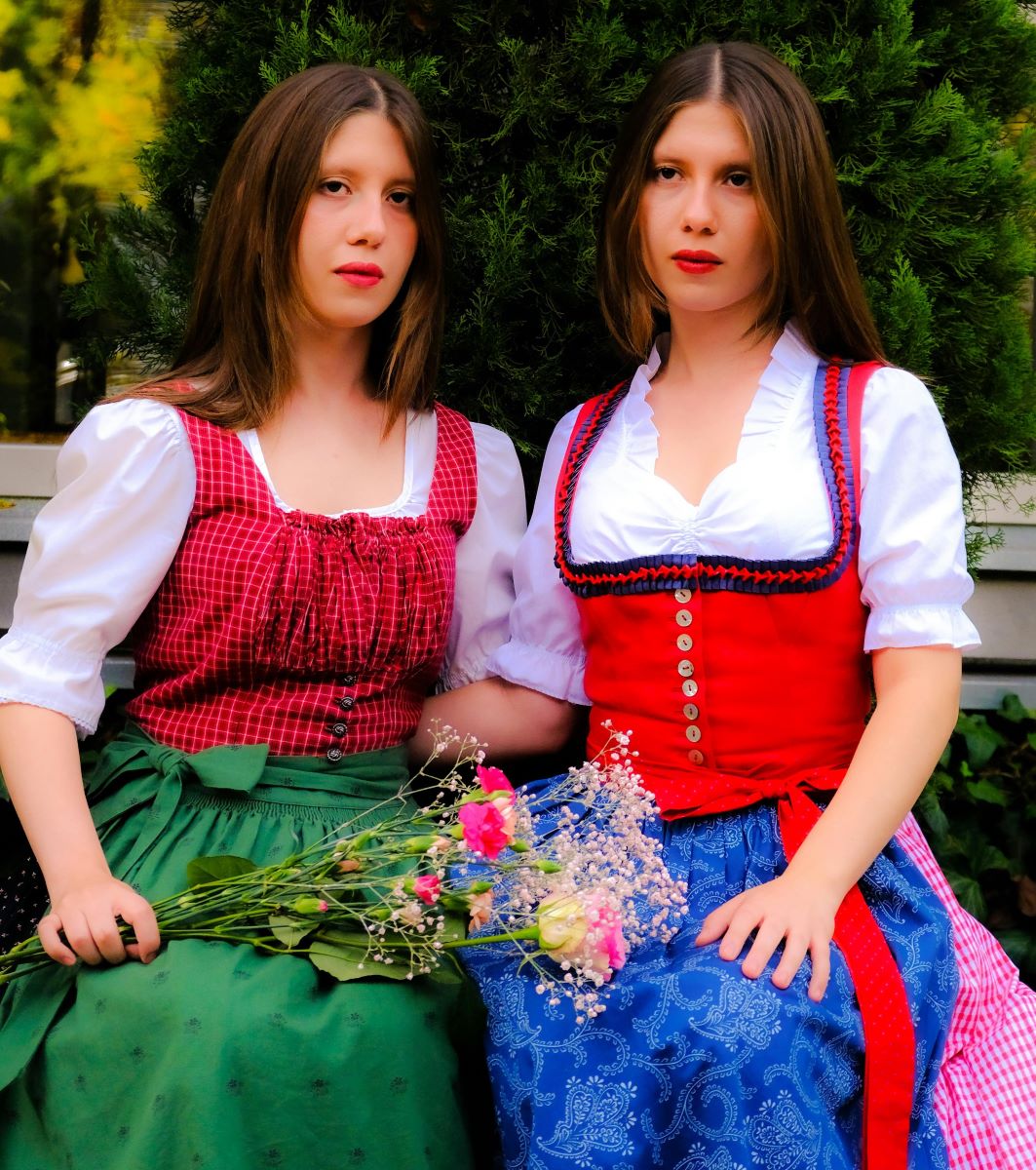
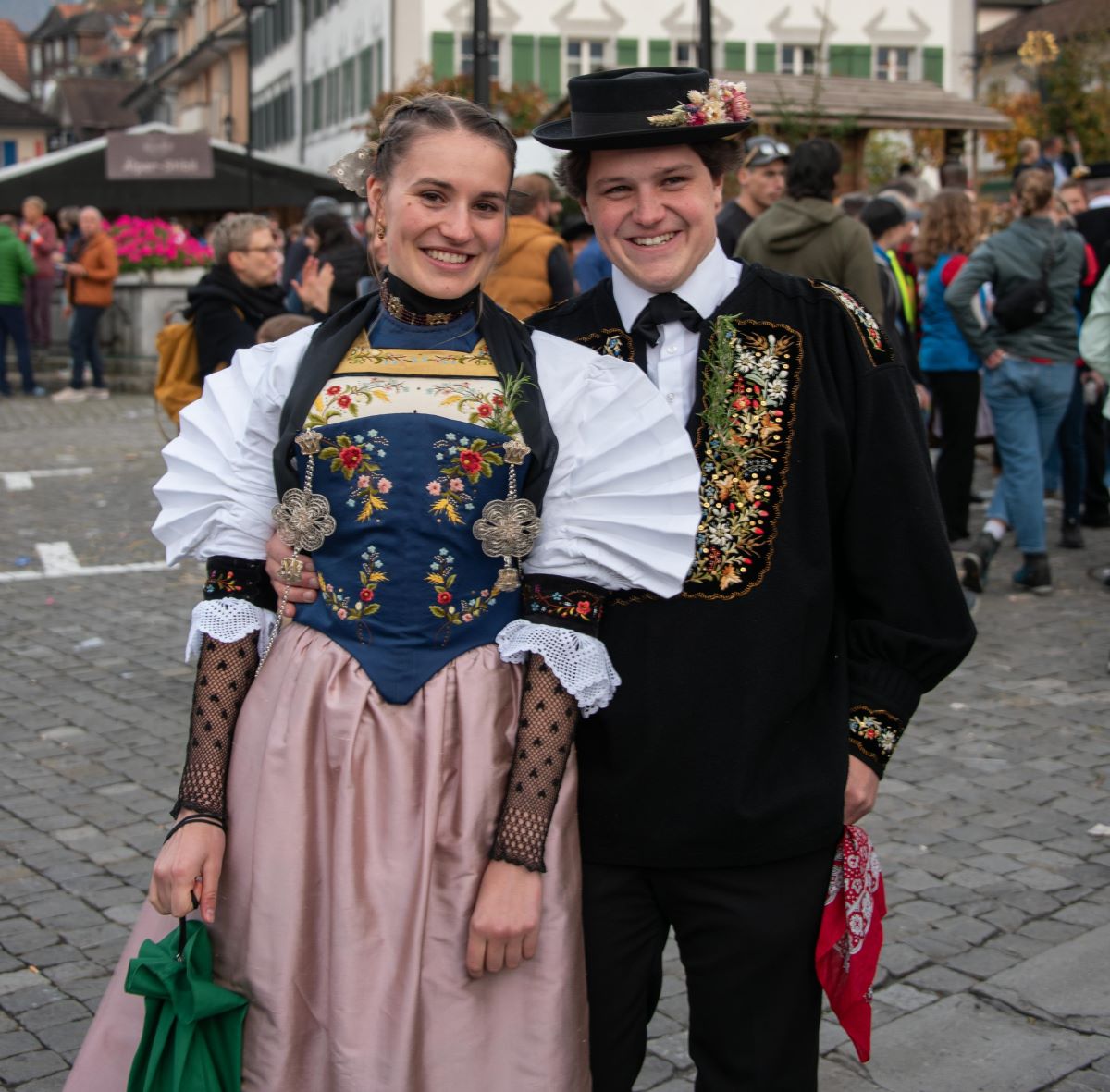
Traditional Swiss women’s costumes vary by region but share essential elements rooted in history and craftsmanship. Here are the key garments and accessories that together form the classic Swiss fashion:
- Blouse (Bluse / Chemise): A white linen or cotton undergarment forming the base of the costume, symbolizing modesty and tradition.
- Bodice (Mieder or Leibchen): A fitted, often embroidered bodice worn over the blouse, defining the waist and reflecting regional identity.
- Skirt (Rock): A long, full skirt usually made of wool, designed for warmth, durability, and everyday alpine life.
- Apron (Schürze): A decorative and practical outer layer worn over the skirt, sometimes indicating marital status or festive occasions.
- Waist Ribbon or Sash (Band / Schärpe): A colored ribbon tied at the waist to secure the apron and add contrast to the outfit.
- Headwear (Haube, Kappe, or Kopftuch): Traditional lace caps, bonnets, or scarves varying by canton and typically worn on formal occasions.
- Jewelry (Trachtenschmuck): Traditional silver or gold jewelry, often including crosses or brooches, reflecting religious and cultural values.
- Stockings (Strümpfe): White or neutral wool or cotton stockings worn for warmth and modesty, especially in mountainous regions.
- Shoes (Trachtenschuhe): Low-heeled or buckled leather shoes designed for comfort and practical daily wear.
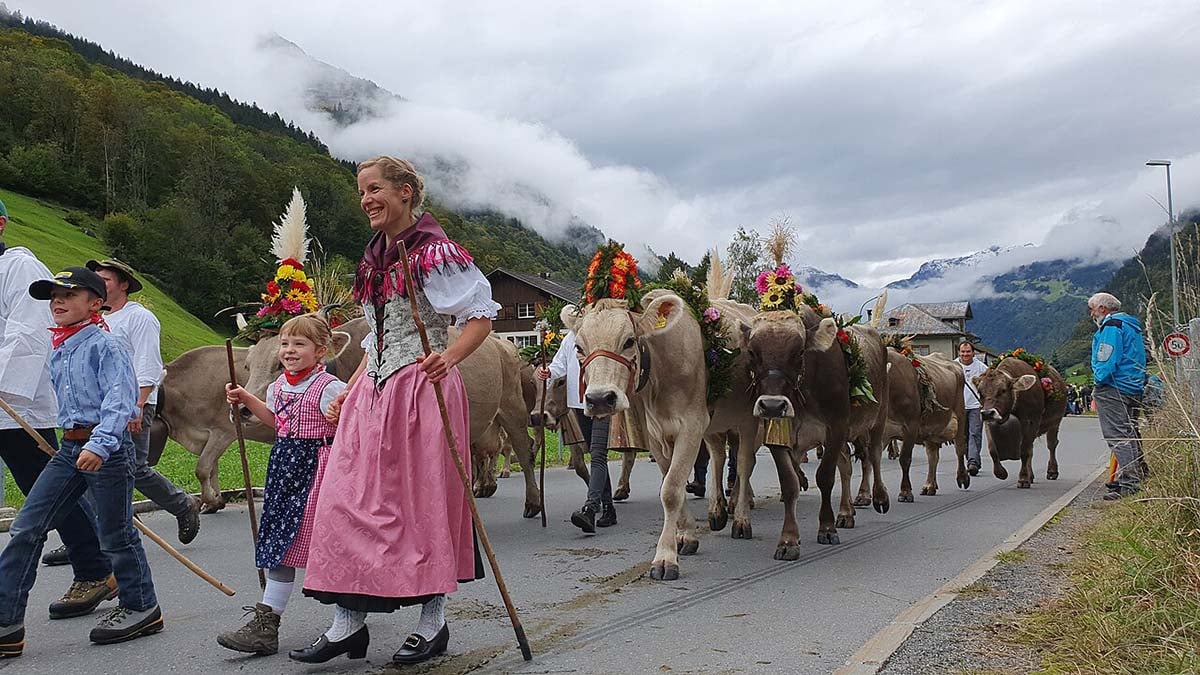
Traditional Swiss wedding dress reflects regional heritage and symbolism. A Swiss bride typically wears a white blouse, embroidered bodice (Mieder), long skirt, decorative apron, sash, lace headwear (Haube), silver jewelry, stockings, and traditional black shoes, each element representing purity, craftsmanship, and cultural identity in Switzerland.
See Also Swiss Folk Art
Swiss National Costume for Men

Swiss traditional clothing for male reflect rural life, alpine practicality, and regional identity. While styles differ across cantons, here are the key garments and accessories that form the classic traditional Swiss outfit.
- Shirt (Hemd): A white or light-colored linen or cotton shirt worn as the base layer, designed for comfort and breathability.
- Vest (Gilet or Weste): A fitted vest often decorated with embroidery or metal buttons, adding structure and regional character.
- Jacket (Juppe or Jacke): A short or mid-length jacket worn for warmth and formality, commonly seen during festivals and ceremonies.
- Trousers (Hosen): Knee-length or full-length trousers made from wool or sturdy fabric, suited for alpine work and daily wear.
- Suspenders (Hosenträger): Traditional braces used to hold trousers in place, combining function with classic rural style.
- Belt or Waistband (Gürtel): A leather or fabric belt, sometimes decorated, used to secure trousers and carry small tools.
- Hat (Hut or Trachtenhut): Felt or wool hats, often black, worn as a symbol of regional identity and tradition.
- Stockings (Strümpfe): Wool or cotton knee-high socks worn for warmth and practicality in mountainous regions.
- Shoes (Trachtenschuhe): Sturdy leather shoes or boots designed for durability, walking, and everyday rural life.
3. Iconic Folk Attire in Switzerland
Schwarze Tracht (Black Dress)
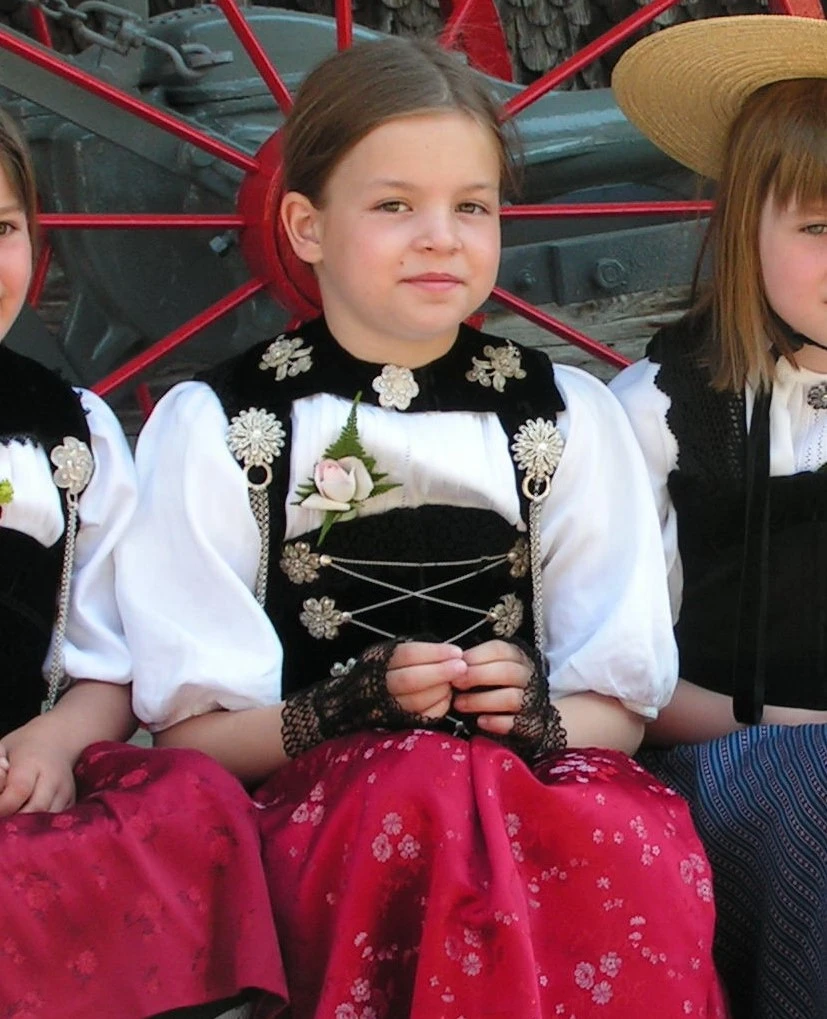
Schwarze Tracht is one of Switzerland’s most famous traditional outfits for women. It has a long, wide cotton skirt and a fitted vest, giving it a neat, elegant shape. The outfit feels both strong and graceful.
The skirt and blouse are often different colors, adding brightness. Women wear white undergarments, with socks or tight tops under the skirt for comfort. Black slip-on shoes complete the look.
Berner Tracht (Bernese Attire)
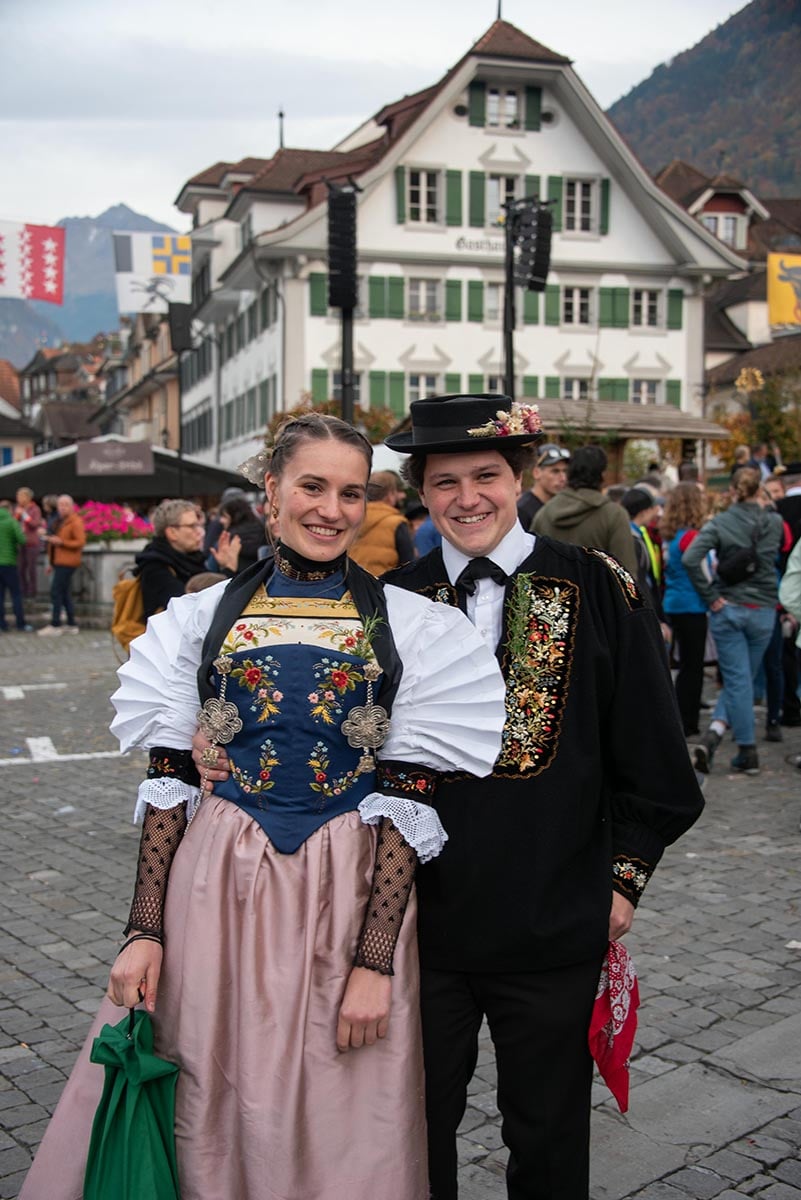
Berner Tracht, also called Bernese Attire, is the traditional folk clothing of the Canton of Bern in Switzerland. These clothes represent regional identity, rural heritage, and social traditions that date back several centuries.
A key component of this attire is the Gugelhut, a traditional headgear resembling a bonnet, typically crafted from black fabric and adorned with ribbons or flowers.
This distinctive headpiece adds a touch of elegance and tradition to the ensemble. Accompanying the Gugelhut is the Bluse (Blouse), which can be either white or colored and often features intricate lacework or embroidery. Paired with a vest or bodice, the Bluse completes the Bernese attire with a blend of grace and cultural heritage.
Lederhosen
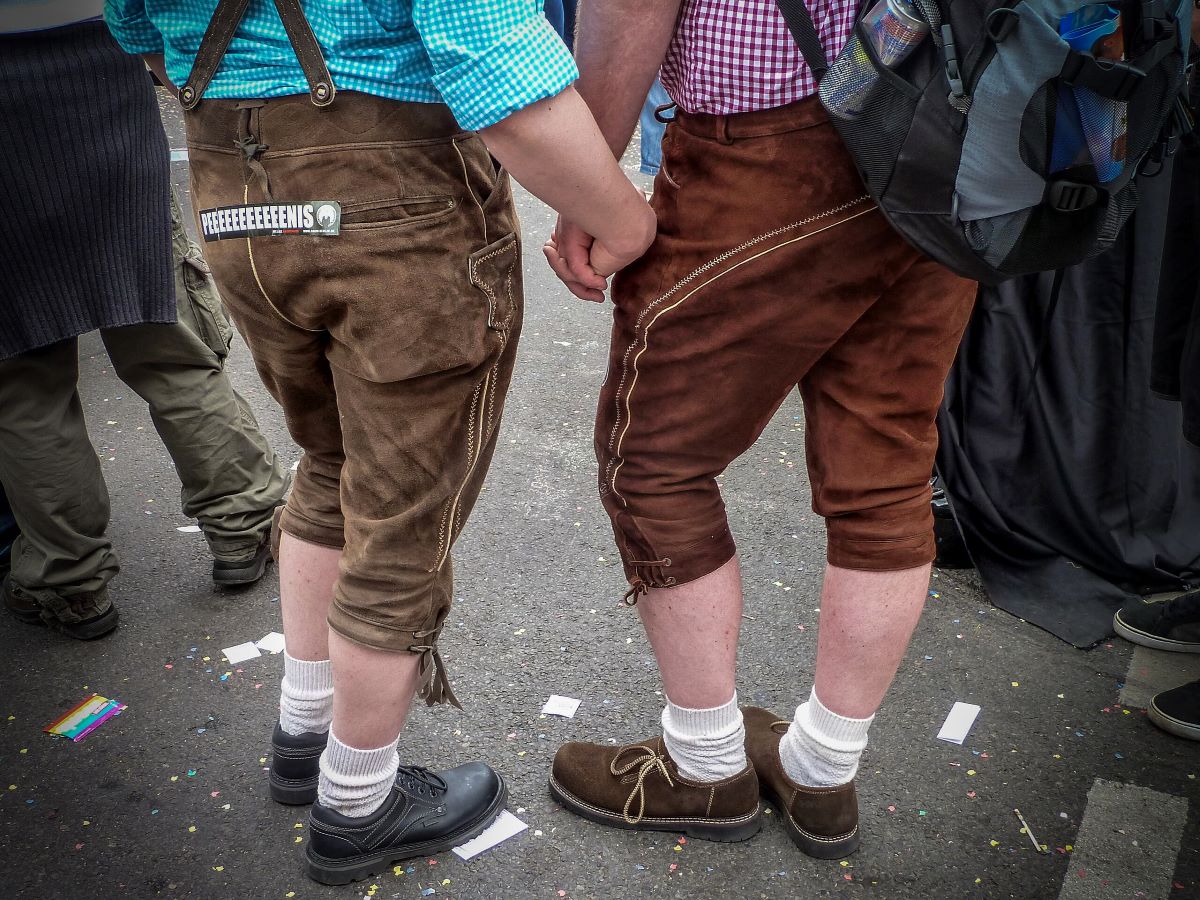
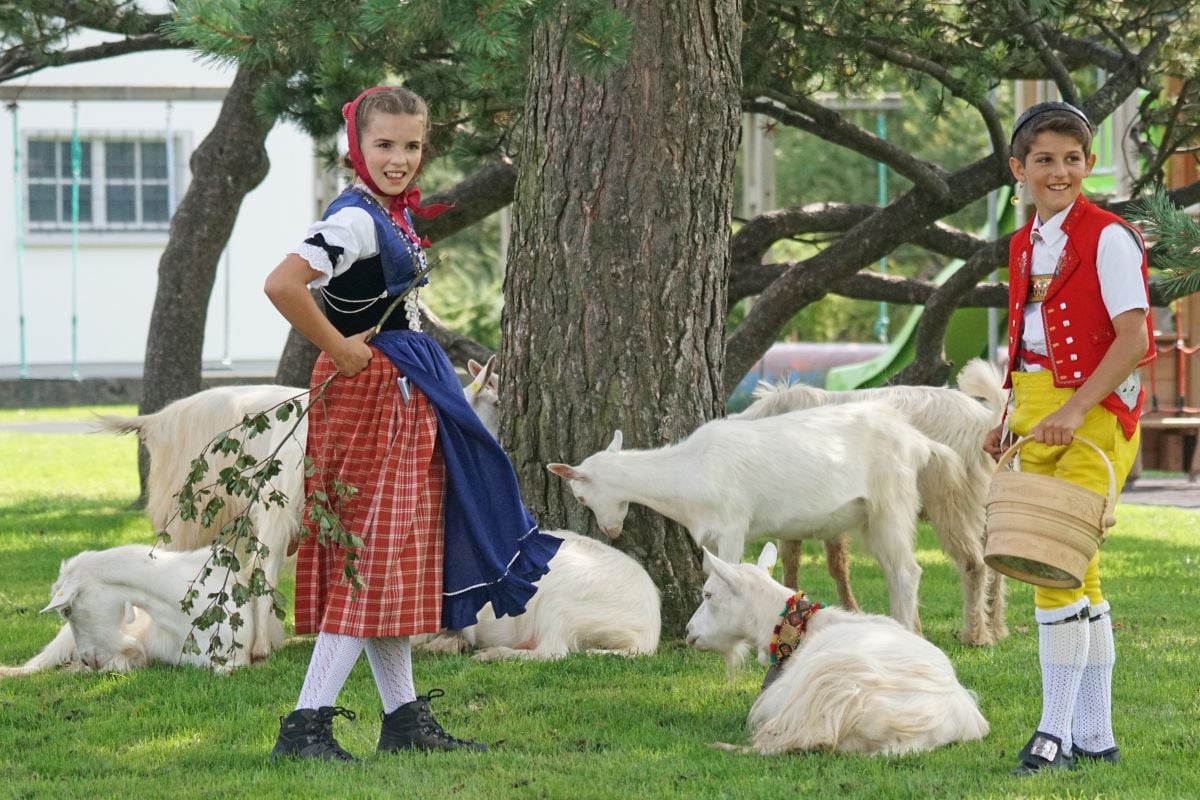
In Swiss tradition, particularly among men, Lederhosen hold a significant place in attire. These leather shorts or trousers, often in shades of brown, are distinguished by intricate stitching and buttoned closures, exuding both durability and style. While women wear long gowns, Swiss men prefer knee-length jeans that we call Lederhosen.
These pants are ideal for work or hiking in the mountains and are held up by suspenders. Typically, men wear the same shoes as women and have caps that change according to the seasons. Often, males wear colored vests with ornamental buttons.
Completing the attire are the Haferlschuh (Brogue Shoes), sturdy leather footwear with laces or buckles, commonly paired with woolen socks for comfort and practicality.
At a local Swiss festival, I noticed a young boy wearing Lederhosen, confidently walking among musicians and dancers. His knee-length leather trousers and suspenders blended naturally into the celebration, showing how tradition is still lived.
Appenzeller Tracht
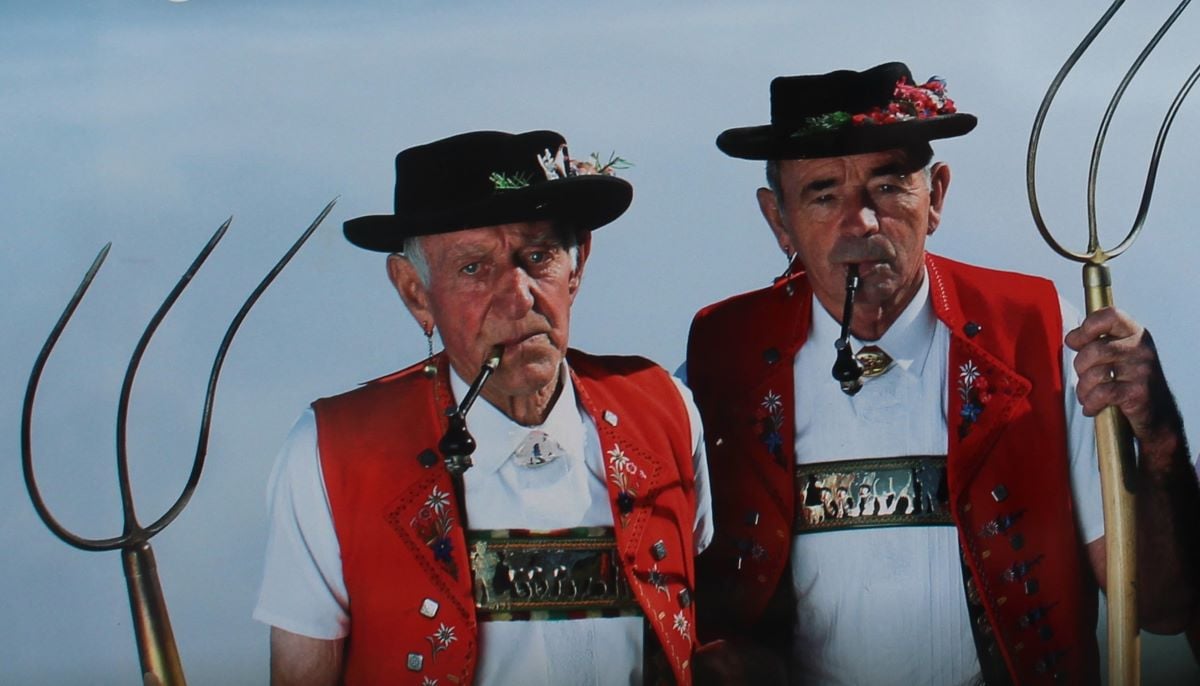
In Swiss tradition, particularly within the Appenzell region, the Appenzeller Tracht for men is celebrated for its distinctive elements. The Strickjacke, a knitted jacket adorned with intricate patterns, is a hallmark of this attire. Worn over a shirt, the Strickjacke adds warmth and visual interest to the ensemble.
Accompanying the Strickjacke is the Gilet, a sleeveless garment worn atop the shirt. Often embellished with decorative buttons or embroidery, the Gilet enhances the overall aesthetic of the attire, adding a touch of elegance and individuality.
See Also Modern Swiss Clothing
Accessories
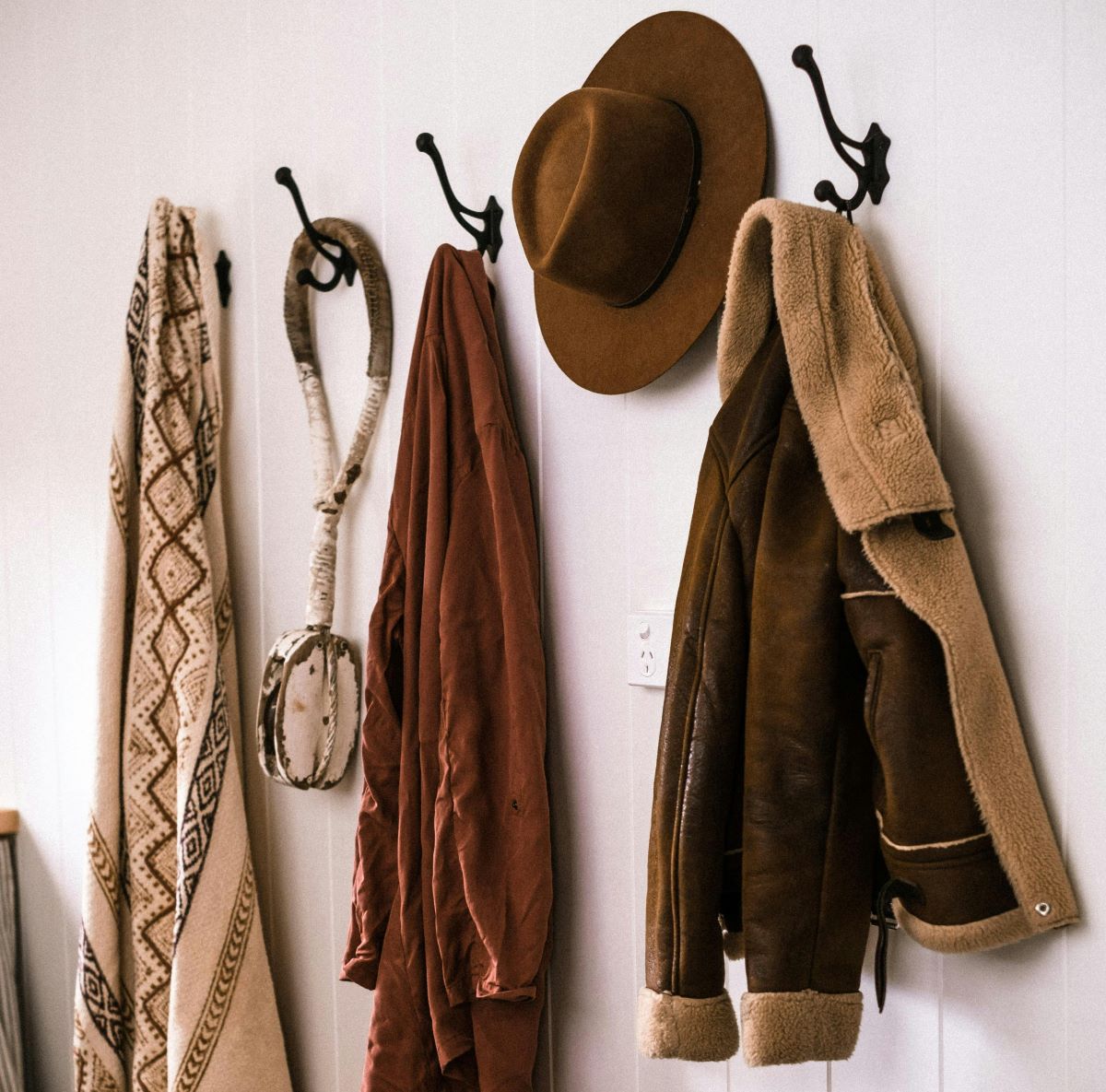
Accessories for Women:
- Sash (Schärpe): A colorful, woven sash worn around the waist, often embroidered with traditional patterns. It secures the outfit and symbolizes regional artistry and femininity.
- Apron Ribbon (Bandschleife): The decorative ribbon used to tie the apron, sometimes indicating marital status depending on its placement and style.
- Headwear (Haube, Kappe, or Kopftuch): Lace caps, embroidered bonnets, or silk scarves worn during formal occasions, varying by canton and often reflecting age or social status.
- Bollenhut: A traditional decorative hat most famously associated with nearby Alpine regions, featuring large woolen pom-poms. While not Swiss in origin, it sometimes appears in alpine cultural representations.
- Silver Jewelry (Trachtenschmuck): Includes necklaces, earrings, brooches, and pendants made from silver, often decorated with filigree work, floral motifs, or religious symbols.
- Brooch (Brosche): Used to fasten blouses or shawls, combining practicality with ornamental design.
- Necklace (Kette): Worn close to the neck or over the bodice, adding elegance and often featuring traditional charms or crosses.
Accessories for Men:
- Hat (Trachtenhut): A felt or wool hat worn as a symbol of regional identity and tradition, commonly seen during festivals and ceremonial events.
- Gamsbart (Chamois Beard Ornament): A distinctive decorative tuft made from chamois hair, attached to men’s hats. It represents alpine heritage, masculinity, and individuality.
- Sash or Belt (Gürtel): A leather or woven belt worn around the waist, sometimes decorated with metal details or embroidery, serving both functional and decorative purposes.
- Suspenders (Hosenträger): Traditional braces worn over the shoulders to support trousers, often featuring embroidery or regional patterns.
- Pocket Watch (Taschenuhr): A classic accessory worn with traditional attire, symbolizing craftsmanship and historical elegance.
4. Regional Swiss Traditional Clothing
Canton of Obwalden
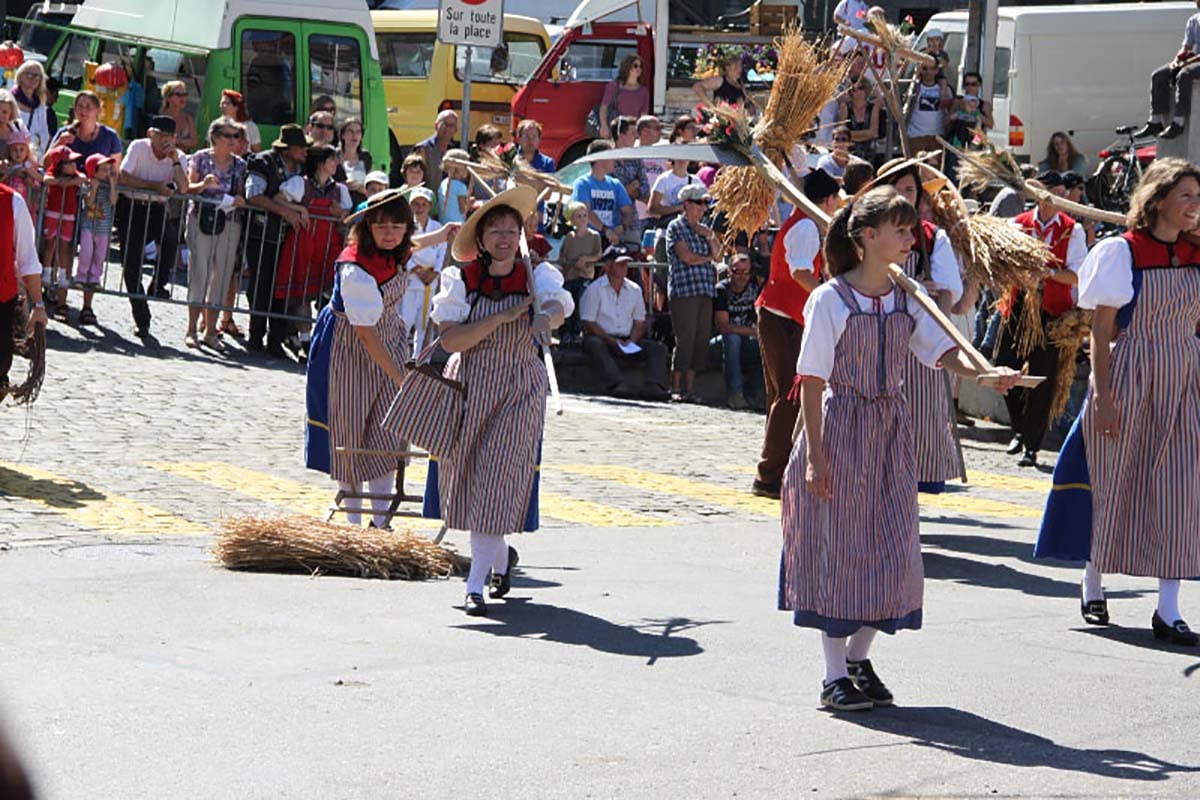
In Canton Obwalden, traditional attire reflects the region‘s vibrant culture. Women wear durable, colorful skirts with intricate patterns, often paired with aprons for both practicality and decoration. White ribbons in hair, adorned with delicate silver clips, add a touch of elegance.
Meanwhile, men in the Canton Obwalden don rugged attire suitable for work and outdoor activities in the mountainous terrain. Their traditional outfit often comprises knee-length trousers crafted from durable materials for warmth and protection.
Paired with long-sleeved shirts made of sturdy cotton or linen, these trousers are accessorized with suspenders and sturdy shoes or boots, ideal for navigating rocky terrain.
Canton of Unterwalden
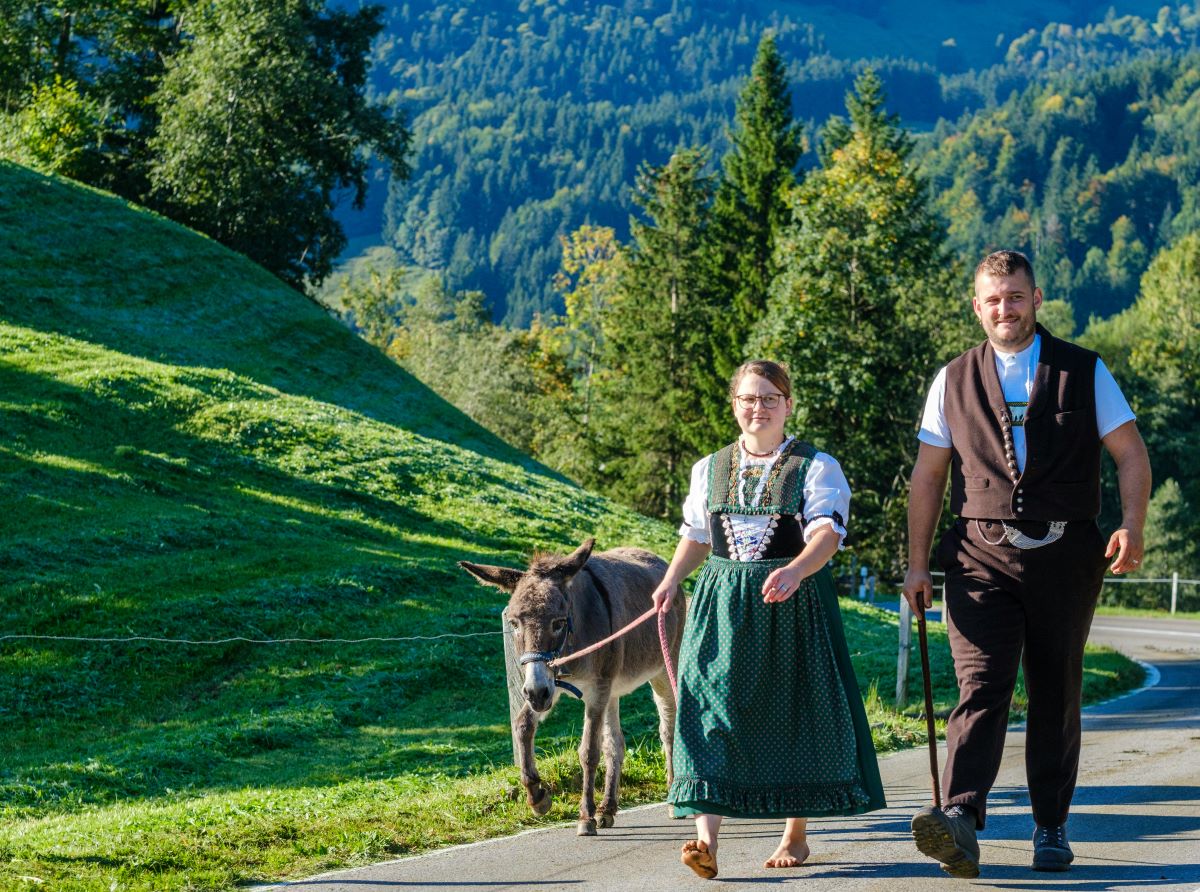
In Canton Unterwalden, attire reflects a deep connection to local heritage. Women usually wear darker skirts, often crafted from durable materials like alpaca or cotton, in adherence to regional tradition. These skirts may feature embroidery or intricate patterns, highlighting the skilled craftsmanship of the region.
Ornaments are crucial for the traditional look. In the region, distinctive ornaments like white ribbons in hair secured by delicate silver clips add elegance. Men prioritize practicality, opting for sturdy attire suitable for work and outdoor activities.
This often includes knee-length trousers paired with long-sleeved shirts crafted from robust cotton or linen fabrics. Suspenders hold up the trousers, while sturdy shoes or boots offer traction and protection in rugged terrain.
Canton of Bern

In the heart of Switzerland lies the Canton of Bern, where traditional attire, known as Tracht, is deeply woven into the fabric of local culture and heritage.
Women often don elegant dresses, typically crafted from high-quality fabrics like alpaca or silk and intricately detailed with delicate embroidery or lace accents. These outfits may feature traditional Swiss motifs, showcasing the rich artistic heritage of the area. Meanwhile, men opt for sturdy garments suitable for both work and outdoor pursuits.
This often includes knee-length trousers made of durable materials paired with long-sleeved shirts crafted from robust cotton or linen fabrics.
See Also Traditional French Clothing
Canton of Graubünden
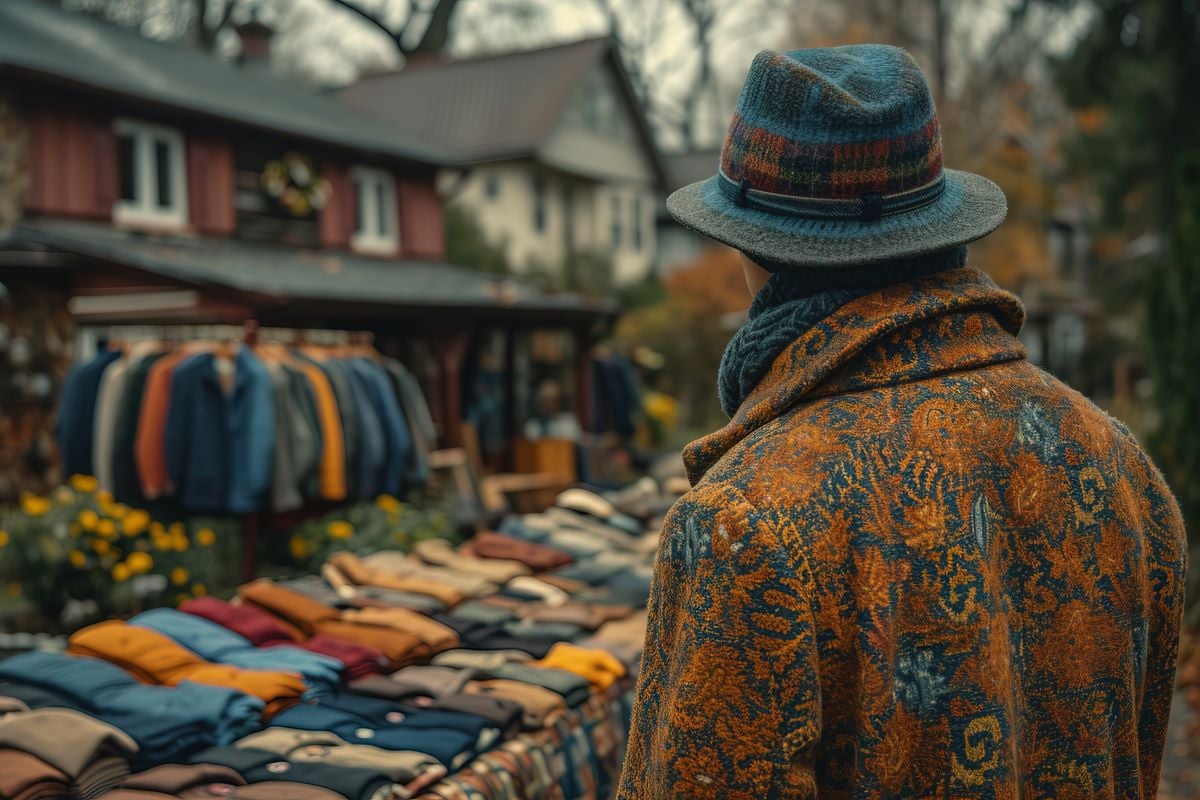
In the Canton of Graubünden, traditional Swiss clothing mirrors a stunning blend of Alpine and Italian influences. Women don dresses crafted from durable fabrics like wool or cotton, adorned with intricate embroidery and vibrant hues that echo the region‘s rich customs and breathtaking surroundings.
These outfits often feature traditional Alpine designs and patterns, showcasing the skilled craftsmanship of the local artisans. Meanwhile, men opt for robust attire tailored for the challenging mountain terrain, typically donning knee-length trousers made of sturdy materials such as wool or leather.
Paired with long-sleeved shirts crafted from durable cotton or linen fabrics, these outfits seamlessly integrate elements from both Swiss and Italian styles. Accessories like belts and hats may also bear motifs inspired by both Alpine and Italian traditions.
According to “6 Facts About Traditional Swiss Clothing”, Swiss costumes differ by canton, use durable natural fabrics, feature aprons as key elements, include knee-length trousers for men, favor practical black slip-on shoes, and evolved from everyday rural wear into ceremonial attire worn during festivals and celebrations.
5. Pattern of Swiss Attire
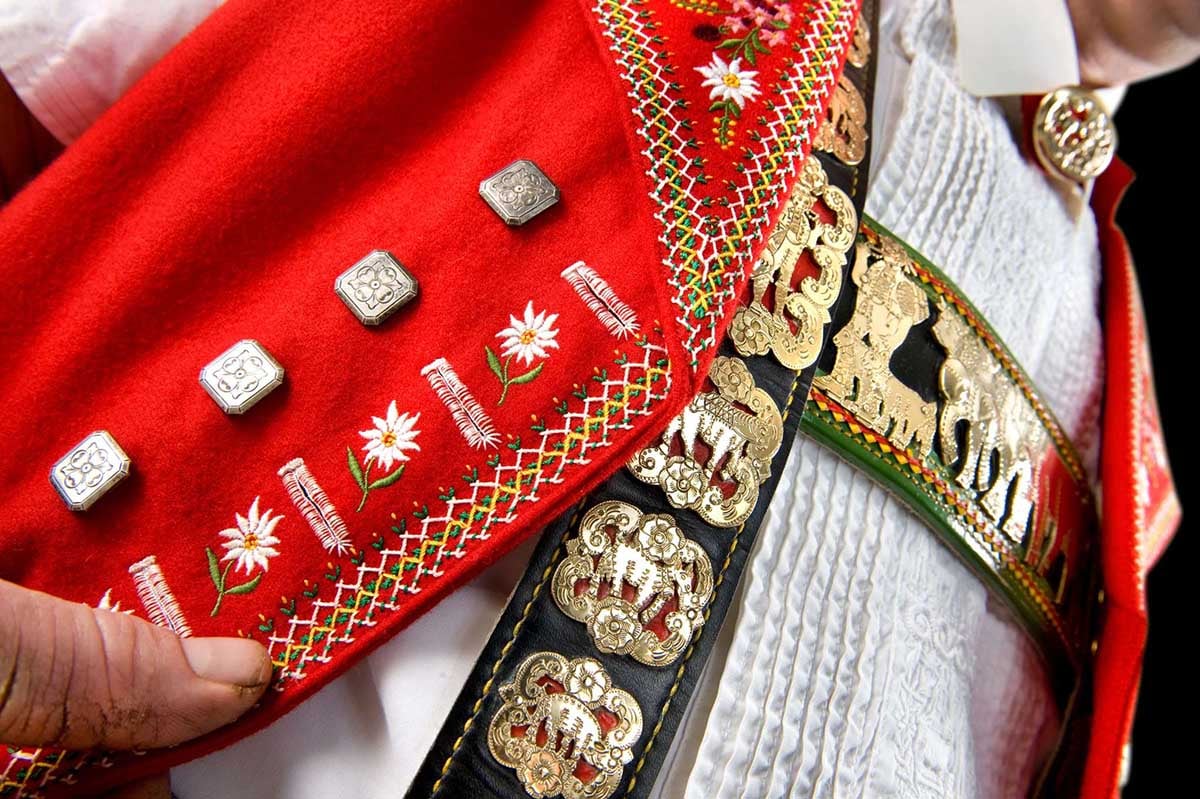
Traditional Swiss clothing intricately weaves together patterns and textures. These designs are meticulously crafted onto garments, creating visually striking textures reminiscent of the Swiss landscape.
Shapes and repeating motifs symbolize unity and harmony within Swiss society and Swiss culture, while the use of high-quality materials like wool and linen highlights Swiss artisanal skill.
Here are the most important patterns found in Swiss traditional clothing:
- Floral Embroidery: One of the most common patterns, inspired by alpine flowers such as edelweiss and gentian. It symbolizes nature, purity, and regional pride.
- Geometric Motifs: Repeating shapes like diamonds, lines, and crosses are used for balance and structure. These patterns often represent order, stability, and tradition.
- Regional Color Patterns: Each canton favors specific color combinations—dark skirts with bright aprons, contrasting bodices, or muted earth tones—helping identify local origin.
- Apron Patterns: Aprons may feature stripes, small floral prints, or woven designs. The style and tying method can sometimes indicate marital status or festive use.
- Bodice Embroidery Patterns: Dense, detailed embroidery on women’s bodices highlights craftsmanship and is often unique to a specific region or village.
- Symbolic Motifs: Hearts, stars, crosses, and vine-like forms appear frequently, reflecting religious beliefs, family values, and community life.
- Material-Based Patterns: Woven textures in wool or linen create subtle patterns through fabric structure rather than color, emphasizing durability and practicality.

Traditional Swiss Clothing: A Recap
Switzerland’s traditional attire, shaped by alpine life and regional diversity, reflects the enduring spirit of Swiss traditions and cultural identity. From carefully crafted Swiss costumes to the distinctive clothing style passed down through generations, each garment tells a story of heritage, function, and pride.
Details such as embroidered aprons, knee-length pants, and classic black slip-on shoes highlight how practicality and elegance coexist in traditional dress.
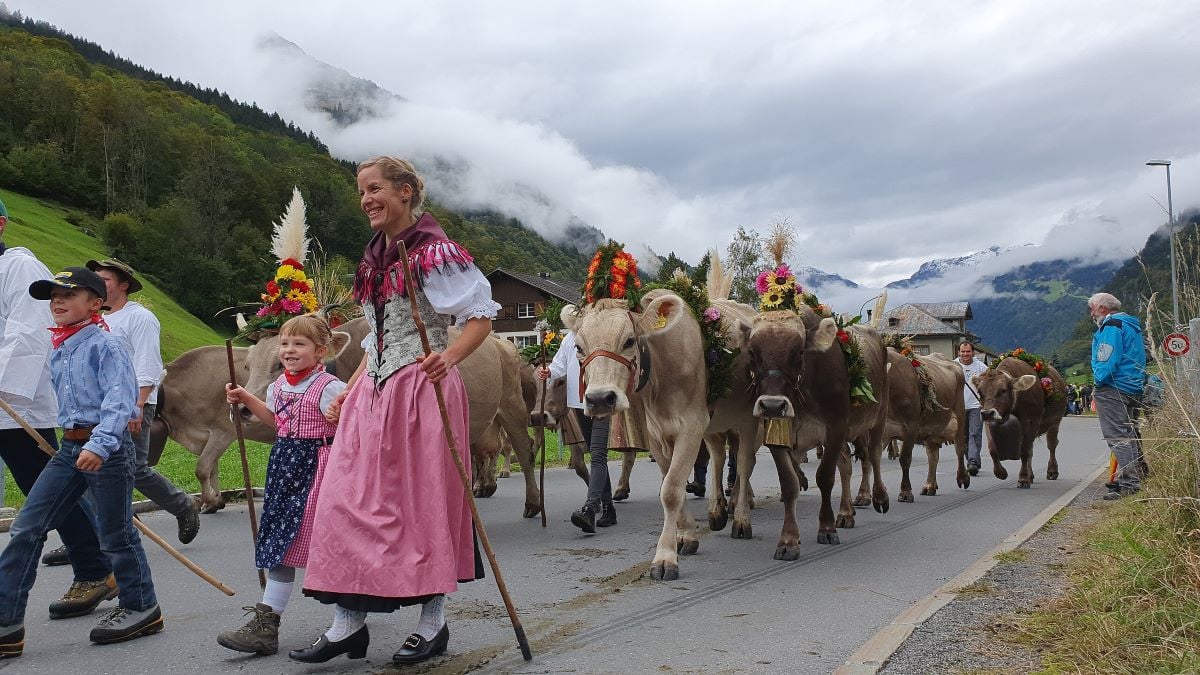
Witnessing people wear these outfits during a local festival brought this heritage to life, as families and musicians proudly displayed their traditional attire as part of everyday celebration.
Today, Swiss costumes remain a living symbol of cultural continuity, connecting past and present while honoring the values and traditions that continue to define Switzerland.