


Ever wondered how a simple greeting can instantly connect you with someone in a new language? You, as a language learner, want to sound natural and confident—but figuring out the right words can feel tricky.
That’s where we come in: with experience exploring 9 different ways to say hello in Dutch, We’ll guide you step by step.
Here’s what you’ll discover:
- Casual greetings for friends
- Polite farewells for formal settings
- Tips for casual chats and business meetings
By the end, you’ll feel confident using nine different ways to greet people naturally, just like I did when my first Dutch hello turned into an unforgettable conversation.


Main & Traditional Dutch Hellos
1. Hallo

Hallo is the everyday Dutch greeting equivalent to English “hello.” It’s used casually, on the street, in shops, on the phone, and also works as an exclamation of surprise. The word comes from older interjections (hallo/hullo, hollo) and French holà, with deeper Germanic roots (Old High German halâ) used for hailing; similar forms exist across Europe.
In the 19th century the spelling and greeting sense spread in print, and Thomas Edison’s promotion of “hello” for telephone answers helped fix its modern form. In Dutch pronunciation it’s relaxed ([‘hɑ.lo]) and often interchangeable with hoi or dag in everyday conversation.
A mini-study by Taalverhalen, titled “Hallo, hoi, hey! Informele begroetingen in Nederland en Vlaanderen”, shows that hallo remains the most common informal greeting in Dutch-speaking regions. Even with alternatives like hoi or hey, hallo is widely recognized and used, making it essential for anyone learning Dutch.
See Also Hello in Tagalog
2. Goedendag
“Goedendag” literally means “good day” in Dutch. It’s a polite and slightly formal way to greet someone, used in both casual and professional settings. Unlike hallo, which is informal, goedendag shows respect and friendliness, especially when meeting someone for the first time.
Historically, Dutch greetings like goedendag evolved from older expressions wishing someone well throughout the day. You might hear it in shops, offices, or even on the street when politeness is important. While less common among younger people today, it remains an essential part of Dutch culture and etiquette, reflecting warmth and courtesy.
Informal and Modern Hellos in Dutch
3. Hoi
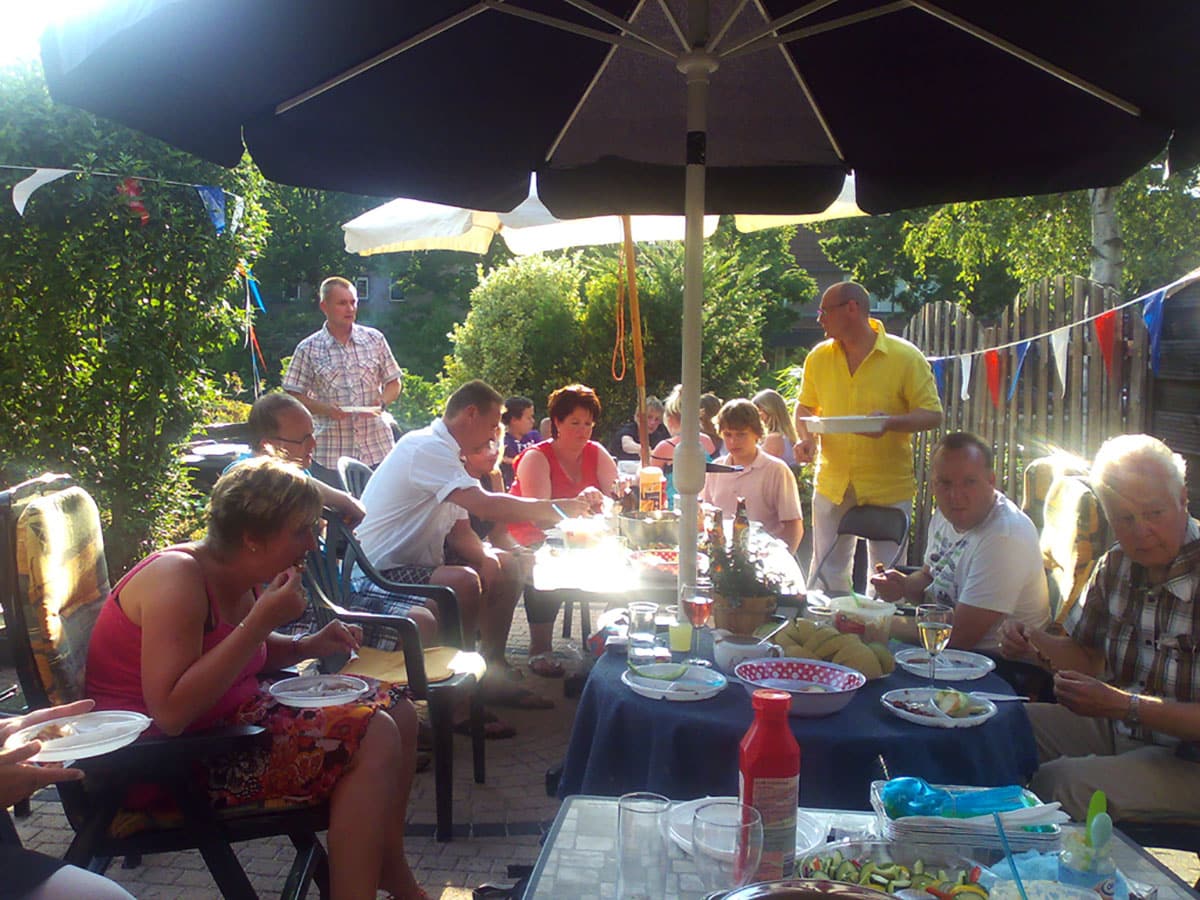
If you want to say hello in Dutch, one of the easiest and most casual ways is “Hoi.” This cheerful greeting is mostly used by younger Dutch speakers in informal social situations. The word “Hoi” has been around since the mid-20th century and quickly became a favorite in everyday conversation.
You can use it when greeting friends and following it up with “alles goed” (how are you / is everything good) to check in on someone’s je dag. When leaving, Dutch people often say “tot ziens” (goodbye / see you) instead of a formal farewell.
Personally, the first time I said Hoi and added alles goed to a group of Dutch friends, I felt instantly included—it’s casual, friendly, and really warms the atmosphere. Among friends, Hoi remains one of the simplest yet most genuine Dutch greetings.
4. Hey / Hé
In Dutch, “hey” or “hé” is the casual way to say hello in Dutch. It’s very similar to English and is widely used among friends, teenagers, and young adults in the Netherlands. The pronunciation is simple, just like “hey” in English, sometimes with a slight Dutch intonation.
People often follow it with “hoe gaat het?” (how’s it going?) to keep the conversation flowing. Historically, it became popular through informal speech and social interactions, rather than traditional greetings. The Dutch equivalent carries a relaxed, friendly vibe, reflecting the casual and open cultural nuances of everyday life in the Netherlands.
Personally, I love how effortless it makes greeting someone feel, like saying hello to a friend.
Formal & Polite Dutch Greetings
5. Goedemorgen
When learning Dutch, one of the first Dutch greetings you’ll encounter is “Goedemorgen”, which literally means good morning. Dutch people use it in formal ways, at work, schools, or when meeting someone politely in the morning.
It’s more than words—body language, like a smile or slight nod, often accompanies it, making it a warm, universal greeting. Saying Goedemorgen feels natural once you combine it with a cheerful hoe gaat het? to ask how someone is.
Its history comes from old Dutch, combining goed (good) and morgen (morning). Using it daily boosts your language skills and connects you to Dutch culture personally.
See Also Hello in Nihongo
6. Goedemiddag
Goedemiddag is a Dutch greeting that literally means “good afternoon.” It’s typically used from around noon up until early evening, approximately 12:00 to 18:00, according to common usage.
Linguistically, it’s a compound of goed (“good”) + middag (“midday/afternoon”). In the Algemeen Nederlands Woordenboek, it’s described as a polite or friendly greeting used at meetings or farewells in the afternoon. There’s also a more informal variant, “goeiemiddag,” which is commonly used in everyday speech.
Etymologically, the phrase reflects older Dutch grammar: historically, Dutch used case inflections, so “goeden middag” was more common, but over time it fused into “goedemiddag.”
Culturally, using goedemiddag signals respect and awareness of the time of day. In more formal or professional situations, like greeting someone at a shop, at work, or at a meeting, it’s very appropriate. In more casual settings among friends, people might instead use middag ( afternoon ) alone, though this is less common.
7. Goedenavond
“Goedenavond” is a Dutch greeting that literally means “good evening.” It’s used in more formal or polite settings during the evening, often after around 6 PM.
Historically, the “‑n” at the end of goedenavond comes from older grammatical case endings: in earlier forms of Dutch, adjectives declined depending on case, gender, and number. When the Dutch case system was largely simplified (especially in spoken language), fixed expressions like goedenavond retained their archaic “‑n” even though it’s no longer productive in everyday grammar.
In modern use, “goedenavond” is a respectful and standard way to greet someone in the evening.
In the book Dutch: A Linguistic History of Holland and Belgium, linguist Bruce Donaldson explains that the “‑n” in goedenavond derives from the now mostly obsolete strong declension system for adjectives in Dutch, preserved in fixed phrases even after grammatical cases faded.
Regional and Cultural Variants
8. Dag
In Dutch, “dag” literally means “day,” but it’s also commonly used to say both hello and goodbye. Historically, it comes from old Germanic roots, related to the English word day. Dutch people often say dag casually when meeting or parting, especially in informal settings.
It’s not only used in the Netherlands but also widely across Belgium, particularly in the Dutch-speaking region of Flanders. Personally, I love how dag feels warm and simple, it’s not stiff, just friendly and flexible. Even tourists pick it up quickly because it’s short, cheerful, and easy to remember.
9. Hoi hoi

If you’re learning hello in Dutch, you might come across “Hoi”, or even “Hoi hoi”, which is a friendly, upbeat way to greet someone. It’s widely used in casual settings like chatting with friends, quick casual chats, or informal gatherings. Unlike formal greetings for business meetings, “Hoi hoi” feels light and approachable.
The word hoi has Dutch origins from the 19th century and is similar to saying “hi” in English. You’ll often hear it when people meet (te ontmoeten) or part ways with a smile. It’s less formal than tot ziens “goodbye” and perfect for basic greetings in daily life.
See Also Hello in Hindi
Additional Hellos in Dutch

- Hoe gaat het met je? – How are you?
- Hoe is het? – How’s it going?
- Welkom – Welcome
- Goede nacht – Good night (used when parting late at night)
- Prettige dag – Have a nice day
- Fijne avond – Have a pleasant evening
- Fijn je te zien – Nice to see you
- Wat leuk je te ontmoeten – Nice to meet you
- Alles kits? – Everything okay? (casual)
- Hoe staat het ermee? – How are things?
Hello in Dutch: A Recap
Learning hello in Dutch doesn’t have to be complicated. From the classic hallo to the friendly hoi hoi, and the polite tot ziens when saying goodbye, Dutch greetings cover both casual settings and business meetings.
Hoi hoi adds a cheerful, personal touch to casual chats or when meeting someone (te ontmoeten), while tot ziens is perfect for leaving on a polite note. These basic greetings are simple to learn but make a big difference in connecting with Dutch speakers.
Personally, I love how saying “hoi hoi” instantly brings a smile—it’s like Dutch friendliness in two little words. Practicing these greetings makes every encounter warmer and more natural.



Great point about ‘Hoi’ being used informally!
I always thought ‘Hallo’ was the most common, but this really clears things up.
Thanks!
We appreciate your comment, happy we could clarify things!