

Have you ever wondered how a simple greeting can open doors in a new culture? You’re not alone — many struggle to know what’s polite, friendly, or appropriate. I’ve met colleagues from around the world and noticed how a correct greeting instantly builds rapport.
In this article, you’ll discover how to greet people in these 16 countries:
- Canada
- Korea
- Russia
- Brazil
- Australia
- Germany
- Italy
- Ireland
- Spain
- Greece
- France
- Netherlands
- China
- Philippines
- Japan
- India
Follow this guide to confidently connect, show respect, and understand cultural nuances — turning every “hello” into an opportunity for meaningful connection.
- 1. How People Greet in Canada
- 2. How People Greet in Korea
- 3. How People Greet in Russia
- 4. How People Greet in Brazil
- 5. How People Greet in Australia
- 6. How People Greet in Germany
- 7. How People Greet in Italy
- 8. How People Greet in Ireland
- 9. How People Greet in Spain
- 10. How People Greet in Greece
- 11. How People Greet in France
- 12. How People Greet in Netherlands
- 13. How People Greet in China
- 14. How People Greet in Philippines
- 15. How People Greet in Japan
- 16. How People Greet in India
- Hello in Different Languages: A Recap
- FAQ


1. How People Greet in Canada

When I first visited Canada, I was struck by how effortlessly kindness flows through Canadian greetings. A simple “Hi, how are you?” isn’t just politeness — it’s a cultural bridge. Canadians often make eye contact, smile, and genuinely wait for your response, reflecting their value of respect and community.
What makes Canadian cultuure unique is how they mirror the country’s mosaic of cultures. In cities like Toronto or Vancouver, it’s common to hear English, French, and even Punjabi or Mandarin greetings exchanged on the same street. This blend of voices reflects Canada’s deep multicultural identity, where diversity itself becomes a shared language of welcome.
In more formal settings, a firm handshake is common, while friends might exchange hugs. During national celebrations like Canada Day, you’ll notice the pride in traditional Canadian clothing — from Métis sashes to Indigenous beadwork — subtle reminders that greetings here also carry threads of history and identity.
| Type of Greeting | Common Phrase | Pronunciation | When It’s Used | Cultural Feel / Tone |
|---|---|---|---|---|
| Casual / Friendly | “Hi!” / “Hey!” / “How’s it going?” | (hai) / (hay) / (hauz it go-ing) | Among friends, at cafés, or in daily chats | Warm, relaxed, and friendly — Canadians often smile or make light conversation. |
| Everyday Polite | “Hello” / “Hi, how are you?” | (heh-lo) / (hai hau ar yoo) | In shops, workplaces, or meeting new people | Reflects sincerity and kindness; people genuinely wait for your response. |
| Formal / Professional | “Good morning” / “Nice to meet you” | (gud mor-ning) / (nys tuh meet yoo) | Business meetings, official settings, or formal introductions | Respectful and composed — often accompanied by a handshake. |
| Regional / Cultural Influence | “Bonjour” (in Quebec) | (bohn-zhoor) | French-speaking regions, especially Quebec | Reflects Canada’s bilingual identity; greeting changes with context. |
| Polite Follow-Up | “Have a great day!” / “Take care!” | (hav uh grayt day) / (tayk kair) | Often used when parting or finishing small talk | Adds warmth — a hallmark of Canadian friendliness and courtesy. |
See Also Traditions and Holidays in Canada
2. How People Greet in Korea

In Korean, the word for “hello” is “안녕하세요” (annyeong haseyo), a phrase that beautifully captures the country’s spirit of harmony. Literally translated, it means “Are you at peace?”, a greeting that conveys genuine goodwill rather than a simple hello. It’s used in most everyday situations, from meeting a teacher or colleague to greeting a shop owner. When addressing someone older or in a higher position, people often bow slightly while saying it, reflecting deep-rooted values of respect and humility. The tone and body language matter just as much as the words themselves.
Among friends or younger people, the expression softens to “안녕” (annyeong), a friendly and affectionate “hi.” For parting, Koreans say “안녕히 가세요” (annyeonghi gaseyo) — “go in peace” — when someone else is leaving, or “안녕히 계세요” (annyeonghi gyeseyo) — “stay in peace” — when they themselves depart.
What stands out to me is how even these farewells carry thoughtfulness. During national holidays like Seollal (Lunar New Year) or Chuseok (Harvest Festival), people often wear their traditional Korean clothing, the hanbok, characterized by flowing lines and vibrant colors.
Seeing families bow deeply while exchanging Korean greetings in hanbok feels like watching centuries of Korean culture come alive — a graceful blend of language, respect, and heritage.
| Type of Greeting | Korean Phrase | Pronunciation | When It’s Used | Cultural Meaning / Feel |
|---|---|---|---|---|
| Formal Hello | 안녕하세요 | (ahn-nyeong hah-se-yo) | Everyday use — meeting someone new, in shops, or workplaces | The most common and polite way to greet; conveys peace, kindness, and respect. |
| Casual Hello | 안녕 | (ahn-nyeong) | Among friends, classmates, or younger people | Simple and friendly — used when you’re comfortable with the person. |
| Goodbye (when you’re leaving) | 안녕히 계세요 | (ahn-nyeong-hee gye-se-yo) | When leaving someone who stays behind | Means “Stay in peace”; shows care for the person remaining. |
| Goodbye (when they’re leaving) | 안녕히 가세요 | (ahn-nyeong-hee ga-se-yo) | When someone else is leaving | Means “Go in peace”; polite and warm, often said with a bow. |
| Morning Greeting | 좋은 아침이에요 | (jo-eun a-chi-mi-e-yo) | Mornings, usually in friendly settings | Literally “It’s a good morning”; cheerful and less formal than English “Good morning.” |
| Thankful Greeting / Courtesy | 처음 뵙겠습니다 | (cho-eum bwep-get-seum-ni-da) | First meetings or introductions | “Nice to meet you” in its most formal form — used to show strong respect. |
| Holiday Greeting | 새해 복 많이 받으세요 | (se-hae bok ma-ni ba-deu-se-yo) | During Seollal (New Year) or special occasions | Means “Please receive lots of blessings this year”; often said while bowing in hanbok, adding cultural grace and family warmth. |
3. How People Greet in Russia

In Russian, the most common way to say “hello” is “Здравствуйте” (zdravstvuyte), a word that might feel like a tongue twister at first but carries deep meaning. It comes from the root zdravie, meaning “health,” so it literally wishes the other person well — “I wish you good health.” This greeting is used in formal or respectful situations, especially with elders, strangers, or in business settings.
Russian greeting often pair it with a firm handshake and steady eye contact, reflecting their value of honesty and strength in communication. I still remember the first time a shopkeeper greeted me with that word — it sounded so powerful yet kind, setting the tone for the entire conversation.
Among close friends or family, the greeting softens to “Привет” (privet), which is casual and friendly, similar to “Hi!” in English. There’s also “Доброе утро” (dobroye utro) for “Good morning” and “Добрый день” (dobryy den’) for “Good afternoon.” Beyond greetings, Russian culture thrives on deep hospitality — visitors are often welcomed with tea, homemade pastries, and long conversations that linger well into the evening.
During national celebrations like Maslenitsa, people wear traditional Russian clothing such as colorful sarafans, ushankas, and embroidered shirts, greeting each other with songs and laughter. In Russia, a greeting is not just a start to a conversation — it’s an invitation into warmth, history, and heartfelt sincerity.
| Type of Greeting | Russian Phrase | Pronunciation | When It’s Used | Cultural Meaning / Feel |
|---|---|---|---|---|
| Formal Hello | Здравствуйте | (zdrah-stvooy-tye) | When meeting elders, in business, or polite settings | Means “I wish you health”; shows respect and sincerity. Often used with a handshake and direct eye contact. |
| Casual Hello | Привет | (pree-vyet) | Among friends, family, or people your own age | Friendly and relaxed — shows closeness and comfort. |
| Good Morning | Доброе утро | (dob-ro-ye oot-ra) | Early in the day, both formal and casual | Bright, positive tone — often paired with a smile and nod. |
| Good Afternoon / Day | Добрый день | (dob-ry den) | Daytime, in workplaces or meetings | Neutral and polite; works well in semi-formal settings. |
| Good Evening | Добрый вечер | (dob-ry vye-cher) | After sunset, formal or social occasions | Warm and elegant — often said when entering a home or gathering. |
| Goodbye (Formal) | До свидания | (da svee-da-nee-ya) | When leaving politely or ending a conversation | Literally “until we meet again”; reflects respect and hope to reconnect. |
| Goodbye (Informal) | Пока | (pa-ka) | Among friends, family, or children | Cheerful and lighthearted — similar to “See you!” in English. |
| Holiday Greeting | С Новым годом | (s no-vym go-dom) | During New Year celebrations | “Happy New Year!” — a major holiday in Russia, celebrated with gifts, songs, and festive clothing like sarafans and embroidered coats. |
4. How People Greet in Brazil

In Brazil, greetings burst with the same rhythm and warmth that define the country’s culture. The most common way to say “hello” is “Olá” (oh-lah) or “Oi” (oy) — short, musical sounds that match the easygoing energy of everyday Brazilian life. Formal settings might call for “Bom dia” (bohm jee-ah) for “Good morning,” or “Boa tarde” (boh-ah tar-jee) for “Good afternoon.”
But what truly stands out in Brazil is the physicality of their greetings. A hug, a friendly pat on the shoulder, or even a kiss on each cheek (especially among women) is completely natural. When I first arrived in Rio, I quickly learned that personal space is more of a suggestion — affection is a language in itself.
Alan Hansen said Brazil is a country that everyone loves, and its people are known for their warmth, friendliness, and vibrant energy.
Beyond daily hellos, Brazilian greeting reveal the country’s deep sense of community and joy. People often greet even strangers with genuine warmth, whether in a market or on a bus. This openness reflects a culture shaped by Indigenous roots, Portuguese influence, and African heritage, where music, dance, and family are at the heart of connection.
During festivals like Festa Junina or Carnaval, you’ll see locals in traditional Brazilian clothing — women in ruffled dresses, men in plaid shirts and straw hats — greeting each other with laughter, food, and folk songs. In Brazil, every “Oi” feels like a spark of friendship, a reminder that human connection is meant to be celebrated.
| Type of Greeting | Portuguese Phrase | Pronunciation | When It’s Used | Cultural Meaning / Unique Insight |
|---|---|---|---|---|
| Everyday Hello | Olá / Oi | (oh-lah) / (oy) | Anytime, with anyone | Friendly and versatile — Brazilians often smile or touch your arm while saying it, adding warmth and authenticity. |
| Morning Greeting | Bom dia | (bohm jee-ah) | Before noon | Literally “good day.” Often used with a cheerful tone, especially in cafés and shops. |
| Afternoon Greeting | Boa tarde | (boh-ah tar-jee) | Noon to sunset | Polite but friendly; common in workplaces or while meeting acquaintances. |
| Evening Greeting | Boa noite | (boh-ah noy-chee) | After sunset | Means “good evening” or “good night,” often used both for arriving and leaving. |
| Casual Goodbye | Tchau | (chow) | Among friends or in informal settings | Borrowed from Italian “ciao” — shows Brazil’s European cultural blend. Usually said with a smile or wave. |
| Formal Goodbye | Até logo / Até mais | (ah-teh lo-go) / (ah-teh mys) | Semi-formal or professional settings | Means “see you soon”; expresses optimism and connection even when parting. |
| Friendly Gesture | Beijo / Abraço | (bay-zhoo) / (ah-brah-so) | Among close friends | “Beijo” means “kiss,” “abraço” means “hug.” Common in messages and speech — even men often end texts with “abraço.” |
| Festival Greeting | Feliz Carnaval! / Viva São João! | (fe-leez kar-na-val) / (vee-vah sah-o zhoo-ow) | During national festivals like Carnaval or Festa Junina | Said with dancing, music, and color — greetings here are celebrations themselves, often shared while wearing traditional rural costumes or sparkling carnival outfits. |
| Regional Twist | E aí, beleza? | (eh ah-ee, beh-leh-zah?) | Among young people and friends | Literally “Hey, beauty?” — a slang greeting meaning “What’s up?” or “All good?” It captures Brazil’s relaxed, joyful energy. |
5. How People Greet in Australia

In Australia, greetings are casual, warm, and often sprinkled with humor. The most common way to say “hello” is “G’day” (guh-day), a signature phrase that immediately sets a friendly tone. Australians also use “Hi” (hai) or “Hello” (heh-lo) in everyday interactions, often accompanied by a relaxed smile or nod.
Formal Australian greeting is rare, but in workplaces or official meetings, a firm handshake paired with direct eye contact is common. When I first visited Sydney, I was surprised by how quickly strangers would greet me on the street or in cafés — it felt genuinely inclusive and unpretentious.
Beyond just words, Australian greetings reflect the country’s easygoing, egalitarian culture. Humor, friendliness, and informality are highly valued, and people often shorten names or use nicknames even in semi-formal contexts.
During cultural festivals, like NAIDOC Week or Australia Day, you’ll notice traditional Australian clothing such as ceremonial cloaks, woven fibers, or painted designs worn in performances or parades. These greetings, whether casual or ceremonial, reflect a culture that celebrates connection, openness, and a sense of shared community spirit.
| Type of Greeting | Phrase | Pronunciation | When It’s Used | Cultural Meaning / Unique Insight |
|---|---|---|---|---|
| Everyday Casual | G’day | (guh-day) | Anytime, informal | Iconic Australian greeting; immediately friendly and approachable. Often paired with a smile or nod. |
| Simple Hello | Hi / Hello | (hai) / (heh-lo) | Daily use, both informal and semi-formal | Standard greeting; tone and friendliness matter more than formality. |
| Morning Greeting | Good morning | (gud mor-ning) | Before noon, workplaces or cafes | Slightly more formal but still relaxed; often with a cheerful tone. |
| Afternoon Greeting | Good afternoon | (gud af-ter-noon) | Afternoon, workplaces or semi-formal meetings | Polite but casual; rarely used outside professional or formal settings. |
| Informal Goodbye | Bye / See ya | (bye) / (see yah) | Among friends, casual settings | Cheerful and friendly; often paired with a wave. |
| Semi-Formal Goodbye | Take care | (tayk kair) | Professional or social settings | Shows care and friendliness without being overly formal. |
| Friendly Gesture | Mate / How’s it going? | (mayt) / (hauz it go-ing?) | Among peers or friends | “Mate” reflects egalitarian culture; greetings often include humor, nicknames, or casual questions. |
| Cultural / Ceremonial | Welcome to Country | (wel-kum too cun-tree) | Indigenous ceremonies or cultural events | A respectful greeting acknowledging Indigenous lands and communities, often accompanied by traditional song, dance, or attire. |
See Also Top 5 Languages Spoken in Australia
6. How People Greet in Germany

In Germany, the standard greeting is Guten Tag (goo‑ten tahk), meaning “Good day,” used from late morning through early evening. In more casual settings you’ll often hear Hallo (hah‑loh), while in the south phrases like Grüß Gott reflect regional tradition.
When I met a German colleague for the first time, they greeted me with a firm “Guten Tag” and a steady handshake, it immediately conveyed professionalism and respect. Germans value directness, punctuality, and reliability, traits that extend beyond German greeting to everyday life: public transport is punctual, workspaces are orderly, and personal space is respected.
Beyond formalities, German culture shines in festivals, music, and regional traditions. During Oktoberfest, locals proudly wear traditional German clothing, Dirndl and Lederhosen, while Christmas markets showcase traditional crafts, foods, and community spirit — a vivid reflection of Germany’s rich heritage and love for shared celebrations.
| Type of Greeting | German Phrase | Pronunciation | When It’s Used | Cultural Meaning / Unique Insight |
|---|---|---|---|---|
| Formal Hello | Guten Tag | (goo-ten tahk) | Late morning to early evening; workplaces, meetings, or with strangers | Polite and professional; conveys respect and friendliness in one phrase. |
| Casual Hello | Hallo | (hah-lo) | Among friends, classmates, or casual encounters | Simple and friendly; shows approachability without formality. |
| Morning Greeting | Guten Morgen | (goo-ten mor-gen) | Before noon, in work or social settings | Polite, slightly formal; often paired with a handshake in professional contexts. |
| Afternoon Greeting | Guten Abend | (goo-ten ah-bent) | After sunset, formal or social events | Respectful and warm; used in gatherings or professional encounters. |
| Regional Greeting (South) | Grüß Gott | (gruess got) | Southern Germany (Bavaria, Austria) | Means “God greet you”; reflects local tradition and religious influence. |
| Informal Goodbye | Tschüss | (tsh-uss) | Friends, family, casual departures | Cheerful and relaxed; common in everyday interactions. |
| Formal Goodbye | Auf Wiedersehen | (owf vee-der-zey-en) | Workplace or formal settings | Literally “until we see each other again”; polite and respectful. |
| Holiday Greeting | Frohe Weihnachten / Ein gutes neues Jahr | (froh-uh vy-nakh-ten / ine goo-tes noy-es yah) | Christmas and New Year | Shows warmth and celebration; often shared with colleagues, friends, and family, sometimes while wearing traditional attire at markets or festive gatherings. |
7. How People Greet in Italy

In Italian, the most common way to say hello in Italian is “Ciao.” It’s warm, effortless, and used both when meeting someone and when saying goodbye. While ciao feels friendly and informal, Italians switch to “Buongiorno” or “Buonasera” in shops, cafés, or when addressing someone with respect. For slightly more formal situations, “Salve” offers a polite, elegant alternative without sounding distant.
Italian greetings are often paired with expressive gestures, a smile, or light eye contact, reflecting the country’s open and social communication style. I once experienced this at a small street festival, where a local greeted me with a cheerful “Ciao!” while dressed in traditional Italian clothing—a vest, crisp shirt, and regional hat—making the greeting feel even more personal and rooted in tradition.
In Italy, greetings are often paired with eye contact, smiles, and expressive gestures. Saying hello when entering shops or cafés is expected and considered a sign of respect and good manners.
Among friends, greetings become playful, with phrases like “Ehilà” or “Ciao bella.” During local celebrations and historic events, these greetings blend naturally with traditional attire, reminding you that in Italy, a greeting is not just a word, it’s a reflection of culture, warmth, and everyday life.
| Type of Greeting | Italian Phrase | Pronunciation | When It’s Used | Cultural Meaning / Feel |
|---|---|---|---|---|
| Formal Hello | Salve | sal-veh | Formal situations, business settings, addressing strangers | Polite and refined; respectful without sounding stiff |
| Casual Hello | Ciao | chow | Friends, family, informal settings | Warm and friendly; also used as a casual goodbye |
| Good Morning | Buongiorno | bwon-jor-no | Morning until early afternoon | Courteous and essential; shows good manners |
| Good Afternoon / Day | Buongiorno | bwon-jor-no | Late morning and daytime interactions | Polite and widely accepted throughout the day |
| Good Evening | Buonasera | bwo-na-seh-ra | Late afternoon and evening | Respectful and socially aware |
| Goodbye (Formal) | Arrivederci | ah-ree-veh-der-chee | Formal or polite departures | Courteous; implies future interaction |
| Goodbye (Informal) | Ciao | chow | Friends, family, casual goodbyes | Relaxed and affectionate |
| Holiday Greeting | Buone Feste | bwo-neh fes-teh | Holiday season and celebrations | Warm, festive, and inclusive |
8. How People Greet in Ireland
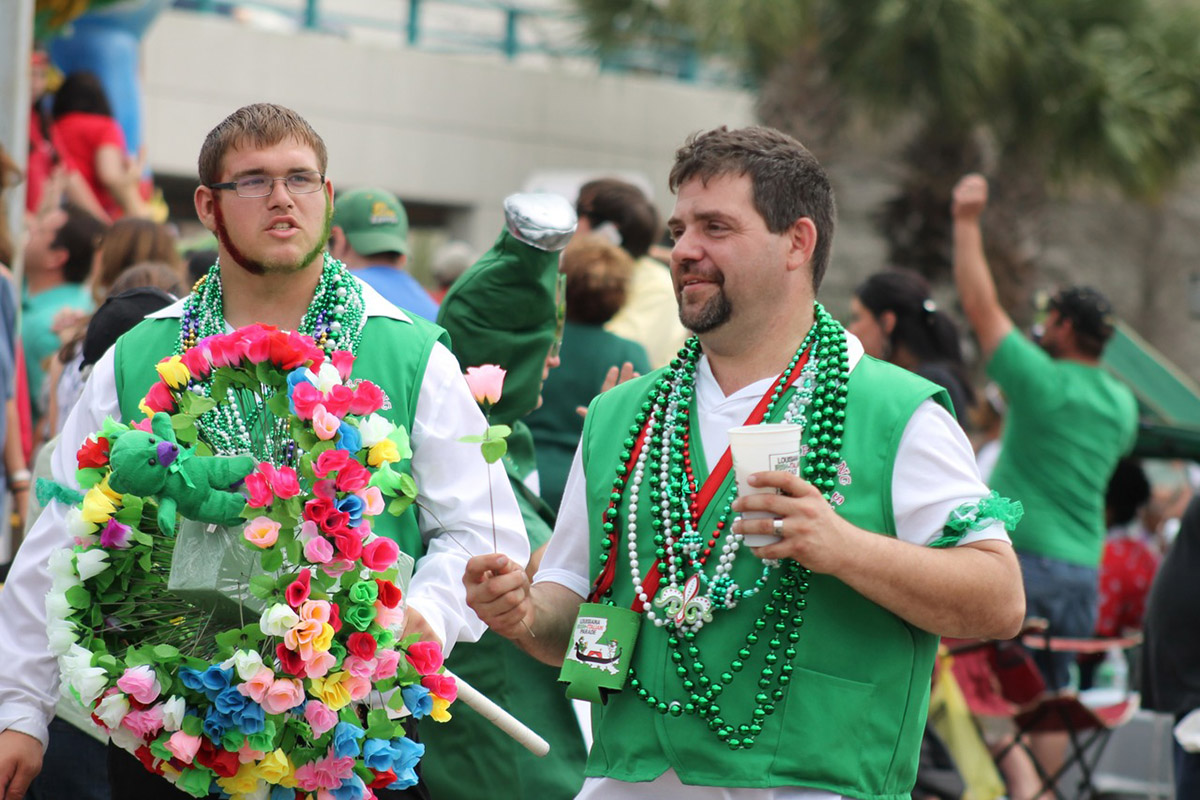
In Ireland, saying hello in Irish is deeply connected to history, language, and community. One of the most meaningful traditional greetings is “Dia dhuit”, which means “God be with you.”
Rooted in ancient Celtic heritage and Christian tradition, this greeting reflects warmth, respect, and spirituality. In everyday life, many people blend Irish and English naturally, so it’s not unusual to hear “Dia dhuit, how’s the craic?” in casual conversation. Eye contact, a genuine “how are you?”, and an openness to chat are all part of Irish greeting culture.
Irish greetings are not rushed—they are invitations to connect. I once experienced this at a local festival where people greeted each other warmly while wearing traditional Irish clothing, such as tweed jackets, flat caps, and wool skirts. A simple greeting quickly turned into friendly conversation, making it clear that in Ireland, saying hello is about belonging, not just politeness.
In Irish culture, greetings often lead to conversation. Eye contact, humor, and a genuine “how are you?” are expected, and saying hello usually opens the door to storytelling, warmth, and shared community.
Whether spoken in Gaeilge or English, greetings in Ireland carry a sense of shared identity. From villages to cities, Irish greetings represents hospitality, cultural pride, and the timeless value of human connection.
| Type of Greeting | Irish Phrase | Pronunciation | When It’s Used | Cultural Meaning / Feel |
|---|---|---|---|---|
| Formal Hello | Dia dhuit | DEE-a ghwitch | Formal or respectful situations; Irish-speaking areas | Means “God be with you”; reflects spirituality and mutual respect |
| Casual Hello | Haigh | hah | Friends, informal encounters | Relaxed and friendly; modern everyday greeting |
| Good Morning | Dia dhuit / Dia dhuit ar maidin | DEE-a ghwitch / ar MAH-din | Morning greetings, especially in Gaeltacht regions | Warm and traditional; often paired with small talk |
| Good Afternoon / Day | Dia dhuit | DEE-a ghwitch | Daytime interactions | Neutral and polite; widely acceptable |
| Good Evening | Tráthnóna maith | TRAH-no-na mah | Evening, formal or social settings | Calm and courteous; reflects traditional etiquette |
| Goodbye (Formal) | Slán go fóill | slawn guh FOH-il | Polite or temporary farewells | Means “goodbye for now”; gentle and respectful |
| Goodbye (Informal) | Slán leat | slawn lat | Friends and casual goodbyes | Friendly and personal |
| Holiday Greeting | Nollaig Shona / Lá Fhéile Pádraig Shona Duit | NOL-lig HOH-na / LAW AY-leh PAW-drig HOH-na ghwitch | Christmas, St. Patrick’s Day | Festive and heartfelt; tied to Irish cultural identity |
9. How People Greet in Spain

In Spain, saying hello in Spanish is warm, expressive, and deeply woven into daily social life. The most universal greeting is “Hola,” a simple yet versatile word used in both casual and formal settings. Depending on the time of day, Spaniards often switch to “Buenos días,” “Buenas tardes,” or “Buenas noches,” especially in shops, workplaces, and polite encounters.
Informal greetings like “¿Qué tal?” or “¿Qué pasa?” are common among friends and reflect the relaxed, social rhythm of Spanish culture.
In Spain, greetings often include cheek kisses, expressive gestures, and close conversation. Saying hello is social and unhurried, reflecting warmth, openness, and the importance of personal connection.
Greetings in Spain often come with eye contact, a smile, or even a light cheek kiss in familiar settings. I once experienced this during a local celebration where people greeted each other casually while wearing traditional Spanish clothing, flowing flamenco dresses, embroidered blouses, and fitted vests. The greetings felt effortless, almost musical, blending naturally with laughter, music, and movement.
In Spain, a greeting is rarely rushed. Whether spoken formally or casually, hello in Spanish is an invitation to connect, converse, and share a moment—making it an essential part of Spanish identity and everyday life.
| Type of Greeting | Spanish Phrase | Pronunciation | When It’s Used | Cultural Meaning / Feel |
|---|---|---|---|---|
| Formal Hello | Buenos días | BWEH-nohs DEE-ahs | Morning; formal or polite settings | Respectful and courteous; shows good manners |
| Casual Hello | Hola | OH-lah | Everyday use; formal and informal | Friendly, universal, and welcoming |
| Good Morning | Buenos días | BWEH-nohs DEE-ahs | Morning until around noon | Polite and socially expected |
| Good Afternoon / Day | Buenas tardes | BWEH-nas TAR-des | Afternoon and early evening | Warm and respectful; commonly used in public spaces |
| Good Evening | Buenas noches | BWEH-nas NOH-ches | Evening and night | Polite; also doubles as “good night” |
| Goodbye (Formal) | Hasta luego | AHS-tah LWEH-goh | Polite or neutral farewells | Friendly and optimistic; implies seeing someone again |
| Goodbye (Informal) | Chao / Ciao | chow | Casual goodbyes among friends | Relaxed and informal |
| Holiday Greeting | ¡Felices fiestas! | feh-LEE-ses FYEH-stahs | Holidays and celebrations | Joyful and festive; expresses shared celebration |
See Also 4 Official Languages of Spain
10. How People Greet in Greece
In Greece, greetings are warm, expressive, and deeply tied to respect, hospitality, and social connection. One of the most common ways to say hello in Greek is «Γειά σας» (Yia sas), used in formal situations or when addressing elders and strangers. Among friends and family, this softens to «Γειά σου» (Yia sou), reflecting familiarity and closeness.
Time-based greetings such as «Καλημέρα» (Kalimera) in the morning and «Καλησπέρα» (Kalispera) in the evening are used widely and are considered essential manners in everyday life.
In Greek culture, greetings often include direct eye contact, cheek kisses among acquaintances, and warm verbal exchanges. Hospitality (philoxenia) makes every greeting feel like a sincere welcome.
Whether welcoming someone with «Καλώς ήρθατε» (Kalos irthate) or ending the day with «Καληνύχτα» (Kalinikhta), greetings in Greece are more than words, they are expressions of warmth, respect, and shared humanity.
Greek greetings are often accompanied by eye contact, smiles, and sometimes cheek kisses, especially among acquaintances. I once noticed this during a village celebration where people greeted each other warmly while wearing traditional Greek clothing, embroidered blouses, flowing skirts, and dark vests, making each greeting feel ceremonial yet natural.
| Type of Greeting | Greek Phrase | Pronunciation | When It’s Used | Cultural Meaning / Feel |
|---|---|---|---|---|
| Formal Hello | Γειά σας | Yia sas | Formal settings, elders, strangers | Polite and respectful; shows social awareness |
| Casual Hello | Γειά σου | Yia sou | Friends, family, familiar people | Warm and personal |
| Good Morning | Καλημέρα | kah-lee-MEH-rah | Morning until midday | Friendly and positive; very common |
| Good Afternoon / Day | Καλημέρα | kah-lee-MEH-rah | Late morning and daytime | Courteous and widely accepted |
| Good Evening | Καλησπέρα | kah-lee-SPEH-rah | Afternoon to evening | Polite and socially appropriate |
| Goodbye (Formal) | Αντίο | ah-DEE-oh | Formal or serious farewells | Respectful and clear |
| Goodbye (Informal) | Τα λέμε | tah LEH-meh | Friends, casual departures | Friendly; means “see you” |
| Holiday Greeting | Χρόνια πολλά! | HROH-nya POH-lah | Birthdays, holidays, celebrations | Warm and celebratory; very cultural |
11. How People Greet in France
In France, greetings are closely tied to politeness, social awareness, and everyday etiquette. The most essential way to say hello in French is “Bonjour,” used from morning until late afternoon and expected in almost every interaction—from entering a shop to starting a conversation. In the evening, this naturally shifts to “Bonsoir.”
Among friends or people who know each other well, greetings soften to “Salut” or the playful “Coucou,” showing familiarity and warmth.
French greetings often come with specific social rituals. In formal or semi-formal situations, a light handshake is common, while among friends and family, cheek kisses (la bise) are a deeply rooted tradition.
I once noticed how natural this felt at a small gathering, where people greeted each other warmly while dressed in traditional French clothing—tailored jackets, scarves, and elegant everyday wear—making the greeting feel refined yet personal.
In French culture, greeting someone is not optional; it’s a sign of respect. Greetings in French correctly sets the tone for the entire interaction, reflecting values of courtesy, social harmony, and cultural awareness that remain central to life in France.
| Type of Greeting | French Phrase | Pronunciation | When It’s Used | Cultural Meaning / Feel |
|---|---|---|---|---|
| Formal Hello | Bonjour | bon-ZHOOR | Daytime, formal or polite situations | Essential politeness; shows respect |
| Casual Hello | Salut | sah-LOO | Friends, classmates, informal settings | Relaxed and friendly |
| Good Morning | Bonjour | bon-ZHOOR | Morning to afternoon | Polite and socially expected |
| Good Afternoon / Day | Bonjour | bon-ZHOOR | Daytime interactions | Neutral and respectful |
| Good Evening | Bonsoir | bon-SWAHR | Evening and night | Courteous and appropriate |
| Goodbye (Formal) | Au revoir | oh ruh-VWAHR | Formal or polite farewells | Respectful; implies seeing again |
| Goodbye (Informal) | Salut | sah-LOO | Casual goodbyes | Friendly and familiar |
| Holiday Greeting | Joyeuses fêtes | zhwa-YEUZ fet | Holidays and celebrations | Warm, festive, and inclusive |
12. How People Greet in Netherlands

In the Netherlands, saying hello in Dutch is simple, direct, and refreshingly informal—reflecting the country’s open and down-to-earth culture. The most common greeting is “Hallo,” used everywhere from shops and offices to phone calls and casual street encounters.
It works in both formal and informal settings, making it one of the safest and most versatile Dutch greetings. In slightly more polite or traditional contexts, especially with strangers, “Goedendag” may be used to show courtesy and respect.
Among friends, greetings quickly become relaxed. “Hoi,” “Hoi hoi,” or “Hé” are common, especially among younger people, and are often followed by “Hoe gaat het?” (How’s it going?). I first felt this ease at a casual gathering where someone greeted me with a cheerful “Hoi!” while wearing traditional Dutch clothing, simple wool jacket and flat cap—making the interaction feel friendly, equal, and unforced.
Dutch greeting culture values equality and sincerity over formality. Eye contact, a smile, and a straightforward hello are usually enough. In the Netherlands, greeting isn’t about ceremony, it’s about openness, clarity, and making everyone feel comfortably included.
| Type of Greeting | Dutch Phrase | Pronunciation | When It’s Used | Cultural Meaning / Feel |
|---|---|---|---|---|
| Formal Hello | Goedendag | KHOO-den-dakh | Polite or first meetings | Respectful, traditional |
| Casual Hello | Hallo | HAH-lo | Everywhere, all contexts | Neutral, friendly, universal |
| Good Morning | Goedemorgen | KHOO-duh-MOR-ghun | Morning, work or school | Polite, structured |
| Good Afternoon | Goedemiddag | KHOO-duh-MID-dakh | Noon–early evening | Time-conscious, courteous |
| Good Evening | Goedenavond | KHOO-den-AH-vont | After 6 PM | Formal and respectful |
| Informal Hello | Hoi / Hoi hoi | hoy | Friends, casual chats | Relaxed, friendly |
| Hello / Goodbye | Dag | dakh | Meeting or parting | Simple, warm, flexible |
13. How People Greet in China

Chinese Greetings are deeply rooted in social values shaped by Confucian philosophy, where harmony, respect, and awareness of hierarchy are essential. Unlike many Western cultures, a greeting is not just a verbal exchange but a reflection of one’s character, upbringing, and respect for others.
Age, social status, and familiarity strongly influence how people greet each other, which is why formal phrases like 您好 (nín hǎo) are reserved for elders, teachers, or authority figures.
Traditional greetings often focus on care rather than emotion. Questions such as “吃了吗?” (Have you eaten?) or “最近忙吗?” (Have you been busy lately?) are not meant literally—they express concern for well-being and show attentiveness. This indirect style avoids imposing on others and maintains social balance, a key cultural principle in Chinese society.
Non-verbal behavior is equally important. Gentle nods, calm tone, controlled gestures, and modest posture reinforce sincerity and politeness. Even today, whether during family gatherings, business meetings, or festivals, Chinese greetings—often exchanged while wearing traditional Chinese clothing like Hanfu, Qipao, or Tang suits—embody humility, empathy, and collective harmony, gracefully bridging ancient traditions with modern life.
| Type of Greeting | Chinese Phrase | Pinyin | When It’s Used | Cultural Meaning / Feel |
|---|---|---|---|---|
| Formal Hello | 您好 | nín hǎo | Elders, teachers, authority figures | Respectful, hierarchical, polite |
| Casual Hello | 你好 | nǐ hǎo | Everyday use | Neutral, friendly, socially balanced |
| Good Morning | 早上好 | zǎo shang hǎo | Morning, formal or polite | Courtesy and positivity |
| Good Afternoon | 下午好 | xià wǔ hǎo | Afternoon meetings | Respectful and time-aware |
| Good Evening | 晚上好 | wǎn shàng hǎo | Evening encounters | Polite and calm |
| Phone Greeting | 喂 | wéi | Answering phone calls | Practical, informal |
| Caring Greeting | 吃了吗? | chī le ma? | Friends, family | Expresses concern, not literal |
14. How People Greet in Philippines

In Filipino culture, greetings are deeply woven into everyday life and reflect the country’s strong values of respect, family, and social harmony. Saying hello in Tagalog is rarely a quick exchange; it is often the beginning of a longer interaction that acknowledges the other person’s presence, well-being, and place within the community.
Words like “po” and “opo” are essential markers of politeness, especially when speaking to elders, teachers, or strangers, and their absence can be perceived as disrespectful.
Traditional Filipino greetings are closely linked to family-oriented customs such as mano po, where younger people gently touch an elder’s hand to their forehead as a sign of respect while greeting them. In homes, it is common to greet everyone individually rather than collectively, reinforcing personal connection and courtesy. Asking “Kumusta?” is not just small talk, it shows genuine care and concern.
During festivals, religious events, and formal gatherings, greetings may be exchanged while wearing traditional Filipino clothing like the Barong Tagalog or Saya, strengthening cultural identity and pride. Whether in rural villages or busy cities, Filipino greetings reflect warmth, humility, and an enduring spirit of hospitality, making every hello an invitation to belonging.
| Type of Greeting | Tagalog Phrase | Pronunciation | When It’s Used | Cultural Meaning / Feel |
|---|---|---|---|---|
| Formal Hello | Kamusta po kayo? | kah-MOOS-ta poh kah-YOH | Speaking to elders, strangers, formal settings | Shows deep respect using po, central to Filipino etiquette |
| Casual Hello | Kumusta | kah-MOOS-ta | Friends, family, everyday conversations | Warm, caring, invites real connection |
| Good Morning | Magandang umaga | mah-GAN-dang oo-MAH-ga | Morning greetings | Polite and friendly; often followed by small talk |
| Good Day | Magandang araw | mah-GAN-dang AH-raw | Neutral, any time of day | Safe, welcoming, respectful |
| Informal Attention | Hoy / Uy | hoy / ooy | Close friends, playful settings | Familiar, lively, informal |
| Traditional Welcome | Mabuhay | mah-BOO-hai | Guests, ceremonies, festivals | Symbol of hospitality and national pride |
| Religious Greeting | Assalamu Alaikum | ah-sah-LAH-moo ah-LAI-koom | Muslim communities | Spiritual greeting meaning peace and goodwill |
15. How People Greet in Japan
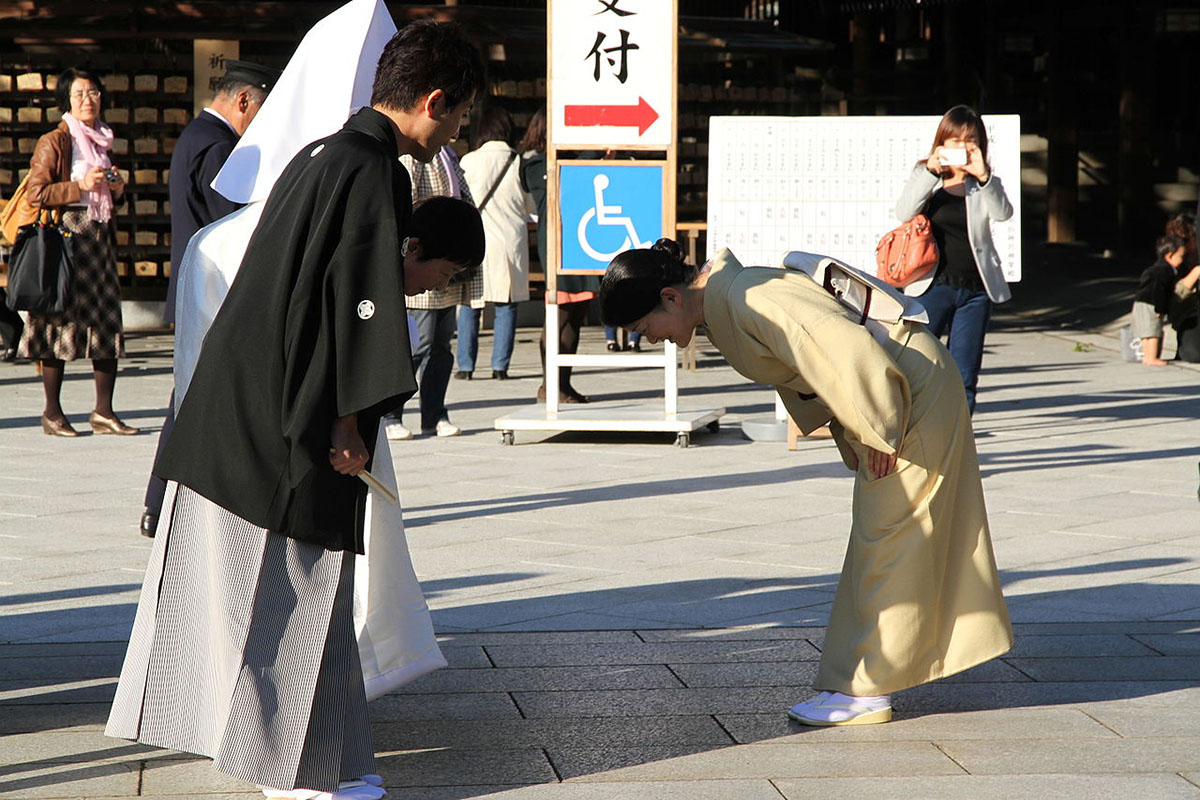
In Japan, greeting is not just about words—it’s a reflection of respect, awareness, and social harmony. Saying hello in Nihongo depends heavily on time of day, relationship, and setting. A polite こんにちは (Konnichiwa) is commonly used during the day, while おはようございます (Ohayō gozaimasu) and こんばんは (Konbanwa) show attentiveness to morning and evening etiquette.
What makes Japanese greetings unique is how closely they are tied to behavior. A slight bow often accompanies a greeting, with the depth of the bow signaling respect, age, or status. In workplaces and schools, greetings are clear, formal, and consistent, reinforcing discipline and mutual consideration.
In more relaxed settings, friends may use casual expressions like やあ (Yā) or どうも (Dōmo), creating a friendly but still respectful tone. Regional culture also shapes greetings—during a visit to Osaka, shopkeepers greeted me with まいど (Maido), a warm, local expression that instantly made interactions feel personal and welcoming.
Even today, whether in business meetings, daily encounters, or festivals where people wear traditional Japanese clothing such as kimono or yukata, Japanese greetings continue to embody humility, empathy, and collective harmony—bridging centuries-old traditions with modern life.
| Type of Greeting | Japanese Phrase | Romaji | When It’s Used | Cultural Meaning / Feel |
|---|---|---|---|---|
| Formal Hello | こんにちは | Konnichiwa | Daytime; polite everyday situations | Respectful and neutral; shows social awareness |
| Good Morning | おはようございます | Ohayō gozaimasu | Morning; work, school, formal settings | Polite, disciplined, respectful |
| Good Evening | こんばんは | Konbanwa | After sunset; meetings, social events | Courteous and time-conscious |
| Casual Hello | やあ / よっ | Yā / Yo | Friends, peers, informal situations | Relaxed and friendly |
| Phone Greeting | もしもし | Moshi moshi | Answering the phone | Polite attention and clarity |
| First Meeting | はじめまして | Hajimemashite | Meeting someone for the first time | Humble, respectful introduction |
| Regional Greeting | まいど | Maido | Kansai / Osaka region | Warm, local, welcoming |
| Informal Acknowledgment | どうも | Dōmo | Casual encounters, coworkers | Easygoing and polite |
16. How People Greet in India
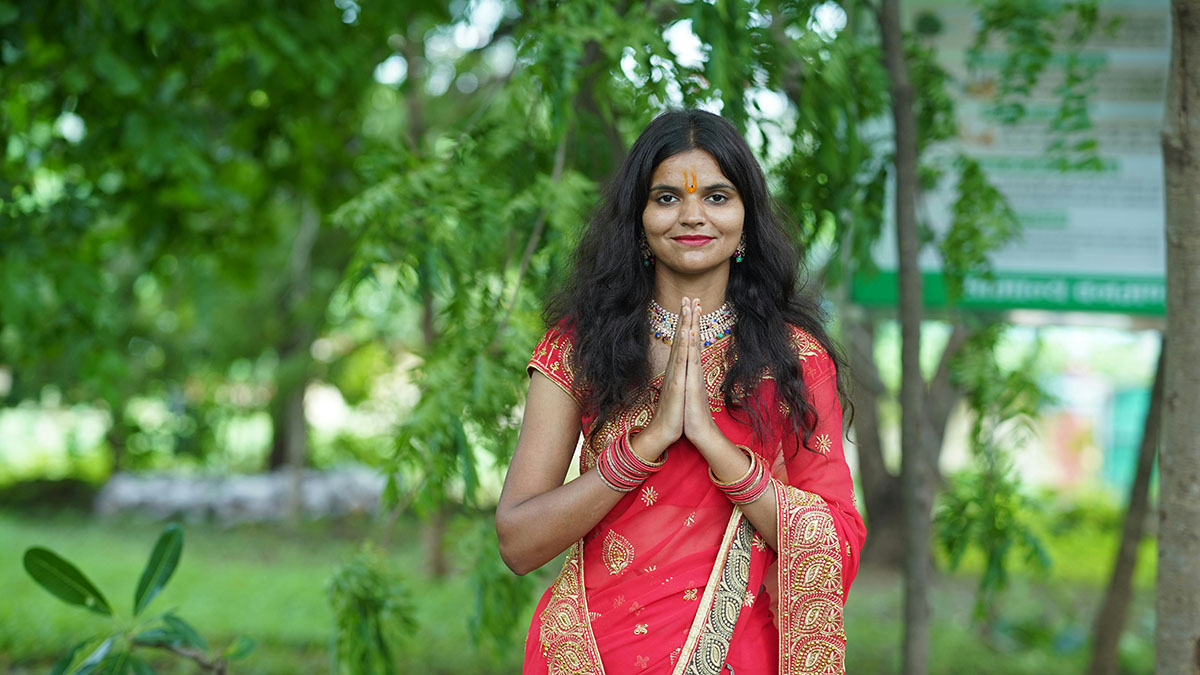
In India, greeting someone is more than a social habit—it reflects respect, spirituality, and cultural identity. The most widely recognized way to say hello in Hindi is नमस्ते (Namaste), a greeting that combines spoken words with a meaningful gesture.
With palms pressed together and a slight bow, Namaste expresses humility and acknowledges the divine presence in the other person. It is used across generations, from daily encounters to formal meetings, temples, and yoga practices.
Alongside traditional greetings, modern life has introduced casual expressions like हाय (Hāy) and हेलो (Helō), especially in cities and among younger people. Yet even today, during festivals, ceremonies, or family gatherings, many Indians greet one another while wearing traditional Indian clothing such as sarees, kurta-pyjamas, dhotis, or salwar kameez, reinforcing cultural pride.
Whether spiritual or informal, Hindi greetings continue to embody values of respect, warmth, and social harmony, blending ancient tradition with modern life.
| Type of Greeting | Hindi Phrase | Transliteration | When It’s Used | Cultural Meaning / Feel |
|---|---|---|---|---|
| Formal / Traditional Hello | नमस्ते | Namaste | Everyday greeting; elders, guests, yoga, spiritual settings | Respect, humility, spiritual connection |
| Very Formal Hello | नमस्कार | Namaskār | Official events, speeches, elders, teachers | Deep respect and reverence |
| Casual Hello | हाय | Hāy | Friends, youth, informal urban settings | Friendly, modern, relaxed |
| Casual / Phone Hello | हेलो | Helō | Phone calls, texting, casual conversation | Global, informal communication |
| Friendly Check-in | क्या हाल है? | Kya haal hai? | Friends, peers, informal chats | Warm interest in well-being |
| Regional / Hindu Greeting | राम राम | Rām Rām | North India, rural areas, elders | Spiritual warmth, community bonding |
| Devotional Greeting | जय श्री कृष्ण | Jai Shri Krishna | Religious gatherings, family, festivals | Devotion, joy, spiritual respect |
| Sikh Greeting | सत श्री अकाल | Sat Sri Akal | Sikh communities, Punjab | Equality, truth, spiritual awareness |
| Islamic Greeting | अस्सलामु अलैकुम | Assalāmu alaikum | Muslim communities, daily interactions | Peace, goodwill, mutual respect |
| Buddhist Greeting | नमो बुद्धाय | Namo Buddhāya | Buddhist communities, temples | Mindfulness, humility, peace |
See Also Holiday Traditions in India
Hello in Different Languages: A Recap
Exploring how people greet around the world has taught me that a simple “hello” is never really simple. Each country carries its own rhythm of warmth, respect, and tradition. I’ve learned that greetings are more than manners; they’re tiny mirrors of history, values, and connection.
Whenever I meet someone new, I find myself pausing — not just to say hello, but to listen, observe, and understand the story behind their words. That’s where true cultural exchange begins.
Traveling and learning about these customs opens doors to empathy and appreciation for our shared humanity. A greeting, after all, is the first bridge between strangers — a small gesture with the power to unite worlds.