


Ever wondered how to greet someone naturally in Japanese? Understanding Hello in Nihongo can transform your interactions, making you feel confident and respectful in any situation. You, the reader, are about to explore the nuances of Japanese greetings, from formal morning and evening expressions to casual and playful ways friends communicate.
As your guide, We’ve combined cultural insights, pronunciation tips, and everyday usage examples to help you master these greetings effortlessly.
Throughout this article, we explored 9 key greetings, their meanings, and responses.
Experiencing a local festival in Tokyo, hearing people greet each other warmly, truly showed me the depth and warmth of Japanese culture.


Main Hello in the Japanese Language
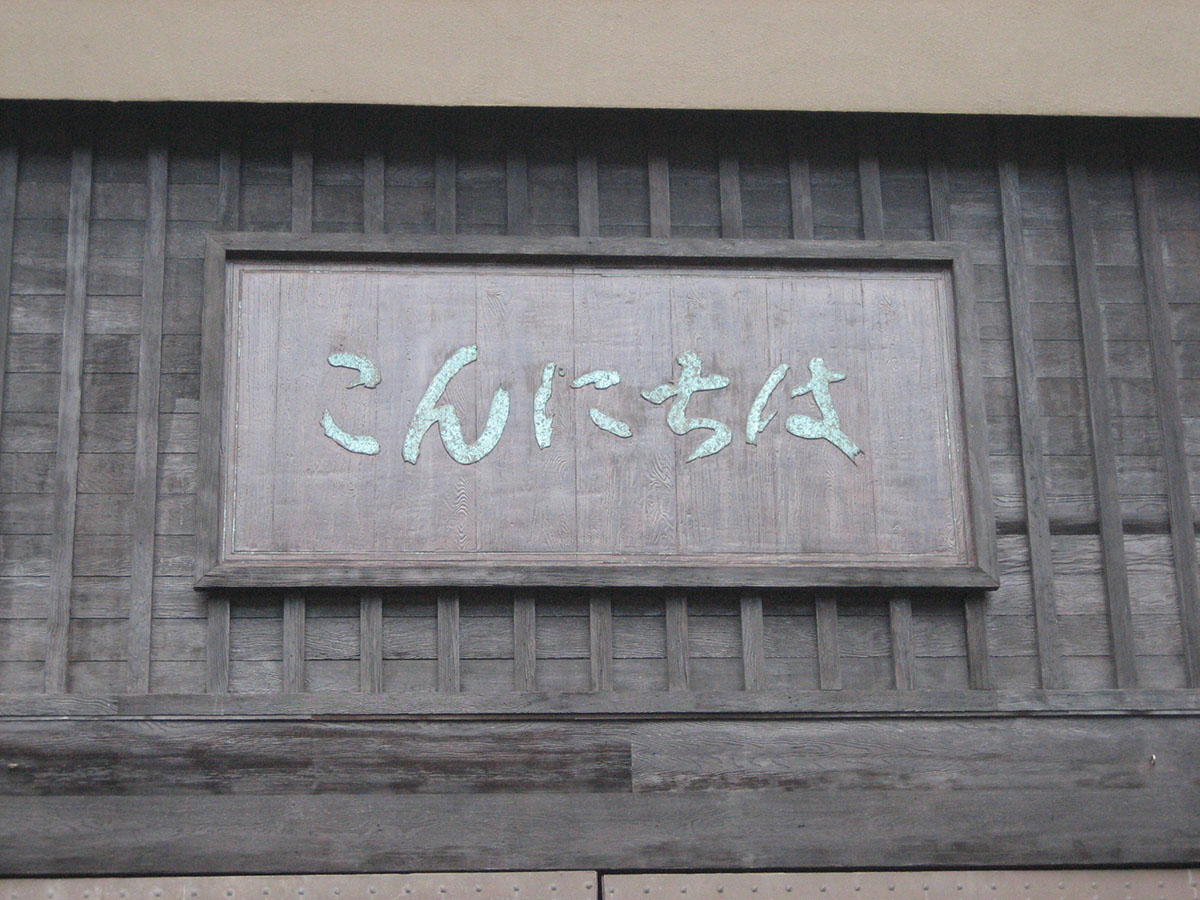
1. こんにちは (Konnichiwa)
こんにちは (Konnichiwa) is a very common Japanese greeting meaning “hello” or “good afternoon.” It originated from the phrase 今日は (konnichi wa) — literally “as for today,” which used to be part of a longer polite sentence asking after someone’s condition.
Traditionally, Konnichiwa is used during daytime, but in modern Japanese it’s used quite flexibly. It is polite but not overly formal, making it suitable for acquaintances and everyday interactions.
According to the study “A Geolinguistic Study on the Greeting Expressions and Behavior in Japan” by Yoshio Ebata, the use of Konnichiwa varies by region across Japan, showing how cultural norms influence greeting choices.
See Also Hello in Hindi
2. おはようございます (Ohayō gozaimasu)
おはようございます (Ohayō gozaimasu) is the standard Japanese greeting meaning “Good morning.” It is polite, respectful, and typically used in formal or semi-formal settings, such as workplaces, schools, or when speaking to elders and acquaintances.
The shorter, casual version おはよう (Ohayō) is used among friends, family, or peers. Rooted in Japanese culture, it reflects attentiveness to time, social hierarchy, and politeness.
Saying Ohayō gozaimasu signals respect while fostering friendly communication. It is an essential part of daily Japanese greetings, embodying the cultural importance of starting the day with courtesy and warmth. During my first week at a Tokyo office, my colleagues greeted me with Ohayō gozaimasu, making me feel instantly welcome.
See Also Japanese Christmas Traditions
3. こんばんは (Konbanwa)

こんばんは (Konbanwa) is the standard Japanese greeting meaning “Good evening.” It is used after sunset in both casual and formal situations, signaling awareness of time and social etiquette. Unlike こんにちは, it is specifically for evening interactions, whether meeting friends, neighbors, or colleagues.
Common responses include こんばんは in return, 元気ですか? (Genki desu ka?) meaning “How are you?” or お疲れ様です (Otsukaresama desu) in workplaces, acknowledging someone’s effort. Situations for use include meeting friends for dinner, greeting neighbors or colleagues in the evening, and attending formal events after sunset.
Mastering Konbanwa helps learners demonstrate proper Japanese manners, respect social hierarchy, and engage appropriately in evening conversations.
See Also Japanese Street Fashion
Casual and Modern Ways to Say Hello in Nihongo
4. やあ / よっ (Yā / Yo)
やあ / よっ (Yā / Yo) are casual Japanese greetings equivalent to “Hi” or “Hey,” used primarily among friends, peers, or close colleagues. Unlike こんにちは or こんばんは, these expressions are informal, relaxed, and often open casual conversations, acknowledge someone’s presence, or grab attention in a friendly way.
The pronunciation is simple: やあ (Yā) as “Yah” and よっ (Yo) as “Yo.” Common responses include repeating the greeting or asking 元気? (Genki?) meaning “How are you?” They are ideal for social, school, or hobby settings, but rarely used with elders or in formal situations, reflecting natural spoken Japanese.
See Also Japanese Artists in the 21st Century
5. もしもし (Moshi Moshi)
もしもし (Moshi Moshi) is a Japanese greeting used exclusively on the phone, equivalent to “Hello?” in English. Its origin reflects Japanese cultural politeness, emphasizing attentiveness and clarity when initiating conversation.
Traditionally, saying Moshi Moshi twice or with a slight pause shows respect and ensures the listener is engaged. While informal among friends, it remains standard for business or family calls, highlighting Japan’s focus on etiquette even in casual interactions. This greeting also shows consideration for the listener, a core value in Japanese culture.
Proper usage conveys respect, warmth, and social harmony, making it an essential part of Japanese greetings.
6. はじめまして (Hajimemashite)

はじめまして (Hajimemashite) is a Japanese greeting used when meeting someone for the first time, meaning roughly “Nice to meet you.” It reflects Japanese culture’s emphasis on politeness, humility, and proper social introduction.
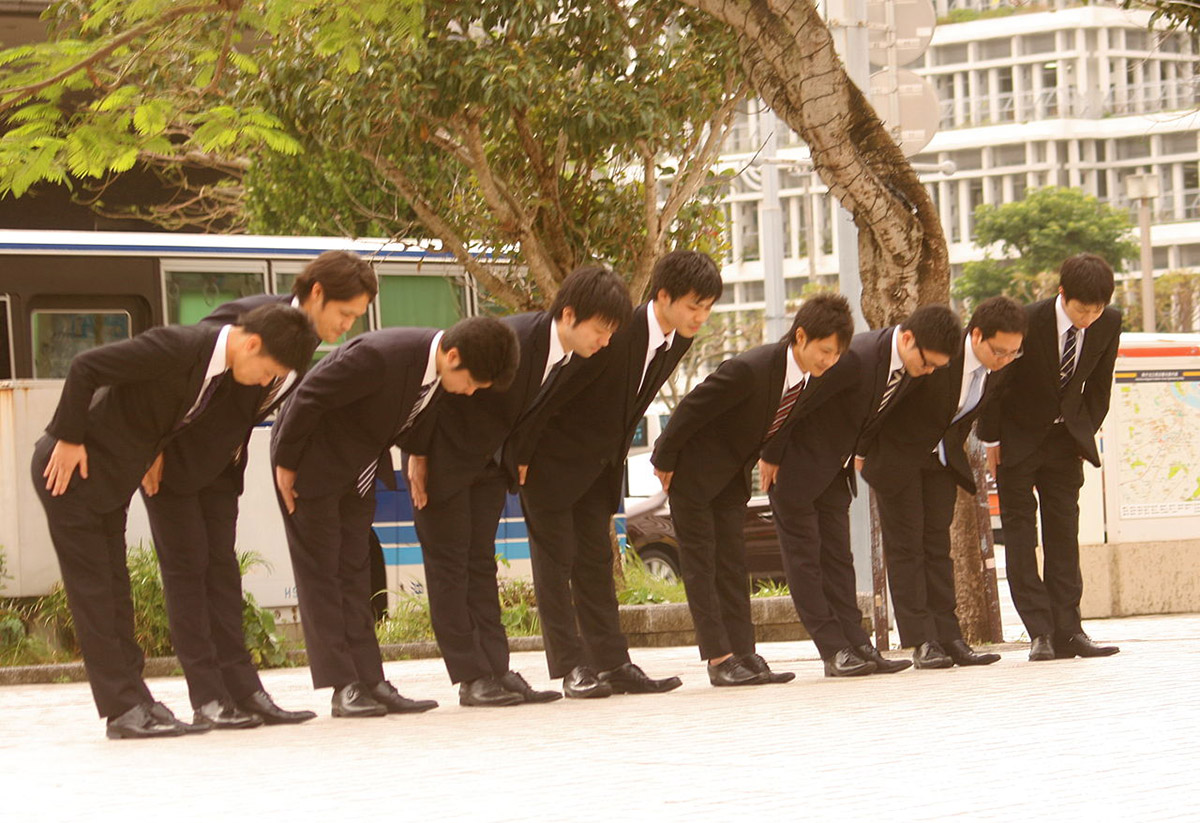
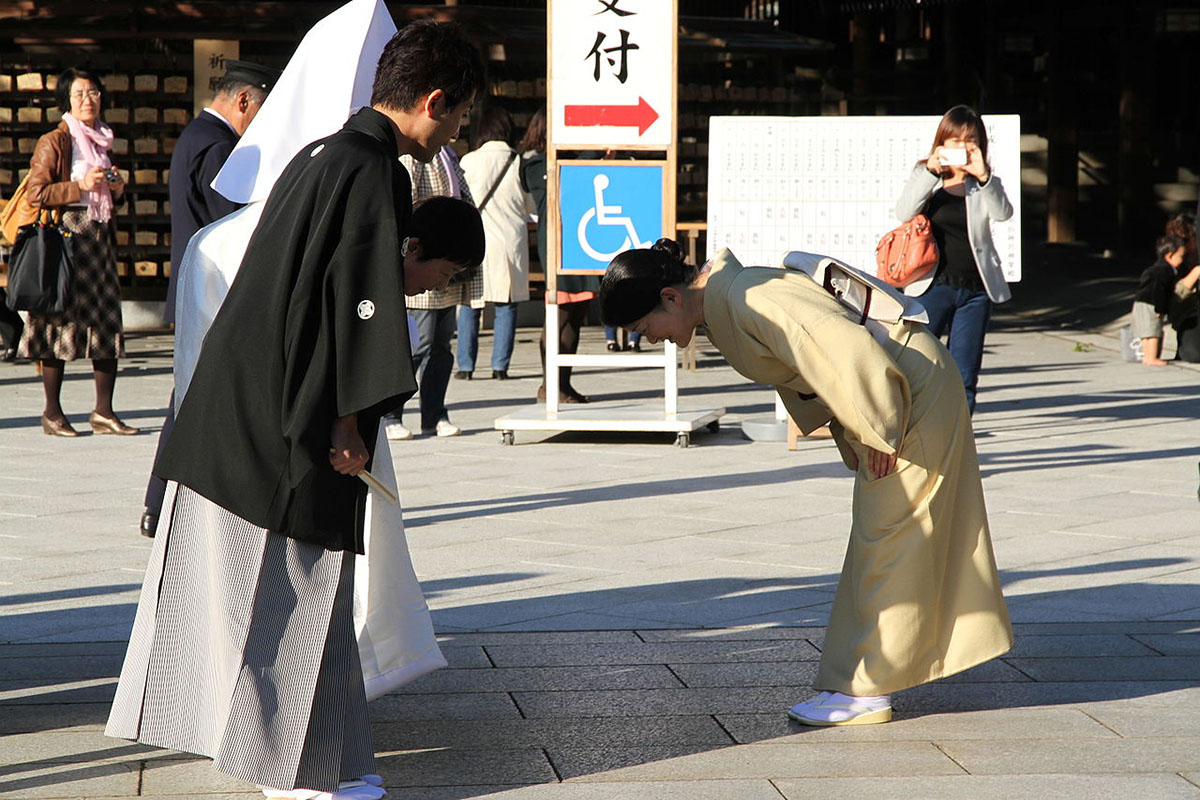
Typically, it is followed by どうぞよろしくお願いします (Dōzo yoroshiku onegaishimasu), signaling a request for a good relationship. Common responses mirror this phrase. Situations include workplace introductions, school meetings, or formal social events. Bowing often accompanies it, showing respect.
According to the study A Brief Analysis of Culture of Japan in Japanese Greetings — First Meeting as the Center by Junyu Chen, first-time greetings strongly influence interpersonal impressions, highlighting the importance of Hajimemashite in Japanese social etiquette.
See Also Chinese Greetings
Regional and Cultural Variants of Greetings in Japan
7. おっす (Ossu)

おっす (Ossu) is an informal, masculine Japanese greeting often used among male friends, classmates, or in sports and martial arts contexts. It is equivalent to “Hey” or “Yo” in English and conveys friendliness, camaraderie, and casual acknowledgment.
The pronunciation is simple: Ossu. Common responses include repeating おっす or adding 元気か? (Genki ka?), meaning “How’s it going?” Situations for use include greeting teammates, friends in casual environments, or fellow club members.
While popular among younger males, it is rarely used with elders or in formal settings. Ossu reflects the informal, energetic side of Japanese social interaction and peer bonding.
See Also Japanese Dance Styles: 4 Vibrant Traditions and Rhythms
8. まいど (Maido)
まいど (Maido) is a casual Japanese greeting commonly used in Osaka and the Kansai region, meaning roughly “Hello” or “Thanks for your continued support.” Originally from merchants’ language, it expresses both acknowledgment and appreciation, reflecting the friendly and business-oriented culture of Kansai.
It is often used among shopkeepers, customers, or colleagues in informal business contexts. Common responses include まいど in return or a polite nod. Unlike standard greetings, Maido carries warmth and familiarity in repeated interactions.
During a visit to a small Osaka market, shopkeepers greeted me with Maido, and their cheerful tone and repeated use made me feel immediately welcomed and connected to local culture.
See Also Japanese Costumes: Origins, Traditions, and Its Cultural Legacies
9. どうも (Dōmo)
どうも (Dōmo) is a versatile Japanese expression used as a casual greeting, acknowledgment, or to say thank you, depending on context. Literally, it can mean “very” or “thanks,” but in everyday speech, it often serves as a short, friendly hello.
It is appropriate in informal situations with friends, colleagues, or acquaintances and is often combined with ありがとう (Arigatō) as どうもありがとう (Dōmo arigatō) for “Thank you very much.” Responses can simply mirror どうも, or include 元気ですか? (Genki desu ka?) to ask “How are you?”
It is rarely used in formal situations, highlighting casual, approachable Japanese communication in everyday life.
See Also Japanese Social Life: 13 Fascinating Cultural Secrets
Additional Hello in Nihongo
- 元気? (Genki?) — “You good?” / casual hello
- 調子どう? (Chōshi dō?) — “How’s it going?”
- よろしく (Yoroshiku) — situational greeting opener
- やっほー (Yahhō) — cute, playful hello
- おつかれ (Otsukare) — workplace greeting
- ごきげんよう (Gokigen’yō) — elegant, old-fashioned hello
- お邪魔します (Ojama shimasu) — greeting when entering someone’s home
- どうもどうも (Dōmo dōmo) — extra friendly hello
See Also Irish Greetings
Hello in Nihongo: A Recap
Japanese greetings offer a rich and nuanced way to connect, from formal expressions like おはようございます (Ohayō gozaimasu) and こんばんは (Konbanwa) to casual, friendly words such as やあ / よっ (Yā / Yo) and おっす (Ossu). Phone greetings like もしもし (Moshi Moshi) and first-time meeting phrases like はじめまして (Hajimemashite) showcase the culture’s emphasis on politeness, hierarchy, and attentiveness.
Each greeting communicates respect, warmth, or camaraderie depending on context, time, and relationship. Understanding and using these expressions correctly helps learners engage naturally with native speakers, demonstrates cultural appreciation, and builds confidence in both formal and informal situations, making communication authentically Japanese.