


Are you curious how Irish greetings can help you connect more deeply with people in Ireland? You’re not alone—navigating these cultural expressions can be tricky. As your guide, We’ll show you how to master them with confidence.
In this article, we explore 9 different greeting occasions, including morning, afternoon, evening, goodbyes, special events, St. Patrick’s Day, Christmas, New Year, and regional or rural variations.
I remember visiting a small village in Connemara, where a simple “Cén chaoi a bhfuil tú?” sparked a warm, lively conversation.
Read on to discover these greetings and start connecting like a local today!
The History and Cultural Roots of Irish Greetings
The role of Gaeilge (Irish) in everyday communication underpins how greetings in Ireland carry deep cultural resonance. Rooted in ancient Celtic heritage and the Christian tradition, Irish-language salutations often begin with phrases like “Dia dhuit” (“God be with you”), embedding spirituality and communal respect into a simple hello.
The history of Irish expressions of warmth and respect is shaped by generations of social interaction in villages, parishes and urban settings — where acknowledging another person’s presence, family and wellbeing became an integral part of greeting. Over time the blend of English and Irish in modern-day greetings emerged: many Irish people now mix Gaeilge phrases, regional idioms and English vernacular, so you might hear “Dia dhuit, how’s the craic?” in casual conversation.
Cultural etiquette in the Irish way of saying hello emphasises eye-contact, a genuine “how are you?”, and often an invitation to talk further — in short, greetings are not just transit words but an opening to connection.
A 2022 corpus-pragmatics study titled “Directives and Politeness in SPICE-Ireland” analysed spoken Irish English and found that Irish speakers favour indirect, face-saving greeting and conversational strategies that reflect a cultural emphasis on warmth, group identity and non-imposition.
See Also Hello in Different Languages
Everyday Irish Greetings and Their Meanings
1. Saying Hello in Irish — “Dia dhuit” and Variations
The traditional greeting “Dia dhuit” (DEE-a ghwitch), meaning “God be with you,” is central to Irish culture, reflecting warmth and respect. The proper reply is “Dia is Muire dhuit” (“God and Mary be with you”), showing mutual acknowledgment among Irish speakers.
Other common variations include the informal “Haigh” or friendly “Conas atá tú?” (“How are you?”), which are widely used in Irish-speaking areas. Using these greetings highlights both cultural appreciation and developing language skills.
Another common greeting is “Fáilte”, which means “welcome.” This expression conveys warmth and hospitality, often used in homes, shops, and public spaces, making visitors feel immediately included and appreciated.
The phrase “Gabh mo leithscéal”, literally “excuse me,” is used politely to get someone’s attention before speaking or greeting. It demonstrates respect and proper etiquette, highlighting the importance of considerate social interaction and the value placed on manners in everyday conversation.
I once greeted a local in the Gaeltacht with “Dia dhuit”, and her delighted reaction reminded me how alive the Irish language remains in everyday life.
| Greeting | Pronunciation | Meaning / Usage | Context / Notes |
|---|---|---|---|
| Dia dhuit | DEE-a ghwitch | “God be with you” | Standard greeting in Irish-speaking areas and formal/informal contexts. |
| Dia is Muire dhuit | DEE-a iss MWIR-eh ghwitch | “God and Mary be with you” | Traditional reply to Dia dhuit, showing respect among Irish speakers. |
| Haigh | HAH | “Hi” / casual hello | Informal greeting, widely used in urban areas and by younger speakers. |
| Conas atá tú? | KUN-us a-TAW too | “How are you?” | Friendly conversational greeting; can follow Dia dhuit or Haigh. |
| Fáilte | FAWL-chuh | “Welcome” | Often used in public spaces, shops, or social gatherings to convey warmth. |
| Gabh mo leithscéal | GOW muh LETCH-skayl | “Excuse me” (used when approaching) | Polite attention-getter before greeting in formal or crowded situations. |
2. Responding to Greetings — “Dia is Muire dhuit”
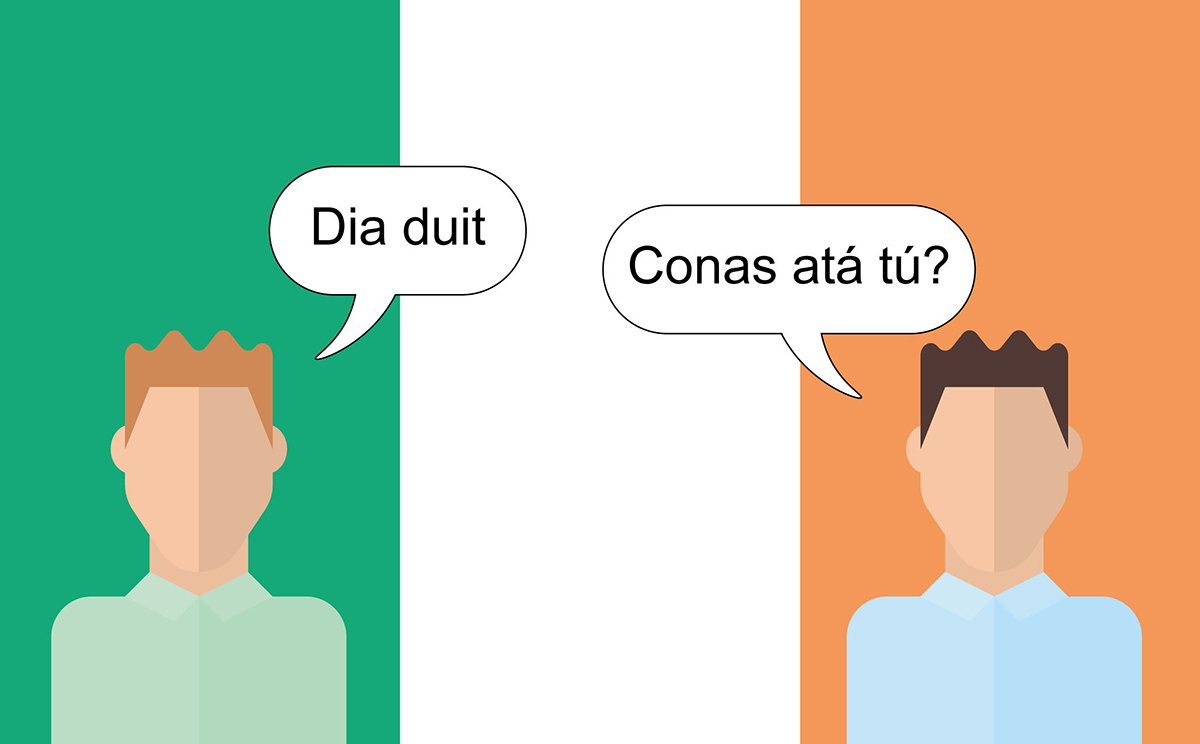
When someone greets you with “Dia dhuit”, the traditional and respectful reply is “Dia is Muire dhuit” (DEE-a iss MWIR-eh ghwitch), meaning “God and Mary be with you.” Often, this is followed by “Conas atá tú?” (“How are you?”) to continue the conversation.
Informally, friends may simply use “Haigh” or a friendly nod and smile. In some situations, “Go raibh maith agat” (“Thank you”) can be used if the greeting includes a blessing. Gestures alone, like a wave or nod, are also acceptable in passing encounters, particularly in rural areas.
For a warmer response, you can combine phrases, for example: “Dia is Muire dhuit! Cad é mar atá tú?”, which invites further conversation and reflects Ireland’s tradition of genuine sociability.
| Response | Pronunciation | Meaning / Usage | Context / Notes |
|---|---|---|---|
| Dia is Muire dhuit | DEE-a iss MWIR-eh ghwitch | “God and Mary be with you” | Traditional and respectful reply to Dia dhuit, used in formal or informal interactions. |
| Conas atá tú? | KUN-us a-TAW too | “How are you?” | Follows Dia is Muire dhuit in friendly conversation, inviting dialogue. |
| Haigh | HAH | “Hi” / casual acknowledgment | Informal response among friends or peers, often with a smile or nod. |
| Go raibh maith agat | Guh rev mah ah-gut | “Thank you” | Sometimes used if the greeting includes a blessing. |
| Gesture only | — | N/A | Nod, wave, or smile; common in passing encounters, especially in rural areas. |
| Combined response | — | “God and Mary be with you! How are you?” | Engages the speaker and reflects warmth and sociability in conversation. |
3. Regional or Rural Differences in Greetings
In Ireland, greetings vary widely between regions and rural communities. Some counties use unique local phrases, such as “Conas tá tú ag déanamh?” (“How are you doing?”) in Kerry or “Cén chaoi a bhfuil tú?” (“How are you?”) in other areas, along with playful contractions in village dialects unfamiliar to outsiders.
Seasonal greetings referencing farm work, like “Conas atá an féar ag fás?” (“How’s the grass growing?”), are common in agricultural areas. Rural greetings often include informal recognition, such as calling out a neighbor’s name, and non-verbal cues like a nod or tip of the hat. In small towns, greetings may evolve into extended conversations about family, work, or local news.
| Greeting / Phrase | Irish / Pronunciation | Meaning / Usage | Context / Notes |
|---|---|---|---|
| Conas tá tú ag déanamh? | KUN-us taw too egg JAY-naw | “How are you doing?” | Used in certain counties like Kerry; replaces standard Conas atá tú? |
| Cén chaoi a bhfuil tú? | KANE khwee a will too | “How are you?” | Common in other regions; informal and friendly local greeting. |
| Conas atá an féar ag fás? | KUN-us a-TAW on FAR egg faws | “How’s the grass growing?” | Seasonal greeting in agricultural areas; references farm work and local conditions. |
See Also Irish Christmas Traditions
Irish Greetings for Different Times of Day
4. Morning Greetings
In Ireland, morning greetings convey warmth and connection. “Dia dhuit” is standard, sometimes extended in Gaeltacht areas as “Dia dhuit ar maidin”. In rural towns, a nod, wave, or raised eyebrow often accompanies the greeting. Locals may comment on the weather or farm conditions, having small talk.
Among children, playful rhymes or nicknames are common. In cafés and pubs, visitors may hear “Barr an lae duit!” (“Top of the morning to you!”), blending tradition with modern social life and adding a cheerful start to the day.
| Greeting | Pronunciation | Meaning / Usage | Context / Notes |
|---|---|---|---|
| Dia dhuit | DEE-a ghwitch | “God be with you” | Standard morning greeting; can be used formally or casually. |
| Dia dhuit ar maidin | DEE-a ghwitch ar MAH-din | “God be with you this morning” | Used in some Gaeltacht areas; emphasizes warmth and a cheerful start. |
| Barr an lae duit | BARR un LAY ditch | “Top of the morning to you” | Common in cafés, pubs, and friendly encounters; blends tradition with modern social norms. |
| Nods / waves / raised eyebrow | — | N/A | Non-verbal acknowledgment in rural towns or passing greetings. |
| Weather or local comment | — | N/A | Often included in rural greetings, e.g., comments about farm or weather conditions. |
| Playful rhymes / nicknames | — | N/A | Used by children or teenagers to add humor and local flavor. |
See Also Irish Fashion
5. Afternoon and Evening Greetings
In Ireland, afternoon and evening greetings often carry a relaxed, friendly tone. Common phrases include “Tráthnóna maith” (“Good evening”) and “Fáilte go dtí an tráthnóna” (“Welcome this evening”) in Gaeltacht regions. Informal expressions like “Céad míle fáilte i ndeireadh lae” (“A hundred thousand welcomes at the day’s end”) are sometimes used in social gatherings.
In rural towns, locals often accompany greetings with observations about evening chores, harvests, or community news. In pubs or cafés, playful questions like “Cén chaoi a bhfuil an tráthnóna agat?” (“How’s your evening going?”) are common, blending conversation, friendliness, and local social rhythms into the greeting.
| Greeting | Pronunciation | Meaning / Usage | Context / Notes |
|---|---|---|---|
| Tráthnóna maith | TRAH-no-na MAH | “Good evening” | Standard evening greeting in Gaeltacht regions or formal contexts. |
| Fáilte go dtí an tráthnóna | FAWL-chuh guh jee on TRAH-no-na | “Welcome this evening” | Polite, formal greeting used in social or community events. |
| Céad míle fáilte i ndeireadh lae | KAYD MEE-le FAWL-chuh ee N-der-ah LAH | “A hundred thousand welcomes at the day’s end” | Warm, traditional greeting often used in social gatherings or pubs. |
| Cén chaoi a bhfuil an tráthnóna agat? | KAYN KHEE a will on TRAH-no-na a-GUT? | “How’s your evening going?” | Informal, friendly question used in casual conversations. |
| Local observations | — | N/A | Evening greetings in rural areas often include comments about chores, harvests, or community news. |
See Also Traditional Irish Clothing
6. Nighttime and Goodbye Expressions
In Ireland, nighttime greetings and farewells often emphasize warmth and goodwill. Common expressions include “Oíche mhaith” (“Good night”) and “Slán go fóill” (“Goodbye for now”), used both in formal and casual settings.
In social gatherings, locals may say “Slán abhaile” (“Safe home”) to show concern for the person leaving. Among friends, playful variations like “Slán leat” or humorous nicknames are common. In rural communities, a nod, wave, or even a final comment about the evening’s events often accompanies the farewell.
I remember leaving a small pub in Connemara, and the bartender called out “Slán abhaile!”, making me feel genuinely part of the local community.
| Expression | Pronunciation | Meaning / Usage | Context / Notes |
|---|---|---|---|
| Oíche mhaith | EE-hah wah | “Good night” | Standard nighttime farewell, used in homes, pubs, or formal contexts. |
| Slán go fóill | Slawn guh FOH-il | “Goodbye for now” | Polite, temporary farewell used in both casual and formal settings. |
| Slán abhaile | Slawn ah-WAL-yeh | “Safe home” | Often said to someone leaving a gathering, emphasizing care and goodwill. |
| Slán leat | Slawn lat | “Farewell / Bye” | Informal goodbye among friends; sometimes combined with playful nicknames. |
| Gestures | — | N/A | Nod, wave, or final comment about the evening often accompanies farewells, especially in rural communities. |
Irish Greetings for Special Occasions
7. Birthdays and Family Celebrations
Irish birthdays and family celebrations are marked with warmth and personal touches. Traditional Irish greetings include “Lá breithe sona duit” (“Happy Birthday to you”) and “Go maire tú an lá seo” (“May you enjoy this day”). In family gatherings, it’s common to pair verbal greetings with handshakes, hugs, or even cheek kisses.
In rural areas, neighbors often drop by with a friendly greeting and a small gift, creating a sense of community. Children may receive playful rhymes or blessings, and elders often offer “Sláinte” (“To your health”) as part of toasts, blending celebration, affection, and cultural tradition.
| Greeting / Phrase | Pronunciation | Meaning / Usage |
|---|---|---|
| Lá breithe sona duit | LAW BREH-ha sun-uh ditch | “Happy Birthday to you” – standard greeting for family and friends. |
| Go maire tú an lá seo | Guh MWAH-ruh too on LAW shuh | “May you enjoy this day” – used to wish joy and blessings on birthdays. |
| Sláinte | SLAWN-chuh | “To your health” – commonly used in toasts during family gatherings and celebrations. |

8. Holiday and Festive Greetings (St. Patrick’s Day, Christmas, New Year)

During Irish festive seasons, greetings carry added cheer and cultural depth. On St. Patrick’s Day (March 17), many send cards saying “Lá Fhéile Pádraig Shona Duit!” (“Happy St. Patrick’s Day to you!”), often paired with shamrock imagery and whimsical puns.
At Christmas you’ll hear “Nollaig Shona” (“Happy Christmas”) or “Nollaig shona dhuit!” in Irish‑language communities. Research titled “Sending Christmas card” by University of Limerick found that sending festive greetings in Ireland is linked with lower levels of depression, highlighting their social and psychological significance
Some Irish say “Athbhliain faoi mhaise daoibh!” (“A prosperous New Year to you!”) at New Year’s Day. In rural towns, seasonal greetings often begin with a note on harvests or communal celebrations. The blend of Irish language phrases, English well‑wishes, and local traditions makes each greeting uniquely warm and rooted in place.
| Occasion | Greeting (Irish) | Pronunciation | Meaning / Usage | Context / Notes |
|---|---|---|---|---|
| St. Patrick’s Day | Lá Fhéile Pádraig Shona Duit! | LAW AY‑leh PAW‑drig HOH‑nah ghwitch | “Happy St. Patrick’s Day to you!” | Often on cards or social messages; paired with shamrocks or playful puns. |
| Christmas | Nollaig Shona / Nollaig shona dhuit! | NOL‑lig HOH‑nah / NOL‑lig HOH‑nah ghwitch | “Happy Christmas” | Used in Irish-speaking communities or general greetings; festive cards common. |
| New Year | Athbhliain faoi mhaise daoibh! | AH-vleen fwee WASH-uh deeve | “A prosperous New Year to you!” | Spoken on New Year’s Day; reflects cultural emphasis on goodwill and prosperity. |
See Also Famous Irish Painters: 6 Artists of Ireland’s Heritage
9. Traditional Irish Blessings and Well-Wishes
Irish culture is rich with blessings and well-wishes that go beyond standard greetings. Common phrases include “Go n-éirí an bóthar leat” (“May the road rise to meet you”) and “Slán go fóill” (“Safe for now”), often used when parting.
Other blessings like ” Go mbeadh do chuid trioblóidí níos lú, agus do chuid beannachtaí níos mó.” which means “May your troubles be less and your blessings be more” appear in letters, speeches, and special occasions. In rural communities, it’s common to pair a blessing with a personal wish, such as health for family or success in farming.
| Blessing / Wish | Irish | Pronunciation | Meaning / Usage | Context / Notes |
|---|---|---|---|---|
| May the road rise to meet you | Go n-éirí an bóthar leat | guh N‑ay‑ree on BOH‑har lat | A wish for success and smooth journeys | Common farewell blessing in letters, speeches, and daily goodbyes |
| Safe for now | Slán go fóill | slawn guh FOH‑il | Wishing someone safety until you meet again | Used when parting temporarily |
| May your troubles be less and your blessings be more | Go mbeadh do chuid trioblóidí níos lú, agus do chuid beannachtaí níos mó | guh MYEH‑d doh khwid TREE‑blow‑dee nees loo, agus doh khwid BAN‑ukh‑tee nees moh | Wishing fewer problems and more happiness | Often spoken at gatherings, celebrations, or as a written blessing |
| Good health and happiness | Sláinte agus sonas | SLAWN‑chuh ah‑guss SUN‑nus | Wishing wellbeing and joy | Used in toasts, celebrations, or personal farewells |
| May luck be with you | Go n‑ádh mór ort | guh naw MORE ort | Wishing someone good fortune | Common for journeys, exams, or life events |
See Also Traditional Irish Wedding Dress
Irish Greetings: A Recap
Irish greetings are far more than simple words—they are reflections of a rich culture, history, and sense of community. From traditional expressions like “Dia dhuit” and “Dia is Muire dhuit”, to regional phrases and playful local variations, greetings reveal the warmth, respect, and sociability at the heart of Irish life.
Rural customs, seasonal references, and small personal touches highlight the strong connections within communities, where a greeting can open a conversation about family, work, or local events.
I remember visiting a small village in Connemara, where a simple “Cén chaoi a bhfuil tú?” from a passerby led to a lively discussion about the harvest, making me feel immediately included. Mastering these greetings provides insight into Irish culture, fostering deeper understanding and genuine connection.